IBS New Forecast Released
"Likely to Rise Above 1.4m"
An analysis has revealed that if carbon neutrality (net zero emissions) is not achieved by 2050, the Arctic and Antarctic ice sheets could melt to an irreversible extent by 2150, causing sea levels to rise faster than previously predicted.
The Institute for Basic Science (IBS) announced on the 15th that a research team led by Axel Timmermann, head of the Climate Physics Research Group and an adjunct professor at Pusan National University, developed a new climate model combining climate factors such as ice sheets, icebergs, ice shelves, oceans, and the atmosphere. Their predictions of sea level changes due to greenhouse gas emissions indicate a greater rise in sea levels than previous models. While earlier projections estimated an increase of 1.3m+α, the team analyzed that the rise could exceed 1.4m.
Since one billion people worldwide live in low-lying areas below 10 meters above sea level, sea level rise caused by global warming could become a global disaster. Among the Earth's various ice masses, ice sheets have the greatest potential impact on sea level rise. Ice shelves or icebergs floating on the ocean do not significantly change sea levels when they melt. In contrast, ice sheets spread entirely over land, so when they melt and flow into the ocean, they substantially raise sea levels. Some analyses suggest that if the Antarctic ice sheet completely melts, sea levels could rise by as much as 58 meters.
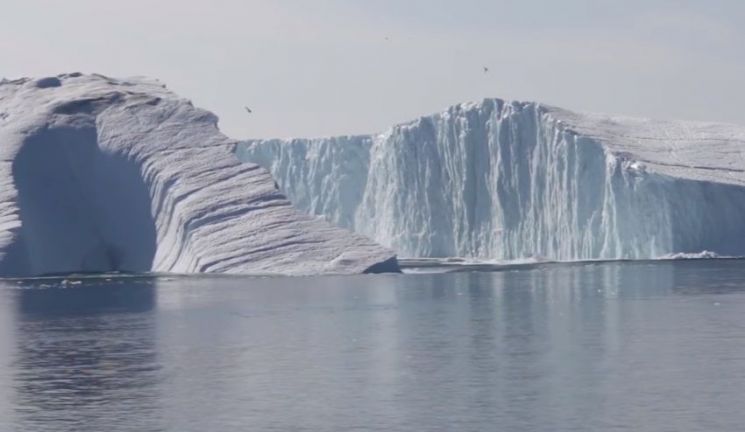
The problem is that changes in ice sheets are physically very complex and progress slowly, making predictions difficult. In particular, much of the Antarctic ice sheet lies below sea level, making it harder to predict than other regions. Moreover, previous studies did not consider interactions with other climate factors, increasing the uncertainty in forecasting ice sheet changes. Existing models simulating changes in the Arctic and Antarctic ice sheets mostly do not reflect the interactions where changes in ice sheets affect the ocean, which in turn influences the atmosphere and causes further changes in the ice sheets.
The research team developed a new climate model integrating ice sheets, icebergs, ice shelves, ocean, and atmospheric factors, and predicted changes in the Antarctic ice sheet and sea levels under three carbon dioxide emission scenarios presented in the Intergovernmental Panel on Climate Change (IPCC) Sixth Assessment Report. Under a high-carbon scenario with continuous industrialization and increasing CO2 emissions, sea levels are projected to rise by 1.4 meters by 2150 due to ice sheet loss. Conversely, under a low-carbon scenario achieving carbon neutrality by 2050, sea levels are expected to rise by 20 cm by 2150. Lee Joon-yi, an IBS research fellow and associate professor at Pusan National University, stated, “If other climate factors such as thermal expansion of seawater and river inflow are also considered beyond those included in this study, the extent of sea level rise would be even greater.”
The researchers foresee irreversible ice sheet collapse if the Earth's temperature rises more than 1.8°C above pre-industrial levels. This means that net zero carbon emissions must be reached before 2060 to prevent abrupt changes in sea levels. Since the Paris Agreement, 121 countries worldwide, including South Korea, have set reduction targets to achieve carbon neutrality by 2050.
Previous studies analyzed that melting of the Antarctic ice sheet accelerates sea level rise. However, this study, which also considered interactions with surrounding climate factors, predicted that while ice sheet melting raises sea levels, the inflow of Antarctic freshwater actually slows the rate of rise. This suggests that for more accurate future climate predictions, it is important to consider interactions among multiple factors through coupled models.
Axel Timmermann, head of the research group and adjunct professor at Pusan National University, said, “For more realistic predictions, it is necessary to develop complex Earth system models that can more reliably reflect each climate factor and their interactions.” He added, “We are planning follow-up research to simulate ice sheet and sea level changes at higher spatial resolution using a model that combines all climate factors.”
The results of this study were published in the international journal Nature Communications (IF 17.694) on the same day.
© The Asia Business Daily(www.asiae.co.kr). All rights reserved.
![Clutching a Stolen Dior Bag, Saying "I Hate Being Poor but Real"... The Grotesque Con of a "Human Knockoff" [Slate]](https://cwcontent.asiae.co.kr/asiaresize/183/2026021902243444107_1771435474.jpg)















