BBC Introduces Representative Scam Cases Using Earthquakes
Fake Fundraising Activities via TikTok, Twitter, PayPal, and More
As support from around the world continues to pour in for the earthquake-affected areas in Turkey, fraudulent activities exploiting people's goodwill are rampant online, raising the need for caution.
On the 14th (local time), the British BBC reported that fundraising scams related to Turkey are taking place through social networking services (SNS).
Most scam accounts post videos or photos on SNS showing the earthquake damage in Turkey and Syria or rescue workers running at the scene, then request donations by saying they will "deliver the funds to the victims in Turkey."
In fact, one TikTok channel showed aerial photos of the Turkey disaster site during a live broadcast lasting three hours. Viewers were guided to support through TikTok's digital currency using the 'Gift' feature. However, there is no way to accurately know who owns this account or how and where the donations are actually used.
Additionally, the BBC pointed out that "it is problematic that 70% of the proceeds go to TikTok as fees."
In response, TikTok explained that the fees are less than that. A TikTok spokesperson told the BBC, "We are working to prevent impersonation of organizations requesting help on TikTok or actions that cause such misunderstandings."
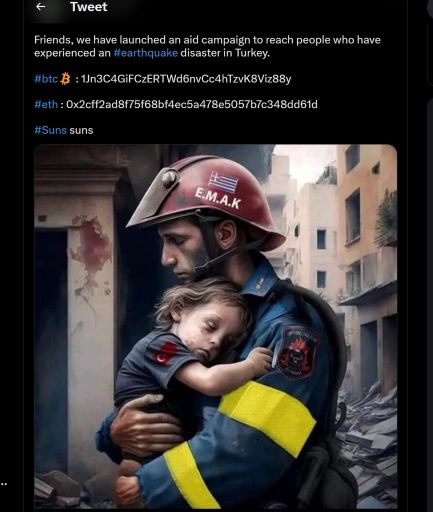
Not only on TikTok, but such fraudulent activities are also happening on Twitter. One Twitter account posted a tweet eight times over 12 hours with a photo of a firefighter holding a child among building debris along with two cryptocurrency wallet addresses.
However, the photo posted on this Twitter account was not real but created by artificial intelligence (AI). The BBC pointed out, "If you look closely, you can see the firefighter holding the child has six fingers on the right hand."
The Greek newspaper OMEA reported that this photo was created using AI by a member of the Aegean Fire Brigade to support colleagues dispatched to Turkey and that someone else had stolen it. Some netizens responded with comments such as "This is really too much" and "It's creepy."
One of the cryptocurrency wallet addresses posted on Twitter has been used by scam accounts since 2018. Another address appears on the Russian SNS VK along with pornographic content.
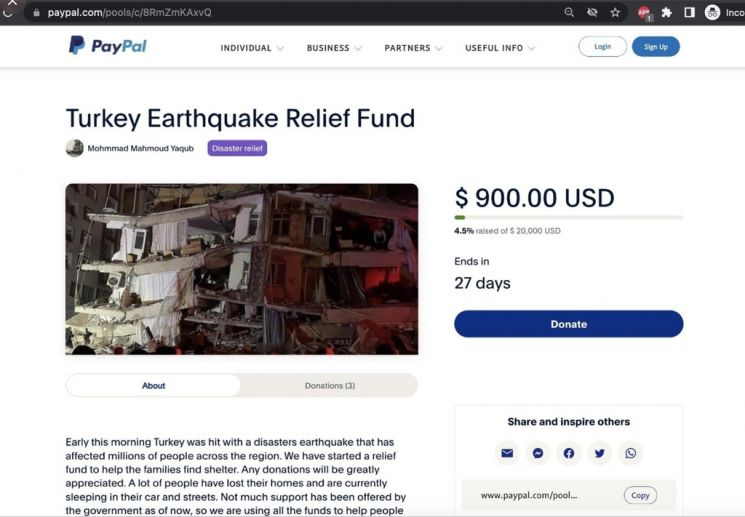
Some accounts are also known to request money transfers through online payment services such as PayPal.
© The Asia Business Daily(www.asiae.co.kr). All rights reserved.
![Clutching a Stolen Dior Bag, Saying "I Hate Being Poor but Real"... The Grotesque Con of a "Human Knockoff" [Slate]](https://cwcontent.asiae.co.kr/asiaresize/183/2026021902243444107_1771435474.jpg)
















