[Asia Economy Reporter Hyunseok Yoo] Hyundai Elevator announced on the 14th that the number of participants in the open API (Application Programming Interface) it publicly released in March last year has rapidly increased to over 60 companies, research institutes, and individuals in just over a year, drawing attention to its potential.
The entry barriers have been removed to allow anyone to use it, diversifying participants to include major corporations such as LG Electronics and Kakao, key telecom companies like KT and LGU+, platform companies such as Woowa Brothers, robot-specialized companies like Robotis and Twinny, government-funded research institutes, and individual researchers.
An API is a software interface for connecting computers or computer programs, enabling the extension of connections between different types of systems or software. Since it can be linked with various IoT devices and external systems such as robots, artificial intelligence (AI) speakers, smartphones, digital signage, and building management systems (BMS), it is expected to have high business scalability.
The field where research and development are currently most active is robot integration. It is commercialized and operating at more than 30 sites where Hyundai Elevator is installed, including hospitals, hotels, residential-commercial complexes, and office buildings. A representative site is Severance Hospital in Yongin (Jung-dong, Yongin-si, Gyeonggi Province).
At this location, where a total of 28 Hyundai Elevators are installed, 10 medical service robots operated by LG Electronics, SKT, and Twinny freely move by riding the elevators, performing transportation tasks such as blood, specimens, and medical consumables. Kids robots for guiding pediatric patients in wards are also in operation.
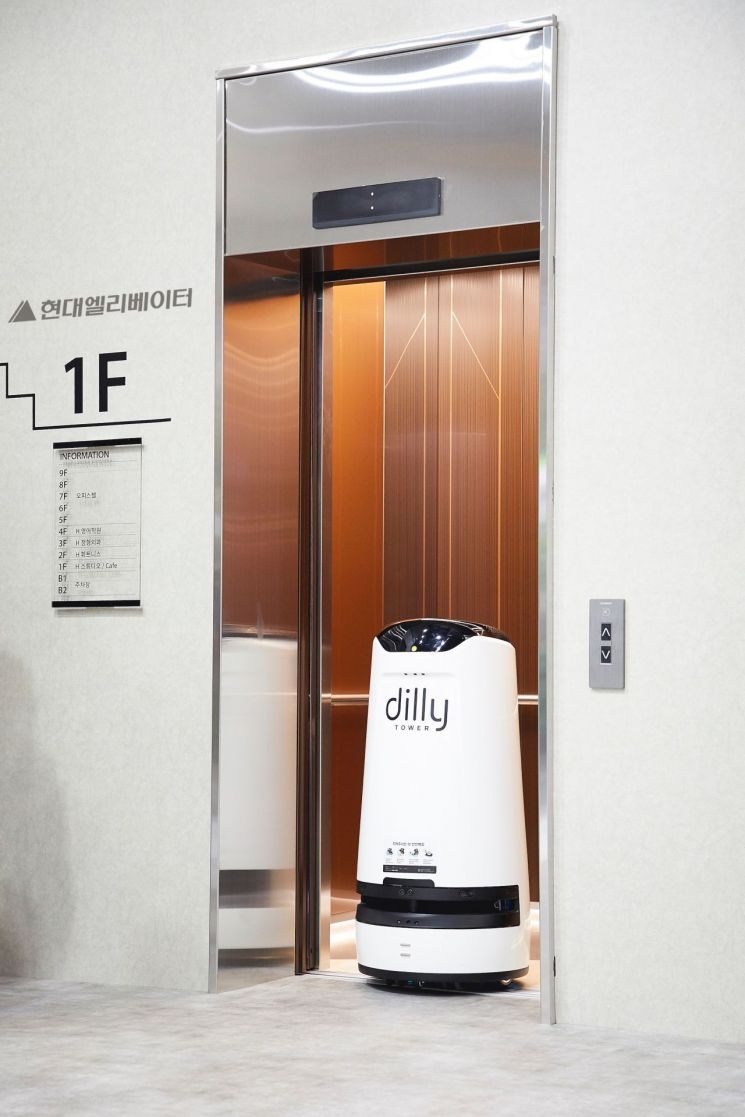
Hyundai Elevator is expected to inject new vitality into the elevator industry based on the open API. Various services can be developed, such as calling the elevator via smartphone without pressing a button or providing customized information on elevator signage by recognizing the passenger’s information.
Additionally, it is anticipated that operational system improvements will be possible, such as analyzing elevator usage information to reduce power consumption or automatically positioning elevators on floors where passengers gather to reduce waiting times.
A Hyundai Elevator official said, “Since the open API is cloud-based, it can freely connect with external devices such as robots and smartphones without installing separate equipment anywhere internet access is available.”
© The Asia Business Daily(www.asiae.co.kr). All rights reserved.
![Clutching a Stolen Dior Bag, Saying "I Hate Being Poor but Real"... The Grotesque Con of a "Human Knockoff" [Slate]](https://cwcontent.asiae.co.kr/asiaresize/183/2026021902243444107_1771435474.jpg)















