January CPI Expected to Rise 6.2%
Month-on-Month Increase Expands to 0.5%
Impact of Gasoline Price Surge... Used Car Prices Also Up
[Asia Economy Reporter Kwon Haeyoung] Although inflation in the United States has slowed compared to last year, the pace is expected to have decelerated. This forecast, released ahead of the January Consumer Price Index (CPI) report on the 14th (local time), supports the Federal Reserve's (Fed) view that "there may still be more work to do."
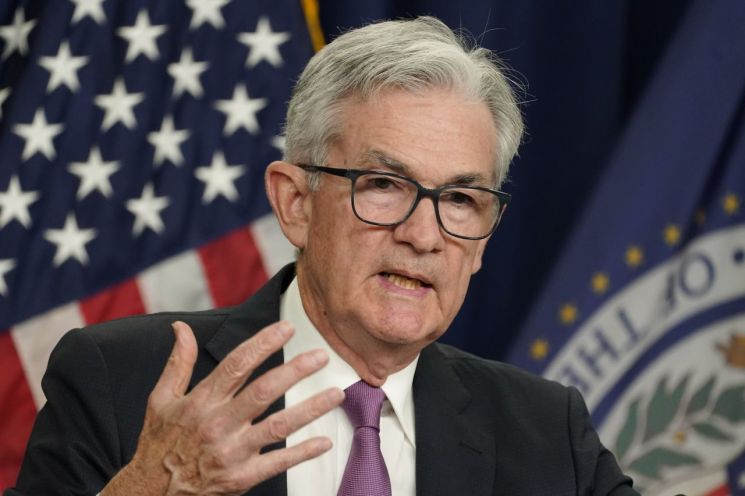
On the 12th (local time), Bloomberg compiled expert predictions and projected that the U.S. January CPI would rise 6.2% year-over-year. This is a slower increase compared to the 6.7% rise in December of last year.
What stands out is that the monthly increase is expected to be larger. The U.S. CPI rose 0.5% month-over-month in October last year, then slowed to 0.2% in November and 0.1% in December. However, it is forecasted to rise again by 0.5% in January this year, indicating a break in the monthly improvement trend after three months. Bloomberg analyzed, "This is an uncomfortable pace for the Fed, which wants to make greater progress in the war against inflation," adding, "It shows that the Fed still has more work to do."
Rising prices of gasoline and used cars pushed the forecast higher. In particular, the upward trend in used car prices was cited as a concern. According to Mannheim, a U.S. used car auction platform, the average transaction price of used cars in January rose 2.5% month-over-month, the largest increase since November 2021 (3.9%). This also marked the second consecutive month of increase following December last year (0.8%). Since U.S. inflation tends to move in tandem with used car prices, the trend in used car prices is considered a sensitive indicator when predicting inflation. Bloomberg noted that a 1 percentage point increase in used car prices leads to a 0.05 percentage point rise in overall inflation.
However, it is positive that the core CPI, which the Fed closely monitors, is expected to ease. The core CPI, excluding energy and food, is projected to rise 5.5% year-over-year, the smallest annual increase since 2021. The monthly increase is estimated at 0.4% for the second consecutive month.
If the U.S. January CPI does not ease or if February employment expands beyond expectations, there is speculation that the Fed may raise the benchmark interest rate several more times. Earlier, senior Fed officials made hawkish remarks last week, such as "It could be a long fight with higher rates sustained for a longer period," and "We are preparing for a long-term battle to bring inflation down to target levels." Initially, the market expected that the Fed would pause rate hikes after a baby step (0.25 percentage point increase) in March, depending on economic indicators.
Anna Wang, a Bloomberg economist, said, "Rising gasoline prices, a slowdown in the decline of goods prices, and still strong service price increases will push both the CPI and core CPI higher," adding, "This will lead the market to bet that the Fed may raise rates higher than currently expected or than the levels projected in the December dot plot."
© The Asia Business Daily(www.asiae.co.kr). All rights reserved.
![Clutching a Stolen Dior Bag, Saying "I Hate Being Poor but Real"... The Grotesque Con of a "Human Knockoff" [Slate]](https://cwcontent.asiae.co.kr/asiaresize/183/2026021902243444107_1771435474.jpg)















