Unable to Repatriate Overseas Earnings Due to System Deficiencies
Korean Film Directors Guild and Others Support Amendment
"Directors' Average Annual Salary 18 Million Won... Will Be Helpful"
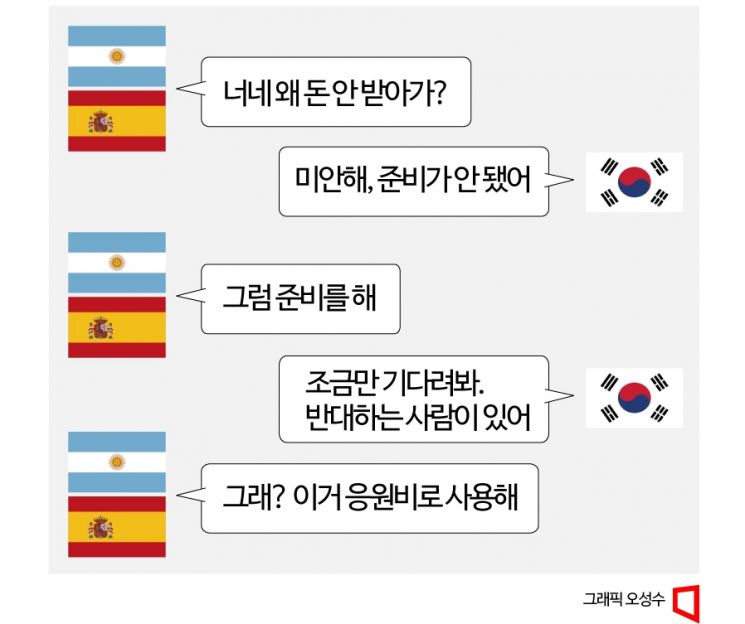
Director Jang Hang-jun explained the background of collecting overseas copyright royalties like this. Recently, 268.87 million KRW of copyright royalties that had been dormant for 6 years in Spain and 2 years in Argentina were brought into Korea.
Through this remittance, about 500 directors including Hwang Dong-hyuk of 'Squid Game', Kim Han-min of 'The Admiral: Roaring Currents', Jang Hang-jun of 'Forgotten Night', Hong Won-chan of 'Deliver Us from Evil', and Im Soon-rye of 'Our Life's Best Moment' received copyright royalties. These royalties are for films, entertainment, and comics, with 62 recipients in Spain and about 460 in Argentina. In Spain, the royalties are for works used over 6 years, and previous royalties were absorbed into the respective country's cultural fund. If recipients do not claim the royalties within one year, the Korean Film Directors' Guild (DGK) will send the money back to the local country.
What exactly happened?
Urging Guarantee of Fair Compensation Rights for Video Creators
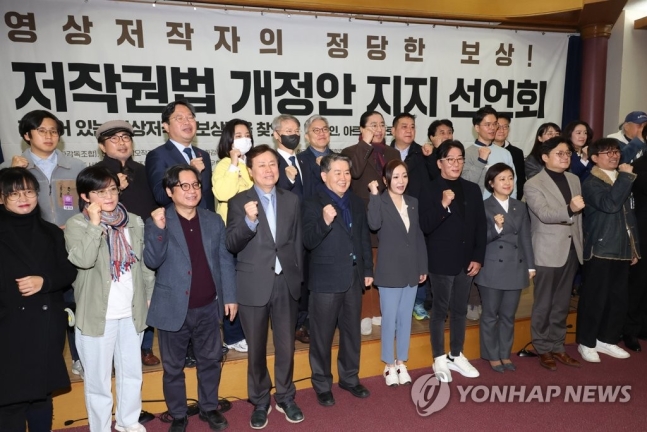
On the 9th, 24 creator organizations including DGK gathered at the National Assembly Members' Office Building in Yeouido, Seoul, to hold an award ceremony and urged partial amendment of Article 100 of the Copyright Act. The purpose was to guarantee fair compensation rights for video creators.
The 'fair remuneration' system, which is practiced in over 40 countries including France, Spain, and Argentina, guarantees the compensation rights of authors regardless of nationality for works used within the respective country, based on the national treatment principle stipulated in the Berne Convention.
The 'Fair Remuneration' system requires that when major authors of audiovisual works such as directors and screenwriters transfer their copyright property rights for production, the final supplier of the audiovisual work (broadcasters, OTT, digital platforms, etc.) must pay compensation to the authors. This system is widespread in Europe and South America. In the United States, it is called residuals, which effectively provides similar compensation to audiovisual creators.
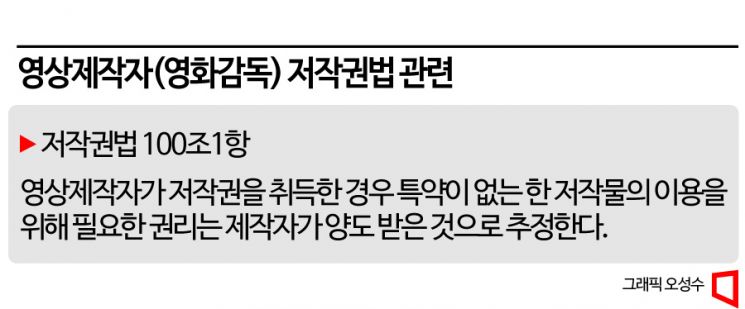
Korean copyright law only presumes the transfer of copyright property rights by audiovisual creators but does not stipulate fair compensation rights. Even if overseas copyright management organizations (CMOs) want to remit compensation to Korean creators, there is no legal basis for remittance because the rights of domestic creators are not guaranteed.
DGK explained, "Korean directors also have the right to receive copyright royalties generated in the respective countries, but overseas remittance of royalties is mostly done through reciprocal representative agreements based on the principle of reciprocity and equality." They added, "Only when Korea can collect and remit royalties for foreign authors can the other countries remit royalties to Korea."
It is explained that the proactive remittance from Spain's copyright management organization DAMA (Derechos de Autor de Medios Audiovisuales) and Argentina's DAC (Directores Argentinos Cinematogr?ficos) reflects the support of these two organizations for the movement to amend Korean copyright law. On December 6 last year, DAMA, and on the 26th of last month, DAC paid the accumulated copyright compensation for Korean audiovisual works viewed in their countries to DGK, respectively.
"Protecting Creators' Rights Will Bring Out the Second 'Squid Game'"

Director Hwang, who received the most copyright royalties from Spain, said through a video at the 'Declaration of Support for Fair Compensation for Video Creators and Copyright Law Amendment' held that day, "For the second 'Parasite' or the second 'Squid Game' to emerge, the industry must be recognized as thriving," and urged, "Please approach this with the mindset of nurturing a large ecosystem."
Director Hwang recalled, "There was a time when I failed at the box office and had to live in debt after a project was canceled. I lived on 200,000 KRW a month. If this system had existed then, wouldn't it have helped?"
He continued, "Production companies also agree to transfer all rights to investors and distributors. Film directors have no choice but to accept this as an unwritten rule. Looking at the spending patterns, since it involves investors, distributors, and screening platforms, I don't think it would work by making separate contracts with one production company or producer. For it to be fair and systematized, it should be done at the national level. Please pass the bill in the National Assembly with the belief that we are taking a step forward."
"Average Annual Salary of Film Directors is 18 Million KRW, Please Let Us Make a Living"
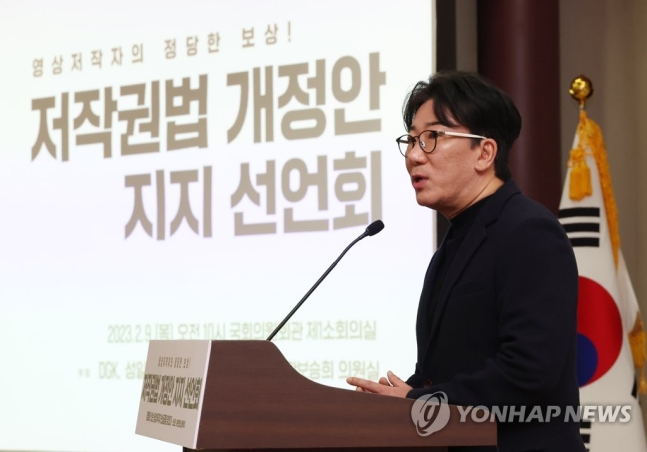
Yoon Je-gyun, DGK representative, appealed, "The average annual salary of about 500 film directors affiliated with the guild is less than 18 million KRW. Except for some star writers, they are building the K-content powerhouse with less than 1 million KRW a month. The era has changed with the digital transition. We hope changes will follow accordingly."
He added, "We are not asking for a certain amount of money for box office success. We are not asking for a lot of money. Just let us make a living. Writers and directors around the world, including Argentina and Spain, share even a little, so we came to ask to share as much as other countries do."
Director Jang Hang-jun also emphasized, "I think of fellow directors who dreamed of being directors all their lives but left because they could not overcome financial hardship," and said, "Many creators can be freed from poverty and hardship through copyright royalties." He added, "If this situation continues, the second Bong Joon-ho, Park Chan-wook, or Hwang Dong-hyuk will not emerge."
450 Billion KRW Dormant Overseas, Why?
These organizations urged the National Assembly and government to take a leading role.
DGK raised their voice, saying, "It is estimated that 45 billion KRW can be collected worldwide in one year." They explained the need to establish a provision for audiovisual creators' compensation rights by amending Article 100 of the Copyright Act and to have the Ministry of Culture, Sports and Tourism manage and protect the activities of audiovisual copyright management organizations. The organizations demanded the enactment of a new right in Article 100, Paragraph 1, guaranteeing fair compensation rights for audiovisual producers.
Director Im Soon-rye emphasized, "The Copyright Act, created in 1987, is being applied to a rapidly changing production environment. I hope that even a single won will be fairly compensated as the rights of creators."
Director Kim Han-min urged, "I hope Korea will raise its national prestige with timely legal amendments and show a leading role to the young people who love K-content."
© The Asia Business Daily(www.asiae.co.kr). All rights reserved.
![Clutching a Stolen Dior Bag, Saying "I Hate Being Poor but Real"... The Grotesque Con of a "Human Knockoff" [Slate]](https://cwcontent.asiae.co.kr/asiaresize/183/2026021902243444107_1771435474.jpg)

















