Daewoong Ordered to Pay 40 Billion Won in Damages
Manufacturing Technology Use Also Prohibited…Product Disposal Crisis
Metox "Expanding Rights Protection Activities"…Additional Lawsuits Announced
Daewoong "Clear Misjudgment, Will Seek Stay of Execution and Appeal"
[Asia Economy Reporter Myunghwan Lee] The court has ruled in favor of Medytox in the 'Botulinum Toxin (BTX) War' between Daewoong Pharmaceutical and Medytox that lasted over seven years. Daewoong Pharmaceutical is now facing not only having to pay compensation worth around 40 billion KRW but also the risk of being unable to produce BTX altogether.
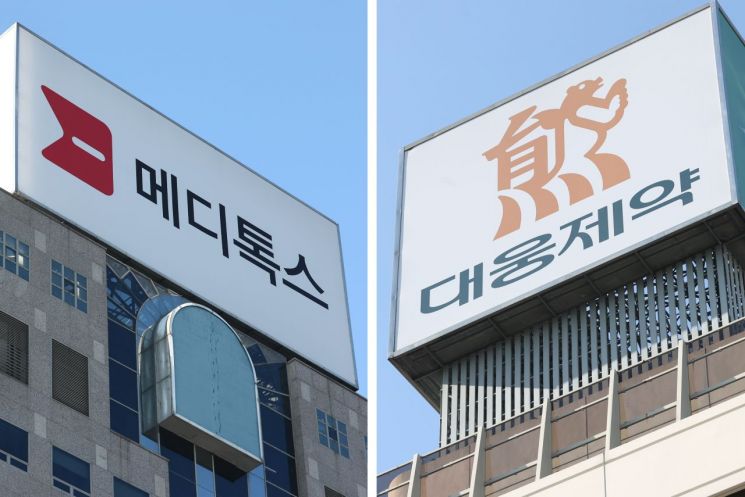
The Seoul Central District Court Civil Division 61 (Presiding Judge Kwon Oh-seok) on the 10th ruled partially in favor of Medytox in a lawsuit seeking injunctions against trade secret infringement and other claims worth approximately 50 billion KRW filed against Daewoong Pharmaceutical. The court stated, "It is difficult to deny the identity of the strains between Medytox and Daewoong Pharmaceutical," and prohibited Daewoong Pharmaceutical from using the related manufacturing technology. Furthermore, Daewoong Pharmaceutical was ordered to hand over the BTX strains to Medytox and to dispose of all already produced finished and semi-finished products. Additionally, Daewoong Pharmaceutical was ordered to pay a total of 40 billion KRW in damages to Medytox.
The court noted, "Phylogenetic analysis results show a close relationship between the strains of both parties," and "There is circumstantial evidence recognizing that Daewoong Pharmaceutical's strain originated from Medytox's strain." It also pointed out, "It appears that Daewoong Pharmaceutical shortened the development period by three months by acquiring the sequence arrangement information of individual process steps from Medytox."
The lawsuit between the two companies over BTX dates back to October 2017. Medytox filed a civil lawsuit alleging that Daewoong Pharmaceutical's BTX product 'Nabota' had stolen its 'Medytoxine' strain. Initially, Medytox filed the lawsuit in the United States, but the U.S. court ruled that "this issue should not be litigated in the U.S. and should be filed in Korea," leading to the lawsuit being refiled domestically.
BTX is a potent toxin extracted from the botulinum bacteria, one of the causes of food poisoning, which induces paralysis of the human nervous system. When injected under the skin, BTX causes slight muscle paralysis, making it useful for medical purposes or cosmetic use to smooth wrinkles.
Medytox, which has effectively won the case, welcomed the court's ruling. Medytox stated, "This court ruling is a clear judgment based on scientific evidence such as genomic sequence analysis that no one can refute," and emphasized, "We will expand Medytox's legitimate rights protection activities based on this ruling."
On the other hand, Daewoong Pharmaceutical showed clear signs of being unsettled by the unexpected ruling. Daewoong Pharmaceutical announced that it plans to immediately file for a stay of execution and appeal following the ruling. The company expressed regret, stating, "Although it was acknowledged that the origin relationship cannot be determined solely by genetic analysis, the ruling based on inference shows limitations in uncovering the substantive truth," and added, "We will promptly proceed with all objection procedures."
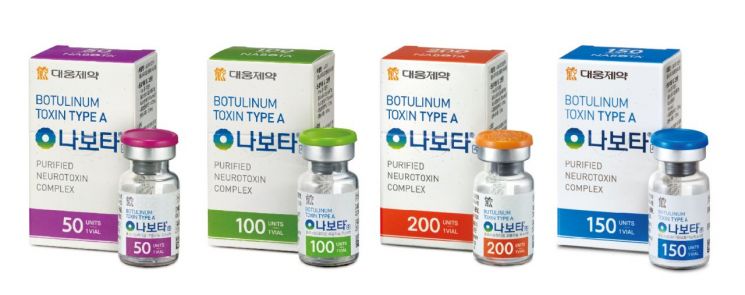
Attention is also focused on the sales prospects of Daewoong Pharmaceutical's BTX product Nabota (exported to the U.S. under the name Juvo), which is the only BTX developer in Korea and Asia to have received approval from the U.S. Food and Drug Administration (FDA) and is currently sold in the U.S. Regarding the U.S. market, since the U.S. International Trade Commission (ITC) ruled in 2021 that Daewoong Pharmaceutical infringed Medytox's trade secrets, Daewoong Pharmaceutical's U.S. partner Evolus has reached an agreement with Medytox and Medytox's U.S. partner Allergan, allowing Juvo sales to proceed smoothly. Last year, sales in the U.S. alone grew by 49% year-on-year, reaching $148.6 million (approximately 187.8 billion KRW), showing rapid growth.
Daewoong Pharmaceutical maintains that there will be little impact for the time being as higher court judgments remain pending. A Daewoong Pharmaceutical official emphasized, "There will be no impact on the Nabota business, and we will continue to pursue global market expansion." Some also expect no issues with the U.S. business since an agreement has already been reached regarding the U.S. market.
However, there are concerns that, in the worst case, production of Nabota itself could become impossible, and domestic approval could be revoked, making overseas sales, including in the U.S., impossible. The court's order to transfer BTX strains and dispose of products, and especially if it leads to approval cancellation, raises the possibility that the Ministry of Food and Drug Safety may not grant export approval. A BTX industry insider analyzed, "Recently, Medytox announced plans to establish a production plant in the United Arab Emirates (UAE), which is the first case so far. Currently, no domestic BTX developer has secured overseas production bases related to BTX," adding, "If exports are completely blocked, it will inevitably be difficult to sell in the global market."
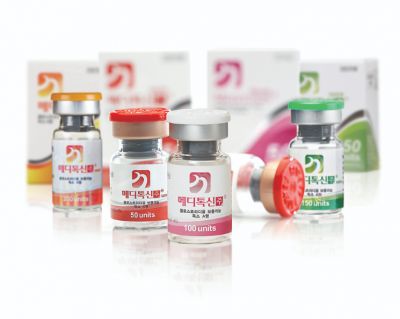
There is also speculation that this ruling will affect other lawsuits related to BTX. In March last year, Medytox filed a lawsuit with the U.S. International Trade Commission (ITC) requesting the import ban of BTX 'Botulax' by Hugel in the U.S. An industry expert familiar with the issue said, "It is difficult to see the strains as different, which can be interpreted as recognizing strain theft," and pointed out, "According to the Infectious Disease Control and Prevention Act, if it is confirmed that strains were illegally obtained, approval cancellation is also possible." He further explained, "Since Medytox and Zetema are the only domestic companies with clear BTX strain origins, there is a high risk that the issue will spread to other companies."
The stocks of both companies showed significant fluctuations following the ruling. Medytox closed at 173,600 KRW, up 29.94% (40,000 KRW) from the previous trading day, hitting the daily upper limit. Zetema also closed up 18.39% (2,880 KRW) at 18,540 KRW. Conversely, Daewoong Pharmaceutical ended trading at 124,200 KRW, down 19.35% (29,800 KRW) from the previous close, and Hugel closed at 133,800 KRW, down 18.17% (29,700 KRW).
© The Asia Business Daily(www.asiae.co.kr). All rights reserved.
![Clutching a Stolen Dior Bag, Saying "I Hate Being Poor but Real"... The Grotesque Con of a "Human Knockoff" [Slate]](https://cwcontent.asiae.co.kr/asiaresize/183/2026021902243444107_1771435474.jpg)


















