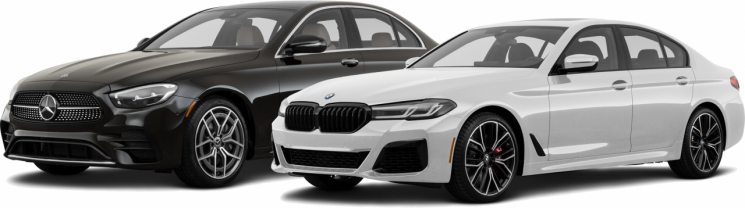
[Asia Economy Reporter Eunju Lee] The Korea Fair Trade Commission (KFTC) has decided to impose a fine of 42.3 billion KRW on German car manufacturers who agreed to introduce software technology that reduces urea solution consumption while developing emission reduction technology. This action marks the first case in which the KFTC has sanctioned business operators for collusion related to corporate research and development (R&D).
On the 9th, the KFTC announced that it would issue corrective orders and impose a provisional fine of 42.3 billion KRW on four German diesel passenger car manufacturers (Mercedes-Benz Group, BMW, Audi, Volkswagen) for colluding to introduce software that reduces urea solution injection (consumption) while developing selective catalytic reduction (SCR) emission reduction technology.
According to the KFTC, in September 2006, the four companies agreed in Stuttgart, Germany, to adopt software implementing a dual injection method to reduce urea solution consumption. Subsequently, they manufactured and sold diesel passenger cars equipped with SCR software reflecting this agreement. Urea solution is used in the selective catalytic reduction (SCR) system to reduce nitrogen oxides, toxic gases emitted by diesel vehicles. Since the amount of urea solution affects nitrogen oxide emissions, configuring the urea injection strategy is a core technology of SCR.
A KFTC official explained, “The single injection method is a system designed to maximize urea solution input, whereas the dual injection method can be understood as adding a kind of ‘switch’ to reduce urea consumption.” The official added, “The problem is that the four companies agreed to install this kind of ‘switch’ inside vehicles through collusion to reduce urea consumption.”
By agreeing to reduce urea consumption, the four companies sought benefits such as reducing the size of tanks installed inside vehicles. Reducing tank size can improve vehicle fuel efficiency. As a result, they blocked the possibility of researching and developing urea injection strategies that could maximize nitrogen oxide reduction effects. Accordingly, the KFTC viewed this as a competition-restricting agreement that prevented the development and launch of diesel passenger cars capable of excellent nitrogen oxide reduction performance.
The KFTC stated, “This action is significant as the first case to sanction business operators’ collusive behavior related to research and development (R&D), recognizing not only price and quantity but also eco-friendliness as key elements of competition, thereby expanding consumer choice.” Furthermore, it emphasized, “In particular, it clarified that acts avoiding competition in the development of eco-friendly innovative technologies through related agreements can also constitute competition-restricting agreements prohibited under the Fair Trade Act.”
© The Asia Business Daily(www.asiae.co.kr). All rights reserved.
![Clutching a Stolen Dior Bag, Saying "I Hate Being Poor but Real"... The Grotesque Con of a "Human Knockoff" [Slate]](https://cwcontent.asiae.co.kr/asiaresize/183/2026021902243444107_1771435474.jpg)















