Ireland Constitution "Housework is Women's Duty"
Referendum After Controversy Over Gender Role Stereotypes
Ireland has decided to put to a referendum the repeal of a constitutional provision stating that "a woman's duty is housework." This move aims to amend the outdated constitution that has long been criticized for its gender role stereotypes, which assign economic activities to men and housework to women.
According to Article 41, Section 2 of the Irish Constitution, "A mother shall not be obliged by economic necessity to engage in labor to the neglect of her duties in the home, and the state shall endeavor to ensure this." This provision was enacted in 1937 and was known as the "woman's place is in the home" clause.
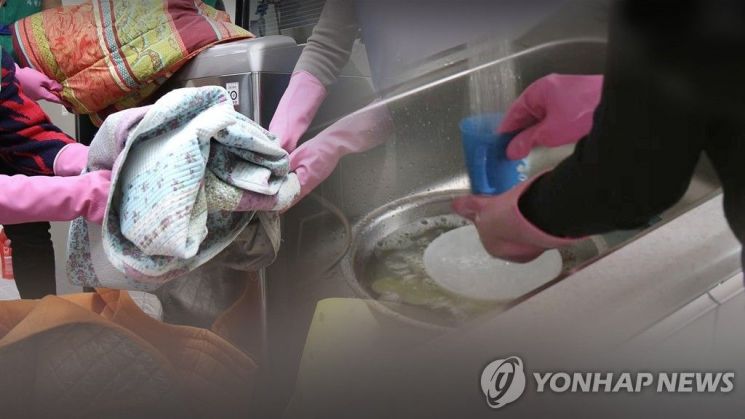
This provision has been evaluated as a basis for confining Irish women to the home. In Ireland, even among dual-income couples with regular jobs, women often take primary responsibility for housework. According to a European Union (EU) survey, the number of women who spend more than four hours a day on housework is twice that of men.
The repeal of this provision has been consistently discussed. In 1993, the repeal was first publicized through a report titled "The Status of Women," and in 2013, a citizens' assembly demanded its repeal, but it failed. In 2018, former Minister for Justice Charlie Flanagan, and last year, former Prime Minister Miche?l Martin promised a referendum to repeal the provision but did not implement it.
Recently, the political sphere and civil society have again called for constitutional amendments. In response, Taoiseach Leo Varadkar has decided to put the repeal of this provision to a referendum within this year. Previously, Ireland legalized same-sex marriage in 2015 and abortion in 2018 through referendums.
South Korea Also Has a High Burden of Women's Housework
Meanwhile, although South Korea does not have a related constitutional provision like Ireland, surveys show that women still bear a high proportion of housework. According to Statistics Korea in 2021, the value of unpaid housework was 490.9 trillion won, accounting for 25.5% of the country's gross domestic product (GDP). Per capita, women spent 13.8 million won worth of housework, 2.6 times more than men (5.21 million won).
Men's housework time increased from 45 minutes in 2014 to 64 minutes in 2019, indicating a rise in the share of housework, but it still does not reach half of women's time.
According to "An Analysis of Determinants of Time Poverty by Age Group," published by Jimin Lee, a senior researcher at the Korea Employment Information Service, married women with higher earned income are more likely to experience time poverty. Time poverty refers to people who spend long hours on paid work or housework/caregiving but have insufficient leisure or free time. Regarding the finding that women across all age groups are more likely to be time-poor, the researcher explained, "This reflects the reality of the unequal combination of housework and paid labor."
© The Asia Business Daily(www.asiae.co.kr). All rights reserved.
![Clutching a Stolen Dior Bag, Saying "I Hate Being Poor but Real"... The Grotesque Con of a "Human Knockoff" [Slate]](https://cwcontent.asiae.co.kr/asiaresize/183/2026021902243444107_1771435474.jpg)















