"This is a serious economic corruption crime." On the 16th of last month, the prosecution made this claim while requesting a 40-year prison sentence for former Star Mobility chairman Kim Bong-hyun at the sentencing hearing held by the 13th Criminal Division of the Seoul Southern District Court (Presiding Judge Lee Sang-ju). They also requested the confiscation of 77,435,400,000 KRW and the seizure of his resident registration card. Wearing a prison uniform, Kim nodded upon hearing the prosecution's demand and made a final statement. He said, "I sincerely apologize for causing social unrest," but added, "I did not embezzle the 77.4 billion KRW subject to confiscation, and I myself suffered damages; it was just money that was misused."
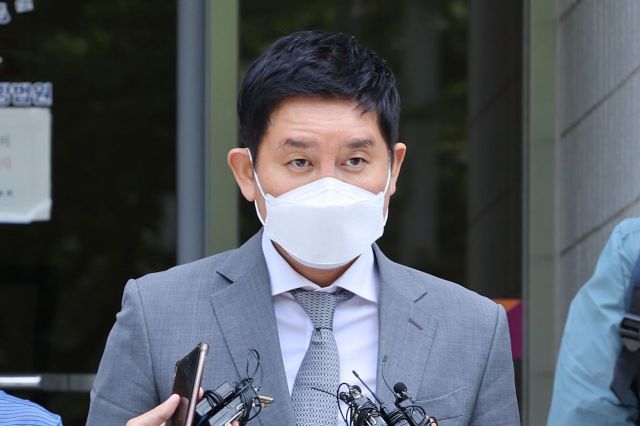 Kim Bong-hyun, former chairman of Star Mobility and a key figure in the Lime Asset Management (Lime) scandal, is leaving the courtroom after completing the pre-arrest detention hearing related to fraud and violation of the Act on the Regulation of Conducting Fund-Raising Business without Permission at the Southern District Court in Yangcheon-gu, Seoul, last September.
 [Image source=Yonhap News]
The first trial sentencing for former chairman Kim, who is charged with embezzlement under the Act on the Aggravated Punishment of Specific Economic Crimes, will be held on the 9th. This is the sentencing he is receiving about two and a half years after being indicted. As the chairman of Star Mobility, whose main business was industrial robots, Kim became entangled in the Lime Asset Management (Lime) redemption suspension scandal, putting him at risk of being imprisoned for up to 40 years. What charges is he facing?
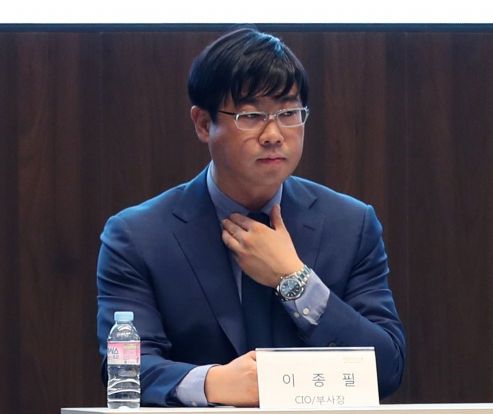
Ponzi Scheme and Illegal Fund Transactions Manipulated Returns... Former Lime Vice President Lee Jong-pil Sentenced to 20 Years
The case dates back to 2019. At that time, Lime was the top private equity fund asset management company in South Korea. Following the deregulation of private equity funds in 2015, it grew to manage nearly 6 trillion KRW in assets. Lime gained popularity with financial products guaranteeing annual returns of 5-8%. Some investors even gathered billions of KRW, including retirement funds, to invest.
However, Lime's core was rotting. To boost short-term returns, it purchased large amounts of 'mezzanine funds' from poorly performing companies listed on the KOSDAQ. 'Mezzanine' is an Italian term meaning the intermediate floor between the first and second floors. Mezzanine funds are designed to lower high-risk financial products to medium risk by mixing them with low-risk products through sophisticated structuring. But Lime designed mezzanine funds by combining problematic funds with sound ones. Eventually, these funds failed, causing significant losses. According to a February 2020 audit by the Financial Supervisory Service, Lime's main fund was halved in value, and some sub-funds suffered total losses.
Lime decided to conceal these losses. They manipulated returns through illegal convertible bond transactions. The manipulation method was called 'parking transactions.' Similar to parking a car on someone else's land, parking transactions occur when a product is traded but temporarily held by the counterparty. These often happen due to purchase limits. Lime was desperate to hide investment losses caused by parking transactions. Among the convertible bonds Lime traded, some were involved in delisting issues.
They even resorted to Ponzi schemes, rolling over returns. They hid losses by repurchasing loss-making funds at unreasonable prices, making it appear as if there were no losses. The U.S. Securities and Exchange Commission (SEC) concluded that the International Investment Group (IIG) fund, which Lime had invested in since 2017, was a Ponzi scheme. The SEC froze assets, blocking Lime's cash flow.
As various suspicions arose, investors flocked to Lime in July 2019 to recover their money. Initially, Lime paid out using accumulated liquidity. However, from October 2019, they delayed redemptions and eventually declared a suspension of redemptions. Mezzanine funds troubled Lime during this period as they could not be liquidated into cash. Former Lime Vice President Lee Jong-pil, who was involved in this entire process, was sentenced to 20 years in prison in November last year.
Kim Bong-hyun, Who Lobbied Political and Legal Circles... "Chairman Who Will Save Lime"
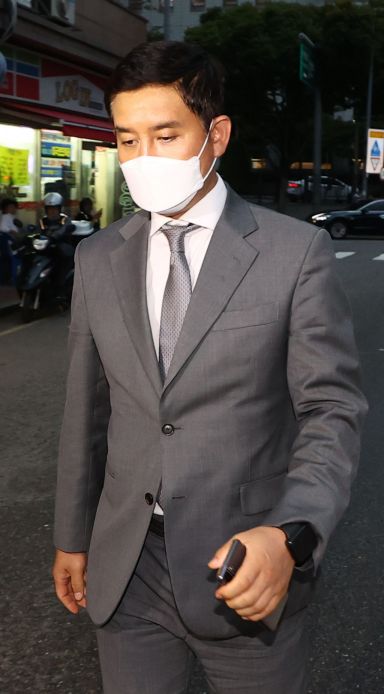 Former Star Mobility Chairman Kim Bong-hyun is returning home after a court hearing held in October 2021 at the Seoul Southern District Court in Yangcheon-gu.
 [Image source=Yonhap News]
Then why was former chairman Kim, who was not even affiliated with Lime, caught up in a serious economic corruption crime? He was identified as the actual source of Lime's funds. He is also suspected of lobbying political circles. In a recorded conversation with Jang, former head of Daishin Securities Center, Kim appears as the "Chairman who will save Lime," accused of hiding losses and selling Lime funds.
Kim's political lobbying was revealed in court. He bribed former Blue House economic secretary Kim with about 37 million KRW. The court acknowledged that former secretary Kim received bribes from Kim and passed on Lime-related documents. Moreover, Kim appointed the secretary's younger brother as an outside director of Star Mobility and paid him about 19 million KRW as salary. The documents passed by the bribed secretary included critical contents such as "Inspection plan report on Lime Asset Management's unsound management practices" and "Borrowing status and future countermeasures of professional private equity funds," which were key to the Lime investigation.
He also reached out to the legal community. When the Lime scandal broke and the Seoul Southern District Prosecutors' Office took charge of the investigation, Kim entertained active prosecutors with drinks. Kim spent about 5.36 million KRW on alcohol, bands, and entertainment hostess fees. However, in September last year, the court ruled that since the per-person entertainment cost, including all attendees, was 939,167 KRW, below the 1 million KRW threshold, it did not violate the Anti-Graft Act, sparking controversy.
Kim Bong-hyun Denies Embezzlement Charges... Prosecution Demands Maximum Sentence
The prosecution believes Kim tried to continue his crimes, including embezzlement, by saving Lime through lobbying political and legal circles. According to the prosecution, Lime invested 40 billion KRW as convertible bond acquisition funds in Star Mobility. Kim used 20,875,400,000 KRW of this for personal debt repayment and 19.2 billion KRW for acquiring the Veterans Association Mutual Aid Society (Hyanggun Sangjohoe).
The prosecution also believes Kim embezzled about 37.7 billion KRW in assets after acquiring Hyanggun Sangjohoe. Former Star Mobility CEO Lee Kang-se, who was tried for conspiring with Kim to use company funds for the acquisition, was sentenced to five years in prison in May last year. The prosecution explains that the total embezzled amount, including funds from Star Mobility and Suwon Passenger Transport, reaches 103.3 billion KRW. Additionally, Kim is charged with concealing asset outflows from Hyanggun Sangjohoe and reselling it to Boram Sangjo, embezzling a contract deposit of 25.9 billion KRW.
Kim denies the charges, stating, "I never used the embezzled money for personal purposes," but the prosecution insists he should receive the maximum sentence. While requesting a 40-year prison term, the prosecution pointed out, "Kim shows no remorse for hiding embezzled funds during the crime" and "He is also the worst fugitive with no precedent." They added, "Victims and accomplices related to this case are closely watching the trial outcome," and requested the court to carefully consider the case to confirm that judicial justice is alive and to maintain trust in the judicial system.
© The Asia Business Daily(www.asiae.co.kr). All rights reserved.
![Clutching a Stolen Dior Bag, Saying "I Hate Being Poor but Real"... The Grotesque Con of a "Human Knockoff" [Slate]](https://cwcontent.asiae.co.kr/asiaresize/183/2026021902243444107_1771435474.jpg)

















