[Asia Economy Reporter Byeon Seon-jin] Health authorities expect this year to be the year that ends the three-year COVID-19 pandemic and achieves a complete return to normal life. On the 30th of last month, the first phase of indoor mask mandate adjustment was implemented, with the goal of fully lifting mask requirements and easing COVID-19 classifications within this year. Complete normalization means that COVID-19 will no longer be seen as something special but as one of many respiratory infectious diseases.
Ji Young-mi: “This Year is the First Year of Transition to Normal Life”
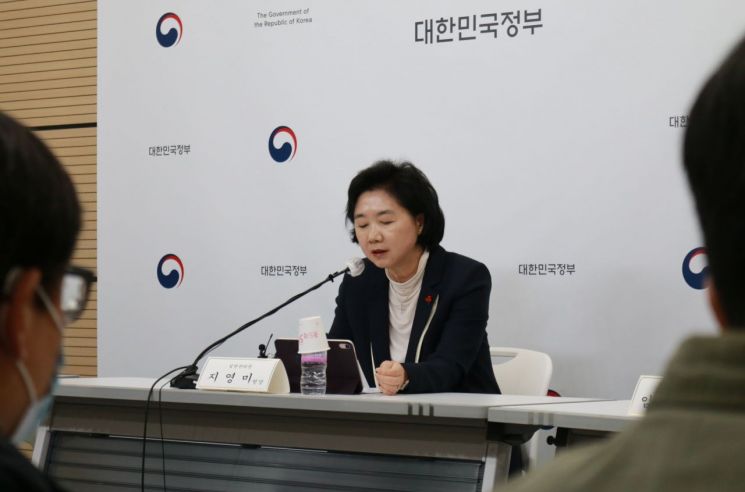
At a press briefing held on the 7th, Ji Young-mi, Commissioner of the Korea Disease Control and Prevention Agency (KDCA), stated, “Although the world has not yet completely escaped the COVID-19 crisis, it is clear that we are seeing the end of a long tunnel,” emphasizing, “This year will be the first year to end the emergency phase and transition to normal life.” While COVID-19 will not disappear, its fatality rate has decreased due to vaccinations, allowing it to be managed within the general healthcare system. This is the first time health authorities have set this year as the end point of the pandemic.
Until now, health authorities believed that complete normalization would only be possible after the World Health Organization (WHO) lifted the Public Health Emergency of International Concern (PHEIC) designation for COVID-19, which was declared in January 2020. At the 14th WHO meeting held on January 30, although immunity to COVID-19 was high, the PHEIC was maintained due to uncertainties about new variants and still high fatality rates. Commissioner Ji has attended all meetings from the first in January 2020 through the recent 14th meeting. She said, “At the 14th meeting, discussions were held on establishing sustainable prevention, surveillance, and response plans after the pandemic ends.” This highlights the importance of now creating a system where COVID-19 is treated as one of several respiratory viruses, like influenza. The upcoming 15th meeting at the end of April is attracting attention to whether WHO will end the PHEIC designation.
US to Normalize in May... What About Korea?
Countries have already begun preparing blueprints for complete normalization. The United States plans to end its public health emergency status on May 11. They are also promoting annual vaccination programs with one to two doses per year. Commissioner Ji said, “Korea will also adjust its response level by assessing domestic risk and monitoring overseas situations.” Health authorities plan to maintain mandatory measures for arrivals from China until the end of this month, given the stabilization of the COVID-19 situation there, but are considering early lifting of short-term visa issuance restrictions.
However, the full lifting of mask mandates and adjustment of COVID-19 classification levels will occur only after WHO ends the PHEIC. Once the second phase of mask mandate adjustment begins, masks can be removed on public transportation such as subways and buses, as well as in hospitals, clinics, and pharmacies. If the current COVID-19 infectious disease classification is lowered from level 2 to level 4, individuals will seek treatment at hospitals or clinics like they do for the flu when sick. Additionally, health authorities are considering regular vaccinations twice a year for high-risk groups and once a year for the general population.
“Preparing for the Next Pandemic”
The KDCA is developing a ‘Mid- to Long-Term Strategy for Preparedness and Response to Emerging Infectious Disease Pandemics’ based on the experience of responding to COVID-19. The lessons learned from the past three years of the COVID-19 pandemic will be used to “advance the quarantine system.” Commissioner Ji said, “Just as the major overhaul of the national quarantine system after the 2015 MERS outbreak greatly helped in responding to COVID-19, we must now hasten preparations to respond more quickly and efficiently to future pandemics.” To this end, she stated plans to ▲open and utilize accumulated COVID-19 data to lay the foundation for future medical innovation and ▲expand exchanges of experts and joint research with overseas institutions and international organizations.
© The Asia Business Daily(www.asiae.co.kr). All rights reserved.
![Clutching a Stolen Dior Bag, Saying "I Hate Being Poor but Real"... The Grotesque Con of a "Human Knockoff" [Slate]](https://cwcontent.asiae.co.kr/asiaresize/183/2026021902243444107_1771435474.jpg)















