Nestl? "Price Increase to Offset Production Costs"
Kakao Main Production Area Crop Deterioration Due to Drought
[Asia Economy Reporter Hyunwoo Lee] As Valentine's Day approaches, chocolate consumption is expected to increase, but due to abnormal weather conditions causing a sharp decline in the harvest of cocoa, the main ingredient of chocolate, a significant price surge is anticipated. Nestl?, one of the major chocolate manufacturers, also announced the need for price increases across food products.
On the 6th (local time), Mark Schneider, CEO of Nestl?, stated in an interview with the German Frankfurter Allgemeine Zeitung (FAZ) the previous day, "We will need to raise food prices again this year to offset the increased production costs that have not yet been fully passed on to consumers," adding, "Although the increase will not be as steep as last year, another hike will be necessary during the year."
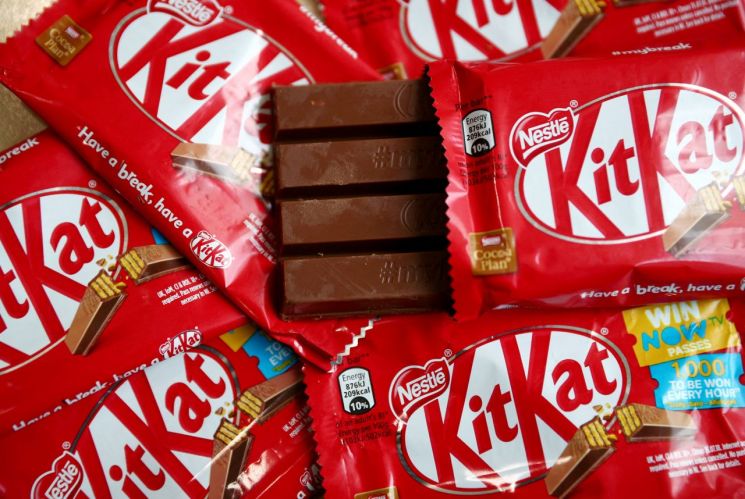
Amid the global inflation trend centered in Europe, the poor cocoa harvest in C?te d'Ivoire, the world's largest cocoa producer and the main source of chocolate's primary ingredient, has been identified as one of the main factors driving further price increases.
According to major foreign media, C?te d'Ivoire's cocoa harvest has significantly decreased this year due to reduced rainfall caused by abnormal weather. The weekly port arrivals at Abidjan and San Pedro, the main cocoa export ports, averaged 115,000 tons (t) until November and December last year, but this month they dropped to 70,000 tons, a nearly 40% decrease.
C?te d'Ivoire's main cocoa harvest season runs from October to March, followed by the dry season, so concerns are rising that the cocoa shortage will persist for an extended period. In particular, since September last year, the rainy season has seen insufficient rainfall, causing significant damage to the cocoa crop.
The shortage of fertilizers following the Ukraine war has also affected crop yields. With Russia, the world's largest fertilizer exporter, reducing fertilizer exports by more than 75%, agricultural production in the Middle East and Africa, which heavily depend on Russian fertilizers, has significantly declined.
© The Asia Business Daily(www.asiae.co.kr). All rights reserved.
![Clutching a Stolen Dior Bag, Saying "I Hate Being Poor but Real"... The Grotesque Con of a "Human Knockoff" [Slate]](https://cwcontent.asiae.co.kr/asiaresize/183/2026021902243444107_1771435474.jpg)















