② China Rises to 2nd Largest Car Exporter Last Year
Importance of Investment Attraction Seen Through Tesla Shanghai Factory
[Asia Economy Reporter Suyeon Woo] China surpassed Germany last year to become the world's second-largest automobile exporter. This was largely due to the global automotive industry's paradigm shift from internal combustion engine vehicles to electric vehicles. The Chinese government's proactive policies to attract electric vehicle factories have reshaped the global automotive industry landscape.
Until before 2020, China's automobile exports remained at around 1 million units annually. However, exports surged to 2 million units in 2021 and 3.11 million units last year. This was thanks to an early shift from internal combustion engines to electric vehicles, nurturing domestic companies and actively attracting overseas automakers. In particular, Tesla's Shanghai factory significantly increased exports starting in 2021.
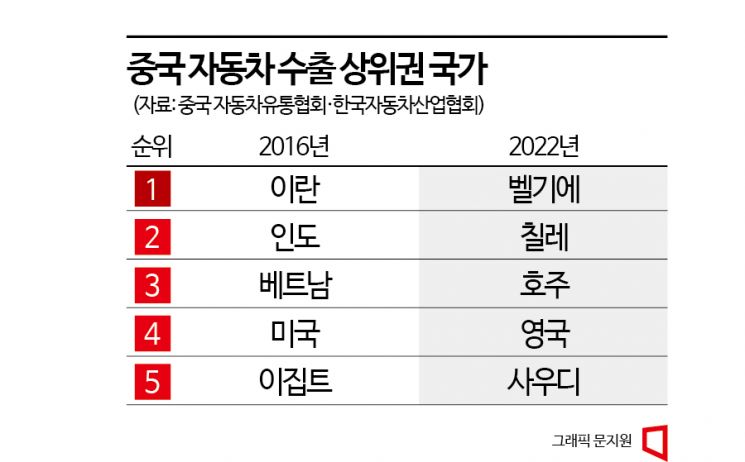
Not only the volume but also the quality of exports improved. Last year, China's new energy vehicle (electric vehicles, hybrid vehicles, hydrogen vehicles) exports accounted for 22% of total exports. As exports increased mainly in electric vehicles, the average export unit price also rose. In the past, exports were mainly to countries with low per capita income such as Iran, India, and Mexico. However, recently, exports to advanced countries like Belgium, Australia, and the United Kingdom have increased. BYD, which is fiercely competing with Tesla in the electric vehicle market, secured dedicated export ships as export volumes grew. BYD recently started selling in Japan, which is often considered a graveyard for foreign brands. Electric vehicle startups considered the Chinese version of Tesla, such as Nio, Xiaopeng, and Li Auto, are increasing sales in countries with rapid electric vehicle adoption like Norway and Denmark.
Tesla is at the core of China's rise as a strong electric vehicle exporter. Tesla sells vehicles made in its Chinese factory both locally and to Europe. The availability of China-made Teslas in the local market has boosted the competitiveness of local electric vehicle brands. Tesla's market entry pushed local brands to focus on quality improvement.
The Chinese government provided every possible support to attract Tesla's Shanghai factory. Construction of the Tesla Shanghai factory began in January 2019 and started operations by the end of that year, the shortest construction period ever for an electric vehicle factory. Local governments assigned officials to the construction site to assist with progress. It took only four days to secure the necessary water supply for the factory. Chinese state-owned banks provided subsidies and low-interest loans.
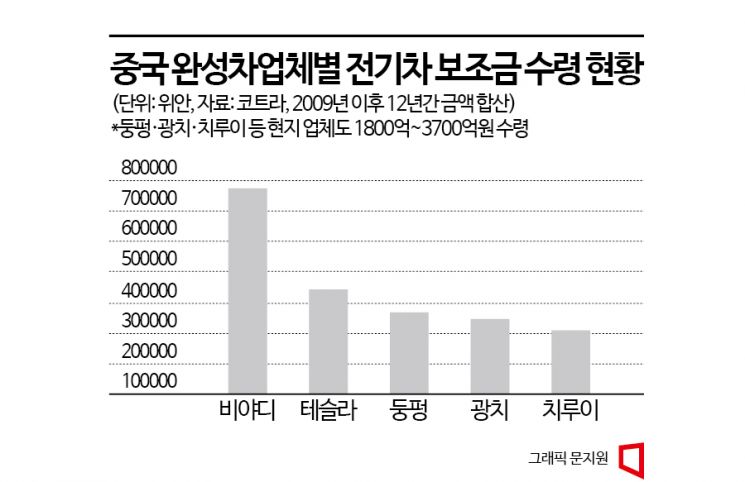
Tesla even changed China's foreign investment laws. Originally, China did not allow foreign capital to hold more than 50% of shares in Chinese automobile companies to protect domestic companies as latecomers. However, Tesla insisted on owning 100% of the Shanghai factory shares, citing intellectual property and brand protection. The Chinese government amended the law to accommodate Tesla's request. In the long run, they calculated that attracting foreign capital would benefit industrial development more than protecting domestic industries.
Recently, Tesla has been scouting new overseas factory locations. Countries including South Korea, Indonesia, Canada, and Mexico have entered the competition to attract Tesla. The Indonesian government promised full support, including tax reductions and nickel mining rights, a key mineral. President Yoon Suk-yeol also held a video meeting with Tesla CEO Elon Musk. However, South Korea has not yet offered specific incentives to attract investment.
Kang Nam-hoon, chairman of the Korea Automobile Manufacturers Association, emphasized, “To attract foreign-invested companies' electric vehicle production facilities and increase domestic companies' electric vehicle facility investments, comprehensive incentive policies must be established,” adding, “We need a strategy to strengthen the domestic production base and investment environment to enhance export competitiveness.”
© The Asia Business Daily(www.asiae.co.kr). All rights reserved.
![Clutching a Stolen Dior Bag, Saying "I Hate Being Poor but Real"... The Grotesque Con of a "Human Knockoff" [Slate]](https://cwcontent.asiae.co.kr/asiaresize/183/2026021902243444107_1771435474.jpg)
















