Sharing How to Auto-Post Blogs and Write Web Novels with Generative AI
Naver and Kakao Have No Generative AI Content Policies Yet
Experts Say "Generative AI Content Will Overflow... Impacting Portals Too"
[Asia Economy Reporter Yuri Choi] 'Automatically posting dozens of blog articles in 2 minutes with Chat GPT', 'How to monetize your blog using AI'.
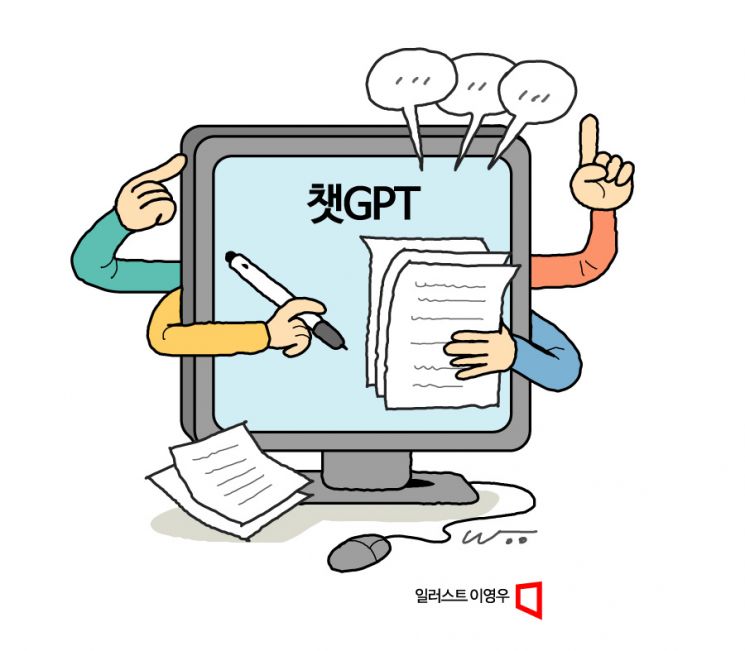
Methods of automatically generating content using generative artificial intelligence (AI) are spreading online. Generative AI, like Chat GPT, creates content such as text, images, and music by utilizing existing data. Just as it can quickly complete papers and reports with simple command inputs, AI is also being used for blog content. The portal industry is closely monitoring the situation as there are no specific guidelines for AI-generated content.
On the 2nd, methods for writing blog posts or web novels using Chat GPT are spreading on platforms like YouTube. Not only does it write text, but it is also easy to find ways to automate everything from creating blog categories to posting by using open application programming interfaces (APIs). This can increase blog visitors and generate advertising revenue.
Naver and Kakao do not have separate policies regarding AI-generated content. They impose sanctions if AI-generated content violates existing content operation policies such as obscenity or harmfulness. However, they do not consider AI-generated content itself problematic. The same applies to Naver Webtoon and Kakao Entertainment, which provide webtoon and web novel services. A Naver official said, "There are not many cases of abuse or plagiarism using AI," and added, "We may establish separate standards over time, but there are none yet."
In the United States, where plagiarism and copyright controversies surrounding generative AI are active, guidelines are being created one by one. Tapas, Kakao Entertainment’s North American webtoon and web novel platform, recently added a guideline banning AI-generated content. It prohibits including AI-created content in webtoon and web novel episodes, covers, and banners. They have instructed that already posted AI content must be deleted by the 6th. Getty Images, an image-sharing site, has also completely banned AI-generated images. Adobe, famous for Photoshop, allows the use of AI-generated images but has created guidelines requiring separate labeling.
The reason for creating guidelines is copyright issues. AI learns from existing works and creates content based on them, which can infringe on other creators’ copyrights in the process. Tapas stated, "AI-related copyright laws may change, but we follow the current interpretation of U.S. copyright law that only human-created content is protected by copyright."
Experts agree that preparations are needed for the flood of AI-generated content. As the amount of AI-generated content increases, content diversity may decrease and search quality may be affected. Copyright infringement and harmfulness of content can also become issues.
Professor Myungjoo Kim of the Department of Information Security at Seoul Women’s University pointed out, "AI is based on probability, so it shows the closest match to the user’s request," adding, "As AI-generated content increases, contents become similar and may exhibit bias."
Jae-kyung Bae, AI Product Leader at AI specialist company Upstage (former Kakao search engine leader), said, "Initially, low-quality automatically generated content will increase, but classification models will quickly emerge to enable detection," and predicted, "However, just as copyright issues have arisen with image generation models, similar problems may appear in text-based content."
© The Asia Business Daily(www.asiae.co.kr). All rights reserved.
![Clutching a Stolen Dior Bag, Saying "I Hate Being Poor but Real"... The Grotesque Con of a "Human Knockoff" [Slate]](https://cwcontent.asiae.co.kr/asiaresize/183/2026021902243444107_1771435474.jpg)
















