Government and Research Institutions Establish Simultaneous Export Strategies
Survey of Major Countries' 'Nuclear Power Administrative and Legal Systems'
"Will Serve as a Foundation for Export Policies"
[Asia Economy Reporter Baek Kyunghwan] The Yoon Seok-yeol administration's nuclear power export policy is gaining momentum. Centered on the Presidential Office, government ministries and affiliated organizations have begun reviewing the global market for nuclear power exports. The plan is to first examine the nuclear power policies and related legal frameworks of major countries, and then establish customized export strategies focusing on countries with fewer nuclear reactors.
On the 2nd, according to the Presidential Office and government ministries, internal discussions for nuclear power exports have started mainly among affiliated and research institutions that formulate and support the government's nuclear power policy. A senior government official said, "Organizations overseeing or supporting the government's international nuclear cooperation activities simultaneously began research for exports immediately after the president's overseas visits," adding, "Results will be shared with the Presidential Office, government ministries, and related agencies within a year at the longest or by the first half of the year at the shortest, to establish efficient policies."
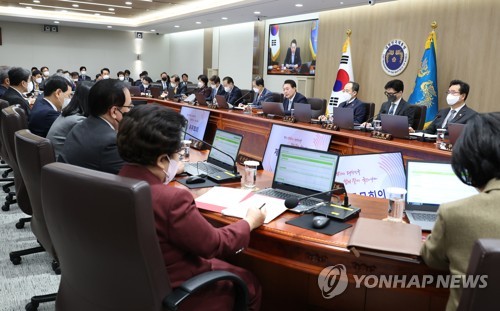
Earlier, on the 25th of last month, President Yoon stated at a Cabinet meeting held immediately after his overseas visit, "Based on the success of the Barakah nuclear power plant with our brotherly nation UAE, we will seek additional nuclear cooperation and joint entry into third countries," and added, "We will quickly restore the domestic nuclear power ecosystem, which is on the brink of collapse due to the phase-out nuclear policy, and lay the foundation for the nuclear industry to leap forward again." This reflects the administration's intention to accelerate the 'nuclear power export propulsion' policy, which has been emphasized since his inauguration, aiming to make the nuclear industry a pillar of exports.
Accordingly, internal preparations for nuclear power exports and investigations into the nuclear policies and legal frameworks of major countries have begun. The Korea Nuclear Cooperation Foundation, the only domestic specialized institution for nuclear cooperation, has started analyzing the administrative and legal systems of global nuclear-utilizing countries as well as understanding the status of related organizations. This reflects the current situation where, despite nuclear power export being selected as a major government national agenda, there is a lack of on-site investigation, limiting the establishment of export strategies. The foundation aims to respond swiftly during future bilateral and multilateral consultations.
Forty-five countries have been selected as survey targets. These include 11 countries in the Middle East and Africa (UAE, South Africa, T?rkiye, Armenia, Saudi Arabia, Jordan, Kenya, Egypt, Iran, Ethiopia, Zambia), including the UAE operating the Barakah nuclear power plant visited by President Yoon; 14 European countries (France, Netherlands, United Kingdom, Sweden, Finland, Germany, Switzerland, Poland, Romania, Slovakia, Slovenia, Bulgaria, Czech Republic, Hungary); 5 countries in the Americas (United States, Canada, Argentina, Mexico, Brazil); 11 Asian countries (China, Japan, Australia, India, Bangladesh, Indonesia, Philippines, Vietnam, Thailand, Mongolia, Pakistan); and 4 countries in Russia and the Commonwealth of Independent States (Russia, Kazakhstan, Ukraine, Uzbekistan).
The official said, "According to analyses by internal and external experts, thorough local market analysis must be conducted first to expand exports. Once the investigation is completed, it will serve as important basic data for the government's nuclear power export strategy."
Korea Hydro & Nuclear Power has begun identifying key materials for nuclear power exports. The main focus is to investigate companies by item necessary to maintain the nuclear power supply chain and set management directions. In this process, they plan to examine not only countries with nuclear export experience such as the United States and France but also countries with fewer nuclear reactors like Sweden.
Internally, they are also considering benchmarking the 'France-China Electricity Partnership Association (PFCE).' PFCE is a group formed by French nuclear companies aiming to enter the Chinese market. Korea Hydro & Nuclear Power plans to establish specialized consultative bodies tailored to each country to develop customized export strategies.
The Presidential Office also plans to actively support the government and institutions to accelerate entry into new markets beyond existing nuclear cooperation countries. Although countries like the UAE currently have no plans for additional nuclear power projects, it is judged that cooperation may be needed at any time depending on local power policies and other variables. A Presidential Office official said, "Since the share of nuclear power in the domestic strategic supply plan is expected to rise to the 30% range in 10 years, it is appropriate to treat nuclear power as a representative export product," adding, "Export strategies will be developed based on the results prepared through discussions among various institutions and related ministries."
© The Asia Business Daily(www.asiae.co.kr). All rights reserved.
![Clutching a Stolen Dior Bag, Saying "I Hate Being Poor but Real"... The Grotesque Con of a "Human Knockoff" [Slate]](https://cwcontent.asiae.co.kr/asiaresize/183/2026021902243444107_1771435474.jpg)
















