[Asia Economy New York=Special Correspondent Joselgina] "It is still too early to talk about victory in the war against inflation."
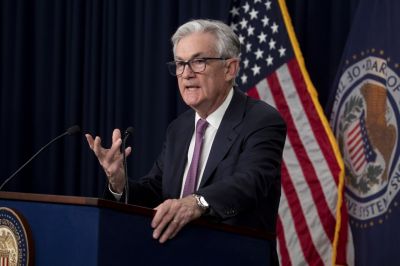
Jerome Powell, Chair of the Federal Reserve (Fed), stated at a press conference held immediately after the February Federal Open Market Committee (FOMC) regular meeting on the 1st (local time), "There will be no rate cuts this year," adding, "It may take longer than expected to bring down inflation." He said, "I believe several more rate hikes are needed for interest rates to reach an appropriately restrictive level," and "The labor market remains strong."
The Fed raised the federal funds rate by 0.25 percentage points at this FOMC meeting, from the previous 4.25-4.5% range to 4.5-4.75%. This follows the previous December FOMC meeting, where the rate hike pace was reduced to 0.5%, signaling a further slowdown in tightening.
At the press conference, Chair Powell explained the reason for the additional slowdown by saying, "Continued rate hikes are necessary," but "Because it takes time for monetary policy to impact inflation and other factors, we raised rates by 0.25 percentage points." A 0.25 percentage point increase is the usual rate hike size, marking a return from last year's high-intensity tightening mode to a more typical mode.
This rate hike size had already been anticipated by the market. Recent various indicators have confirmed signals that the cumulative effects of tightening are beginning to take hold. The December Personal Consumption Expenditures (PCE) price index released before the FOMC showed the smallest increase in 15 months, confirming easing inflationary pressures. Additionally, the Employment Cost Index (ECI) for Q4 of last year, released the day before, also fell short of market expectations, somewhat alleviating concerns about wage inflation pressures that the Fed has been monitoring.
Regarding this, Chair Powell evaluated, "The data over the past three months, including core PCE, is welcome news." He also referred to the recent situation as the "early stage of disinflation." However, he showed caution, saying, "More evidence is needed to be confident that we are moving toward price stability." By sector, while goods inflation has clearly eased, inflation in housing and services is expected to remain "sticky" for some time. Powell assessed long-term inflation as "declining and on a path consistent with the Fed's plans."
Despite Powell's remarks signaling additional rate hikes, the market viewed them as less hawkish (less inclined toward monetary tightening) than expected. When asked if there were any changes to the rate outlook presented in the December dot plot, Powell said, "The year-end rate forecast was 5.0-5.25%, and it will be updated in March," adding, "Data through March is very important."
He mentioned, "It is difficult to reverse course after under-tightening, but there is no intention of over-tightening either." On Wall Street, Powell's public expression of concern about over-tightening itself was seen as dovish. Contrary to Powell's statement that there will be no rate cuts this year, the market is placing more weight on cuts within the year.
When asked whether discussions had taken place about when to pause rate hikes, Powell replied, "The minutes will be released within three weeks," adding, "I won't say everything. We spent a lot of time discussing the future path." When asked if the committee discussed the path of resuming hikes after a pause, he said, "Now is not the time to pause. Additional hikes are needed," and "We will release new rate-related views in March." This refers to the dot plot released immediately after the March FOMC meeting.
Powell reiterated, "At each upcoming FOMC meeting, we will continue to make decisions based on new incoming data, inflation, and economic conditions."
As the market approached the close, the New York stock market extended its gains during Powell's press conference. The Nasdaq index, which is sensitive to interest rates and tech stocks, was trading more than 2% higher. In the New York bond market, the two-year Treasury yield, sensitive to monetary policy, fell to around 4.1%.
© The Asia Business Daily(www.asiae.co.kr). All rights reserved.
![Clutching a Stolen Dior Bag, Saying "I Hate Being Poor but Real"... The Grotesque Con of a "Human Knockoff" [Slate]](https://cwcontent.asiae.co.kr/asiaresize/183/2026021902243444107_1771435474.jpg)















