Yenji is PCR, Guangzhou is Rapid Antigen
Most Chinese excluded... No waiting after testing
[Asia Economy Beijing=Special Correspondent Kim Hyun-jung] As Chinese authorities have resumed COVID-19 testing for arrivals from Korea, it has been revealed that testing methods and criteria vary by region and airport. This is interpreted as a result of the Chinese side taking measures without properly preparing personnel or facilities in advance.
According to multiple sources on the 1st, Chinese epidemic prevention authorities began conducting COVID-19 tests on passengers aboard flights arriving from Korea starting that morning. However, since the central government did not provide specific guidelines and allowed each airport or region to take autonomous measures, testing standards and methods differ across locations.
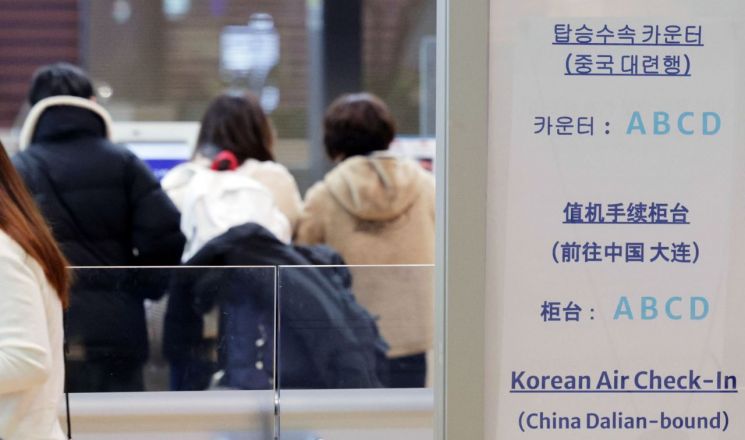
Passengers on Korean flights arriving in Yanji, Nanjing, Hangzhou, Weihai, and other cities on the first day of resumed testing were treated similarly. Passengers entering Yanji underwent PCR testing with all foreigners tested and only three Chinese nationals randomly selected. Weihai excluded Chinese nationals from testing, and Guangzhou conducted rapid antigen tests on foreigners only, confirming positive cases on-site rather than using PCR. According to the Korean Embassy and Consulate in China, no Koreans have been identified as positive and placed under quarantine.
As of this day, the Chinese regions receiving flights from Korea include Guangzhou, Nanjing, Yanji, Hangzhou, Weihai, Wuhan (for flights with Korean nationality), and Shanghai, Qingdao, Shenyang, Shenzhen (for flights with Chinese nationality), totaling 10 locations. There are 62 weekly flights operating between Korea and China.
An embassy official explained, "Each local government responds differently depending on their circumstances, and since the guidelines were suddenly issued, preparations were incomplete," adding, "The situation will only be properly understood after all 10 scheduled incoming flights on the 1st have arrived." The official also noted, "Even if positive cases are found, Chinese epidemic prevention authorities do not immediately share this information with the Korean Embassy."
According to previously notified information, even if test results are positive, individuals are to stay at home or in reserved hotels rather than separate quarantine facilities while monitoring their condition. On-site, it is explained that if PCR tests are positive, results will be communicated individually. One source said, "Due to a shortage of hospital facilities within China, even if positive cases are found, there will be no quarantine in Fangcang (方艙, group quarantine facilities) as in the past."
The situation on the ground is reported to be somewhat chaotic. Multiple arrivals shared on Chinese lifestyle information internet cafes that they experienced inconveniences such as having to wait over an hour inside the aircraft due to PCR testing.
© The Asia Business Daily(www.asiae.co.kr). All rights reserved.

















