[Asia Economy Reporter Hyunseok Yoo] Korean Air announced on the 1st that its operating profit last year reached 2.8836 trillion KRW, a 97% increase compared to the previous year. During the same period, sales and net profit were 13.4127 trillion KRW and 1.7796 trillion KRW, respectively, marking increases of 53% and 179%.
Last year's sales were the highest since 2018. Operating profit and net profit were also the highest since 2021 and 2017, respectively.
Fourth-quarter sales amounted to 3.6088 trillion KRW, a 28% increase compared to the same period last year. However, operating profit and net profit decreased by 26% and 21%, reaching 520.1 billion KRW and 354 billion KRW, respectively.
Passenger revenue recorded 1.6648 trillion KRW, a 339% increase compared to the same period last year, driven by demand expansion due to the lifting of visa-free entry to Japan and the peak season arrival for Southeast Asia and Oceania routes. This surpassed cargo revenue, marking the beginning of a full-scale recovery phase in passenger demand.
Cargo revenue was 1.5483 trillion KRW, a 29% decrease compared to the same period last year. This was due to a decline in demand caused by the global economic slowdown. The drop in market freight rates, influenced by the recovery of belly cargo supply from passenger aircraft, also had an impact.
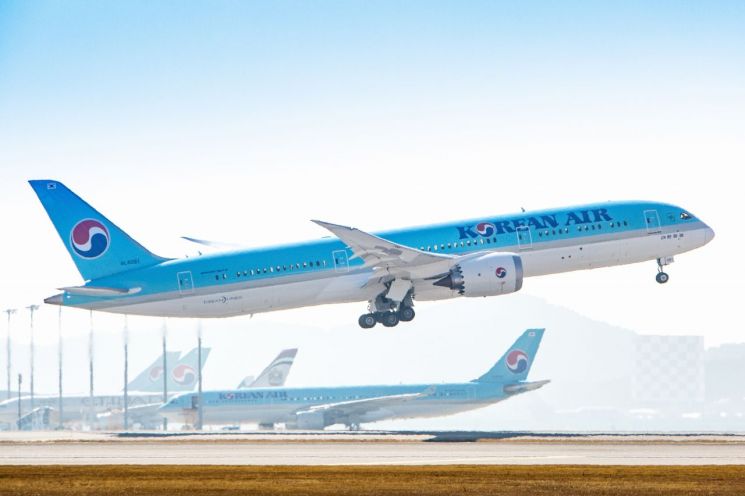
Korean Air expects a gradual increase in demand in the passenger business in the first quarter of this year. The company plans to promote early normalization of the passenger business through swift and flexible supply operations in response to market changes.
In the cargo business, a weak demand for air cargo is expected due to the global economic slowdown. Korean Air will secure demand by strengthening cooperation with major shippers and global forwarders. It also plans to respond to market volatility by enhancing customer service competitiveness through expanding certifications for special cargo air transport.
Korean Air explained, "Although an uncertain business environment is expected in 2023, we will prepare for changes in the business environment during the post-COVID major transition period and lay the foundation for mid- to long-term growth while preparing for the acquisition and integration of Asiana Airlines."
© The Asia Business Daily(www.asiae.co.kr). All rights reserved.
![Clutching a Stolen Dior Bag, Saying "I Hate Being Poor but Real"... The Grotesque Con of a "Human Knockoff" [Slate]](https://cwcontent.asiae.co.kr/asiaresize/183/2026021902243444107_1771435474.jpg)
















