Interview with National Intangible Cultural Heritage Gagok Holder Master Lee Dong-gyu
Performs at 'Ilsodang Music Concert' on the 2nd at Seoul Donhwamun Gugakdang
Descendant of a Prestigious Gugak Family for 5 Generations... 60 Years Dedicated to Gagok
Unlike Pansori with Han Emotionality, Gagok Features Clear Tones Sung in the Royal Court Poems
[Asia Economy Reporter Kim Heeyoon] “The green gauze window flickers, I thought my beloved had come, so I ran out, but it was not him. The moonlit night is full, and on the wet leaves of the paulownia tree, a phoenix comes to preen its feathers in the shadow. Fortunately, it is night; if it were daytime, I might have been ridiculed.”
Like the speaker in Hwang Jiwoo’s poem ‘While Waiting for You,’ who waits for you who was once you and will be you but never comes, the male vocal court song Byeoksachang (碧紗窓) sings a heartfelt longing for a promised beloved who has no set arrival time but will surely come. In Korean traditional music, the songs we often hear are folk songs (sokga) and pansori sung by common people. In the royal court, they sang jeongga, meaning refined and proper songs.
While pansori is characterized by a rough vocal tone embodying deep sorrow, jeongga features singing beautiful poetry with a clear and pure tone. Lee Donggyu (74), a master singer designated as a holder of the national intangible cultural asset ‘Gagok’ last year, was rehearsing repeatedly ahead of the ‘Ilsodang Music Concert’ held on the 2nd at Donhwamun Gugakdang in Seoul. Although he has devoted nearly 60 years solely to gagok, he smiled saying he still feels insufficient. He is a descendant of a prestigious family that has carried on the tradition of jeongga for five generations and is a leading figure in the Korean traditional music scene, actively performing on stage to promote our gagok. The following is a Q&A with this master singer.
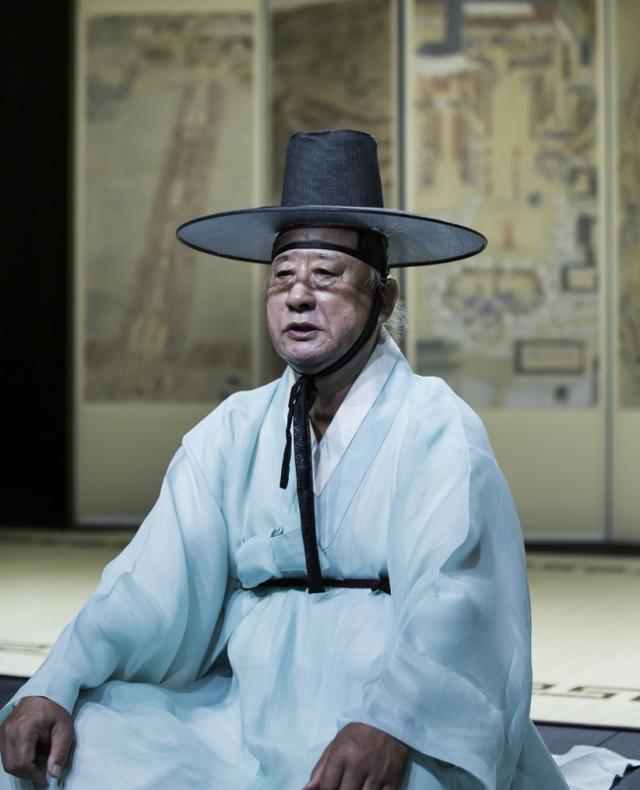 Master singer Lee Dong-gyu, who has been learning Gagok since around 1958 and has lived as a Gagok singer for over 60 years, was designated last year as the holder of the National Intangible Cultural Property No. 30 'Gagok'.
 [Photo by National Gugak Center]
▲When people hear ‘gagok,’ many usually think of Western art songs.
= It is unfortunate. During the Japanese colonial period, Western music was introduced, and the term became popularized, limiting information about gagok to Western-style art songs. Originally, gagok was a song sung in the Joseon Dynasty’s royal court and by the yangban class, encompassing lyrics and sijo poetry together, thus called jeongga. Gagok is a vocal music genre where sijo is sung to chamber music accompaniment composed of string and wind instruments. Currently, 26 male vocal gagok and 15 female vocal gagok pieces are preserved.
▲Having lived as a singer for over half a century, what do you find attractive about our gagok?
= It brings peace of mind?to both the singer and the listener. Gagok is a music form where vocal techniques are strictly restrained, so continuous training is necessary to produce a clear and pure sound. Just as the way of a noble person centers on self-cultivation (sushin, 修身), our singers must refine themselves and sing with a spirit of contentment and contemplation to produce a clean sound. For example, when singing lyrics about a clear sky with a single floating cloud, I feel my body gently rise, looking down on the world. The inspiration felt while floating seeps into the sound. Also, gagok embraces the aesthetics of slowness. The tempo is so slow that even a metronome used in Western music cannot keep the beat. Within this, literature and music achieve perfect harmony. I am attracted to these aspects, and I am proud that the world recognizes this artistic perfection, as evidenced by its inscription as a UNESCO Intangible Cultural Heritage.
▲You are a descendant of a prestigious family of Korean traditional music for five generations. What kind of music did your ancestors perform?
= My great-great-grandfather (Lee Insik) performed court aak (ancient court music) during King Heonjong’s reign and jeonak (court ensemble music) during King Gojong’s reign. My great-grandfather (Lee Wongeun) was a grand master and head musician of the aak department during King Gojong’s time. My grandfather (Lee Sugyeong) was a master geomungo player and head of the royal court aak department. My father (Lee Byungseong) was a renowned gagok master known as a rare voice that appears once in ten thousand. When I was young, my grandfather often made instruments at home, and from about age six, I sat beside him twisting silk threads, naturally growing up in an environment surrounded by instruments, sound, and music. In that atmosphere, I naturally entered the Gugak Training Institute (the predecessor of the National Gugak High School) in 1958, and since then, I have lived my life as a gugak singer.
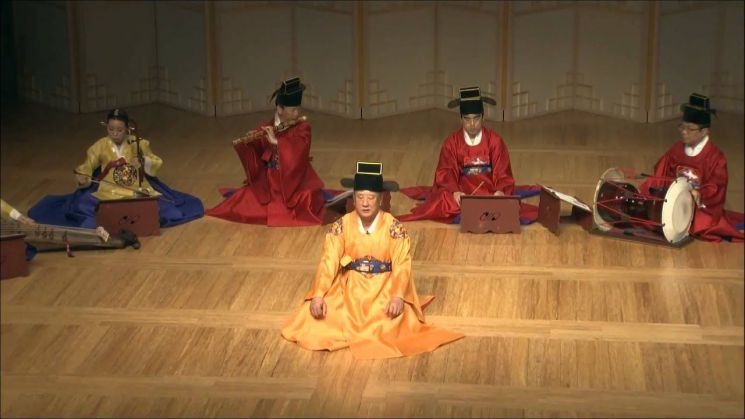 This master singer performing Gagok on the stage of the National Gugak Center is well known for singing with his natural voice without mechanical assistance during performances.
 [Photo by National Gugak Center]
▲Among the performances you have given, which stage was most memorable?
= Every stage was precious and meaningful. A memorable performance was during the 1973 tour in Germany, in Bonn. Before the performance, the MC, who happened to be Korean, asked who would perform gagok. When I said it was me and that I prepared ‘Unrak’ (Unlock), he said Europeans like slow songs and introduced his teacher, whom he had learned gagok from while in Korea. It turned out he was a student of my father. At his suggestion, I changed the piece to Taepyeongga and repeated the lyrics. When he introduced me on stage, applause erupted from the audience. That MC was composer Isang Yun, who was recognized overseas after studying classical music. It was a joyful moment to see someone well-versed in gagok gain international recognition.
▲Your upright posture while singing on stage is impressive. Is it not difficult?
= When I was young and newlywed, my wife said after watching my performance that she would never watch me perform again. She said I looked like a boxer getting hit in the ring, struggling to sing. (laughs) How can singing come out without effort? But actually, when I sing, I get immersed in the melody and forget the difficulty. There is no room for distracting thoughts. If this were difficult, I would have to give up being a singer. The power of immersion?that is the essence of the profession.
▲You mentioned that the Ilsodang Music Concert on the 2nd is a special performance. Could you tell us more?
= The small concert hall inside the National Gugak Center on Donhwamun-ro used to be called Ilsodang (佾韶堂). Now, at the Donhwamun Gugakdang where it stands, I will first sing and then have a talk show with the audience about my activities as a singer. I have lived my life as a gugak musician and singer, and although many things have happened, it saddens me that gagok is gradually being forgotten by the public. I want to stand on as many stages as possible while I can. Although I am a fifth-generation gugak musician, my children are pursuing other careers. It is difficult to make a living by singing. It was a regrettable but unavoidable decision. Instead, I take comfort in passing on good singing to my disciples. Since jeongga is the only genre that contains the refined elegance of our ancestors and the aesthetics of slowness, national-level interest and support are necessary to preserve this culture for a long time.
© The Asia Business Daily(www.asiae.co.kr). All rights reserved.


















