‘February Independence Activists’ Selected: Song Mong-gyu, An Chang-nam, and Kim Pil-sun
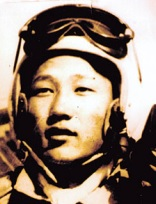
[Asia Economy Military Specialist Yang Nak-gyu] Lieutenant Choi Jong-seong of the Air Force (photo) was selected as the ‘February Hero of the Korean War,’ and Mr. Song Mong-gyu, An Chang-nam, and Kim Pil-soon were chosen as the ‘February Independence Activists.’
On the 31st, the Ministry of Patriots and Veterans Affairs announced that Lieutenant Choi Jong-seong, who distinguished himself in operations to cut off enemy supply routes and rear areas during the Korean War, was selected as the ‘February Hero of the Korean War.’
Lieutenant Choi was born in December 1931 in Geochang, Gyeongnam. He enlisted in June 1951 as part of the first class of Air Force pilot officer candidates, completed training in August 1952, was commissioned as a second lieutenant, and served as an F-51 fighter pilot with the Air Force’s 10th Fighter Squadron. On September 23 of that year, he flew his first mission to destroy enemy supply depots in Hyun-ri, Gapyeong, Gyeonggi Province, and Hoeyang, Gangwon Province. In October, he flew twice daily on the 16th, 20th, 25th, 27th, and 30th, cutting off key enemy supply routes in Gangwon’s Goseong and Wonsan areas and carrying out various combat missions. For these achievements, Lieutenant Choi was awarded the Eulji Military Merit Medal on October 24, 1952.
However, on November 2, while on a rear-area interdiction mission to the Anbyeon area south of Wonsan, Gangwon Province, he was attacked by a large number of enemy anti-aircraft guns on the ground and was killed in action. In honor of his service, the government posthumously promoted him one rank from second lieutenant to first lieutenant, and his remains were interred at the National Seoul National Cemetery on November 15, 1958.
Mr. Song Mong-gyu, cousin of poet Yun Dong-ju and selected as a ‘February Independence Activist,’ was born in 1917 in Yongjeong, China. He received national education at Myeongdong School and Eunjin Middle School and entered the student training center established by Baekbeom Kim Gu to accommodate young people entering the Chinese Central Military Academy. Despite the Japanese colonial government’s policy of eradicating the Korean language and promoting Japanese, he included Korean poems in the literary circle as a form of anti-Japanese resistance.
He was sentenced to two years in prison for violating the Public Security Preservation Act for criticizing Japan’s policy of eradicating the Korean language and promoting assimilation, and advocating for gaining international sympathy to lead the country’s independence. He was imprisoned in Fukuoka Prison and died in prison in March 1945 at the age of 28.
Mr. An Chang-nam was born in 1901 in Seoul. He dropped out of Huimun High School in 1919 and went to Japan to pursue his dream of becoming a pilot. In August 1920, he entered the Oguri (小栗) Flight School. He graduated in March 1921 and became the first Korean to obtain a third-class pilot license in August of the same year. His first domestic flight inspired Korean youth by showing that with interest in science and technology, anything is possible.
In 1926, with the help of Yeo Un-hyung, he participated in anti-Japanese armed struggle and served as the aviation commander of the Shanxi warlord Yan Xishan’s army. In 1928, together with Shin Deok-young and others, he organized the Korean Independence Corps, raised military funds, established a military academy, and trained Korean soldiers to plan domestic invasion operations. He dispatched Choi Yang-ok and others to Korea to lead fundraising for the independence movement and worked to enable Korean pilots in China to participate in aviation independence activities. However, in April 1930, he died at the age of 29 due to a mechanical failure during flight training at the Shanxi Flight School.
Mr. Kim Pil-soon was born in 1878 in Hwanghae Province. He entered Paejae Hakdang in 1886 and joined Jejungwon in 1899, where he served as interpreter and assistant to Oliver R. Avison and translated Western medical books used as teaching materials at Jejungwon, demonstrating excellent English skills. He graduated from Severance Hospital Medical School in its first class in 1908, received a medical practice license, and worked as a professor at his alma mater and a nursing training center, leading efforts to train future medical professionals. In August 1916, as Japanese surveillance and interference intensified, he left Tonghua County and moved to Qiqihar in Inner Mongolia, where he opened the Northern Je Clinic and engaged in medical activities while striving to build a base for the independence movement. He died in September 1919.
The Ministry of Patriots and Veterans Affairs stated that Mr. Song Mong-gyu, An Chang-nam, and Kim Pil-soon are independence patriots who devoted themselves and sacrificed their lives in the fields of literature, military, and medicine for the country’s independent sovereignty.
To honor their contributions, the government posthumously awarded Mr. Song Mong-gyu the Order of Merit for National Foundation, Patriotic Medal in 1995; Mr. An Chang-nam the Order of Merit for National Foundation, Patriotic Medal in 2001; and Mr. Kim Pil-soon the Order of Merit for National Foundation, Patriotic Medal in 1997.
© The Asia Business Daily(www.asiae.co.kr). All rights reserved.
![Clutching a Stolen Dior Bag, Saying "I Hate Being Poor but Real"... The Grotesque Con of a "Human Knockoff" [Slate]](https://cwcontent.asiae.co.kr/asiaresize/183/2026021902243444107_1771435474.jpg)














