North Korea Closes Borders Since COVID-19... Escape Routes Blocked
Empty Hanawon Called for "Budget Cuts and Consolidation"
Ministry of Unification: "Symbolic Role... Diversifying Functions Like Education"
[Asia Economy Reporter Jang Hee-jun] 'Hanawon,' responsible for the initial settlement of North Korean defectors, stands at a crossroads of change. Since North Korea closed its borders following COVID-19, the number of defectors has sharply declined, causing the admission rate to plummet to around 3%. There are calls for diversification of settlement support services for defectors to justify Hanawon’s existence amid discussions of possible consolidation.
According to the Ministry of Unification on the 31st, the cumulative number of defectors who have entered South Korea until last year totaled 32,882. In the past year alone, 67 people entered, including 35 men and 32 women. Quarterly figures show 11 in Q1, 8 in Q2, 23 in Q3, and 25 in Q4, indicating a gradual increase in arrivals in the second half of the year.
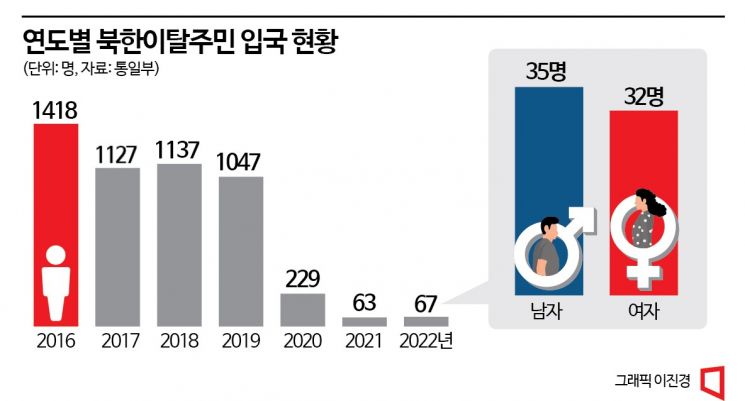
However, the Ministry of Unification says it is too early to declare a recovery. Compared to 63 in 2021, the number increased by 6.3% (4 people), but compared to 229 in 2020, it still represents a 72.4% (162 people) decrease. Considering that the number exceeded 1,000 annually until 2019, before the COVID-19 outbreak, after recording 1,418 in 2016, this is an extremely low figure.
The sharp decline in defectors entering the country is due to North Korea’s 'border closure.' The escape route usually begins through the North Korea-China border region, but since COVID-19, the path to China has been blocked. Although there have been signs of partial resumption of land trade between the two countries recently, internal controls still restrict movement between regions, making it difficult for residents to attempt escape.
Hanawon Emptied by Sharp Decline in Defectors"If This Continues, Consolidation"
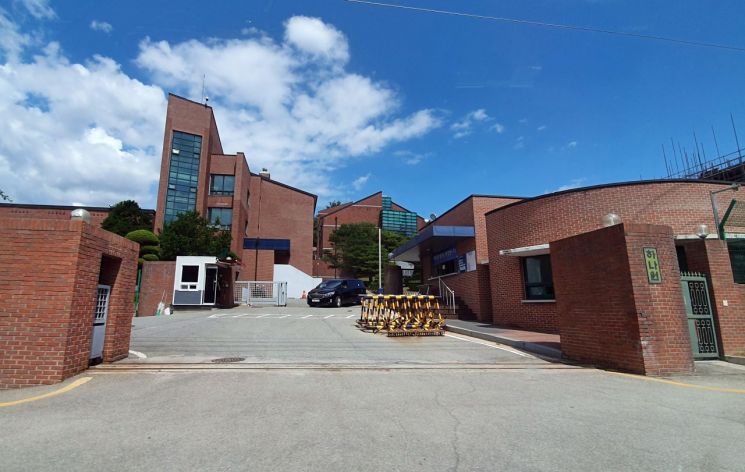
With the number of defectors entering the country decreasing for three years, Hanawon’s existence is also being questioned. While very few defectors enter the facility, a huge amount of manpower and budget is still invested in operating Hanawon. Voices, mainly from the Democratic Party of Korea, are calling for the consolidation of Hanawon’s main center and branch.
The official name of Hanawon is the 'North Korean Defectors Settlement Support Office,' established in July 1999 under the Ministry of Unification. Following the main center located in Anseong, Gyeonggi Province, the '30,000 Defectors Era' led to the opening of the second Hanawon (branch) in Hwacheon County, Gangwon Province, in September 2012. Women, who make up more than 70% of defectors, are admitted to the main center, while men are admitted to the branch.
Although the facilities have expanded, the problem is that there are no defectors to admit. The main center can accommodate up to 600 people, and the branch up to 500, but as of this month, the number of defectors admitted to Hanawon is only about 30. This includes basic, advanced, and academic supplementation classes, amounting to only about 3% of capacity.
The sharp drop in admissions has led to an imbalance in operational manpower. According to the Ministry of Unification’s 2021 fiscal year audit review report by the National Assembly Foreign Affairs and Unification Committee in August last year, more than 200 public officials and Ministry of Unification staff are assigned to Hanawon. In contrast, only 110 people completed Hanawon’s programs last year, including supplementary classes.
This 'the tail wagging the dog' situation has caused budget inefficiency. Last year, personnel expenses paid to 97 public officials at Hanawon amounted to 6.6 billion KRW. Particularly, the project expenses invested by the Ministry of Unification through education and training were about 10 million KRW per graduate until 2019, but after the decrease in defectors, it surged to 25 million KRW in 2020 and 170 million KRW in 2021 per graduate.
"A Symbol Showing the Will for Unification... Seeking Diversification of Settlement Support"
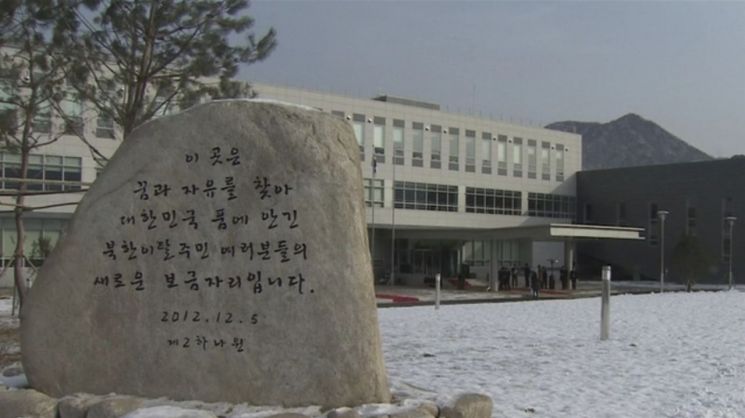
However, considering Hanawon’s history and symbolic meaning, some argue that discussing consolidation is unreasonable. Park Hyun-sun, a research fellow at Ewha Womans University Institute for Unification Studies, emphasized, "Hanawon was established with the purpose of supporting defectors to settle well in Korean society as 'the unification that came first.'"
Researcher Park advised, "If consolidation is discussed just because the number of admissions has decreased, it could be interpreted as giving up not only on defector settlement support but also on the will for unification. The issues of unification and defectors should not be judged solely by economic efficiency but should be addressed as national tasks from a mid- to long-term perspective."
The Ministry of Unification explained that it has reduced manpower by about 20% compared to the existing public official quota (97 people) to improve Hanawon’s operational efficiency and is conducting customized education in line with the reduced number of admissions. It also stated that discussing the integration of the main center and branch is inappropriate to comply with the UNHCR’s recommendation for 'separate accommodation by gender.'
In particular, the Ministry of Unification plans to seek diversification of Hanawon’s role as a key task this year. This is connected to reorganizing the support system centered on the needs of defectors following incidents such as solitary deaths among defectors. Specifically, the plan includes restructuring educational programs to focus on employment linkage and establishing a trauma treatment system for defectors through medical personnel stationed at Hanawon.
A Ministry of Unification official said, "Hanawon is a symbolic space that shows our government’s will for hospitality and inclusion toward defectors and all North Korean residents. Although the number of arrivals has decreased in recent years, Hanawon’s functions must be maintained. Efforts to strengthen settlement support in preparation for recovery in arrivals are also underway."
© The Asia Business Daily(www.asiae.co.kr). All rights reserved.



















