[Asia Economy Yeongnam Reporting Headquarters Reporter Kim Gwiyeol] Viruses have a significant impact on yield reduction when infected during the early growth stage, so it is necessary to reduce damage through early detection and control of viruses in the early growth stage of chili peppers.
Last year, chili pepper farmers in Yeongyang-gun, Gyeongbuk, experienced great difficulties due to viruses such as Tomato spotted wilt virus (TSWV) and Cucumber mosaic virus (CMV).
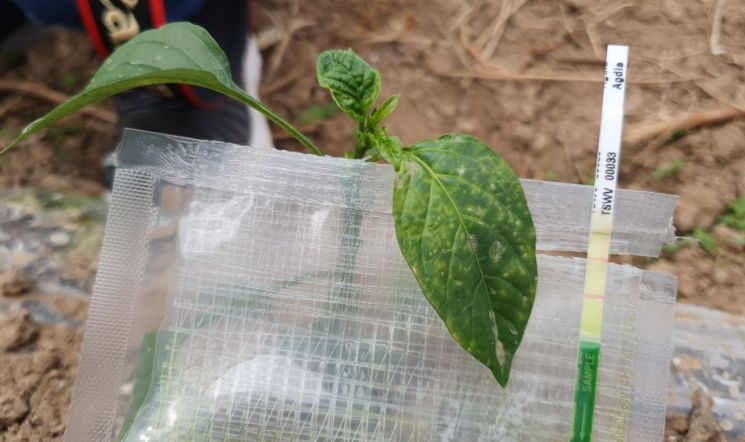
Most of the problematic viruses in chili peppers are transmitted by aphids or thrips, so to minimize damage from viral infections, it is important to monitor vector insects and remove weeds around greenhouses and main fields that serve as habitats for these vectors.
Since early growth infection greatly affects yield, prevention should be prioritized especially from the seedling stage.
When virus infection occurs, infected plants should be removed, and it is important to alternately spray 3 to 4 types of pesticides registered under the Pesticide Maximum Residue Limits (PLS) system with different modes of action at intervals of 7 to 10 days. Also, for farms that suffer repeated damage every year, cultivating resistant varieties is recommended.
The Yeongyang-gun Agricultural Technology Center always keeps virus diagnostic kits for rapid diagnosis, educates farmers on control methods through training, and is making efforts to control viruses by promoting chili pepper seminars in February.
At the beginning of the year during the New Year Farmers' Practical Education course, County Governor O Do-chang said, “Complete control of viral diseases is difficult and they cause great damage when they occur, so preventive management to control disease occurrence in advance is most important, and we will strive to provide timely control guidance through continuous monitoring.”
© The Asia Business Daily(www.asiae.co.kr). All rights reserved.
![Clutching a Stolen Dior Bag, Saying "I Hate Being Poor but Real"... The Grotesque Con of a "Human Knockoff" [Slate]](https://cwcontent.asiae.co.kr/asiaresize/183/2026021902243444107_1771435474.jpg)















