Reducing Dependence on Chinese Imports to Mitigate Risks
Sweden Discovers 1 Million Tons of Rare Earth Deposits
Bill Proposed to Shorten Mining and Distribution Periods
France Also to Start Domestic Lithium Mining
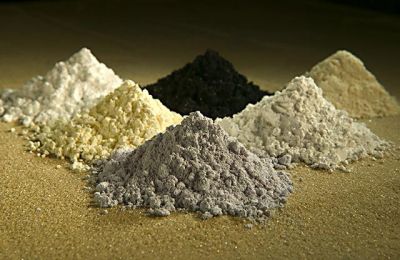 rare earth elements
[Asia Economy Reporter Lee Ji-eun] Europe and the United States are accelerating efforts to produce rare earth elements, the key raw materials for electric vehicle batteries, domestically. Since rare earth elements are directly linked to industrial competitiveness, the plan is to reduce dependence on Chinese minerals and escape supply chain risks.
According to Nihon Keizai on the 30th, at the beginning of this month, the largest rare earth element ore deposit in Europe was discovered in Sweden. Swedish mining company LKAB confirmed that the deposit contains over 1 million tons of rare earth oxides and stated that it is expected to take 10 to a maximum of 15 years for the minerals to go through the mining process and reach the market. Rare earth elements are non-ferrous metal minerals essential for manufacturing semiconductors and electric vehicle batteries, and stable supply of rare earths is crucial to maintaining industrial competitiveness.
Following LKAB's discovery of the rare earth deposit, the European Union (EU) Commission has initiated procedures to significantly shorten the mining and distribution period of rare earths. They plan to review the business permit process related to raw material mining necessary for electric vehicle manufacturing and propose related legislation by March. If the bill passes, the time it takes for minerals to reach the market is expected to be reduced to less than half of the current period.
France is also mining lithium, a core mineral of advanced industries known as "white oil," domestically. Lithium is used to produce cathode materials, which account for 40% of the production cost of electric vehicle batteries. French mineral company Imerys began mining in October and expects to produce a total of 34,000 tons of lithium by 2028. This amount is sufficient to produce 700,000 electric vehicles. Imerys had previously left the deposit untapped due to high mining costs, but with the rapid rise in lithium prices and secured profitability, they decided to proceed with mining.
Europe's direct mining of key minerals is because rare earth elements and lithium are strategic materials that determine the competitiveness of advanced industries. Until now, Europe has imported 98% of its rare earth elements from China, but recently, with the surge in demand in fields such as secondary batteries, voices calling for diversification of the supply chain have grown louder. Additionally, China restricted rare earth exports in 2010 amid a dispute with Japan over the Senkaku Islands, weaponizing rare earths, making it risky to rely solely on imports from China.
The United States is also supporting mining companies financially to reduce dependence on China for key minerals. Last year, the U.S. Department of Defense provided subsidies to Lynas, a global rare earth company headquartered in Australia. It also invested $35 million to develop rare mineral mining and processing facilities in California.
Nihon Keizai explained, "Countries are rushing to build supply chains capable of countering China," but added, "Although minerals can be mined, the refining process imposes a significant environmental burden, so it is expected to be difficult for environmentally regulated Western countries to re-enter rare earth production."
© The Asia Business Daily(www.asiae.co.kr). All rights reserved.
![Clutching a Stolen Dior Bag, Saying "I Hate Being Poor but Real"... The Grotesque Con of a "Human Knockoff" [Slate]](https://cwcontent.asiae.co.kr/asiaresize/183/2026021902243444107_1771435474.jpg)














