North Korea: "Priority Housing Allocation for Multi-Child Families"
North Korea's Birth Rate at 1.9... Policies Being Developed
North Korea has amended its housing law to prioritize housing allocation for families with multiple children in order to increase the birth rate. This appears to be a measure to address the low birthrate issue as the labor force continues to decline in a country that values labor.
On the 26th, Rodong Sinmun, the official newspaper of the Workers' Party of Korea, introduced the 'Housing Law' and explained, "According to the housing allocation principles, housing is given priority to heroes, war veterans, honored soldiers, discharged military officers, teachers, scientists, technicians, contributors, labor innovators, families with triplets, and families who have many children and raise them well."
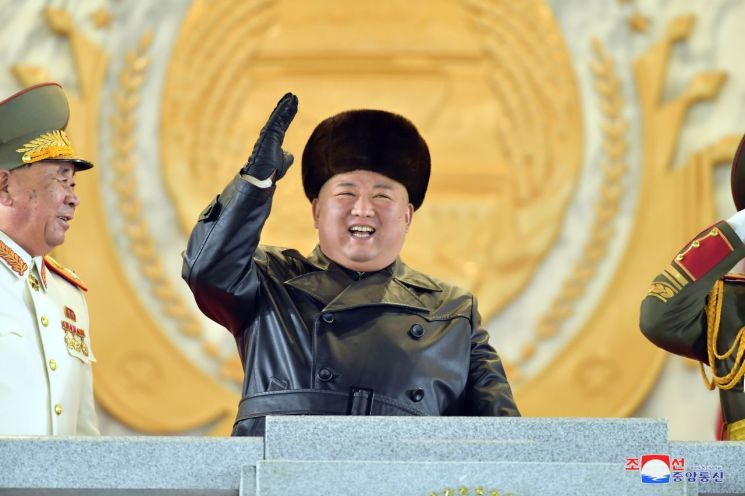 Kim Jong-un, Chairman of the State Affairs Commission of North Korea [Photo by Korean Central News Agency·Yonhap News]
In North Korea, the term 'housing' (salrimjip) refers collectively to apartments and single-story houses, and in principle, ownership and moving are not allowed. The 'Housing Law' regulates the principles related to housing construction, transfer, acquisition, registration, management, allocation, and use, and was enacted in January 2009. According to this law, housing must be supplied by the state unconditionally, but currently, North Korea does not have a sufficient supply of housing, so there are not many livable homes.
The Housing Law has been revised several times, but as of February 2020, the priority allocation targets were limited to "revolutionary fighters, revolutionary martyrs, patriotic martyrs, fallen soldiers, families of the killed, heroes, war veterans, honored soldiers, discharged military officers, teachers, scientists, technicians, contributors, and labor innovators." Housing has been preferentially allocated to those who have made contributions to party work.
However, with this recent amendment, 'families with triplets and multiple children' have been added as first priority.
North Korea Also Faces the Quagmire of Low Birthrates... Population Maintenance Impossible
 The 모습 of North Korean children enjoying the Seollal holiday. [Photo by Yonhap News, Chosun Central TV screen]
This decision is interpreted as North Korea's response to the low birthrate problem. According to the United Nations Population Fund (UNFPA)'s "World Population Status Report 2022," North Korea's total fertility rate is 1.9. This is significantly lower than the global total fertility rate of 2.4 and even below the 2.1 rate needed to maintain the population.
Considering that the global total fertility rate is 2.4, and especially that of the least developed countries is 3.8, North Korea's rate is quite low.
It is estimated that North Korea's population growth rate will be only 0.4% annually from 2020 to 2025.
Until the 1980s, North Korea implemented birth control policies, but during the 1990s, through the so-called "Arduous March," it has struggled with a shortage of the working-age population.
North Korea has a large proportion of labor-intensive industries such as agriculture, so a decrease in labor force directly impacts growth rates.
The aging phenomenon is also prominent. North Korea's total population is estimated at 26 million, with 10% of the population aged 65 or older.
This is not North Korea's first policy to address low birthrates. In February last year, it enacted the 'Childcare Law,' focusing on nutritional supply for children, and at the start of the new school year, it provided students with new uniforms, shoes, backpacks, and school supplies.
© The Asia Business Daily(www.asiae.co.kr). All rights reserved.