Traditional Snacks Like Tteok and Hangwa Popular Among MZ
Newtro Trend Spreads Due to Increased Demand for Convenience Foods
Most Important Purchase Factor Is 'Taste'
As the so-called 'Halmaennial (Halmeoni + Millennial)' trend, which seeks the tastes of the grandparent generation, has become established in the food industry, traditional snacks such as rice cakes (tteok) and Korean traditional sweets (hangwa) are gaining great popularity among younger generations. Unlike the relatively dull image of traditional snacks in the past, various types of old-fashioned snacks such as fusion tteok and topped hangwa are gaining attention, gradually increasing their presence in the dessert market.
According to the Ministry of Food and Drug Safety and others on the 30th, the production volume of tteok in 2021 was 430,000 tons, a 36% increase compared to the previous year (310,000 tons). Compared to the production volume of 230,000 tons in 2017, it increased by about 87%. The production value also increased every year, rising from 463.5 billion KRW in 2017 to 649.4 billion KRW in 2021, an increase of more than 40%. Hangwa production volume also increased by 25.8% in 2021 to 58,988 tons compared to 46,901 tons the previous year. The production value also grew by 5.7% to 81.8 billion KRW from 77.4 billion KRW the previous year.
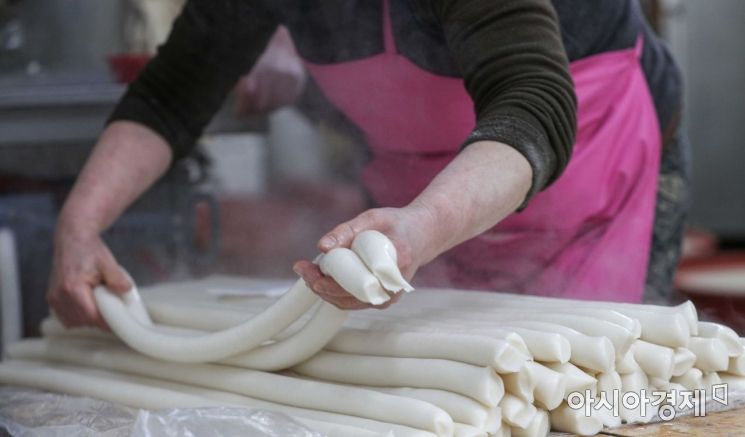
The prolonged COVID-19 pandemic has led to increased demand for convenience foods, which is a major factor behind the rapid growth of the tteok market. During this period, as interest in health grew, demand for processed foods made from easily digestible rice also became active. The 'Newtro' culture, which has been popular in the distribution industry for several years, has contributed to the perception of our traditional culture as stylish and sophisticated. The so-called 'Halmaennial' culture has spread, changing the perception of traditional snacks.
As consumer awareness changed, environments where traditional desserts can be experienced have been created, such as the popularity of fusion tteok like tiramisu tteok, fresh cream tteok, and castella tteok, as well as tteok cafes. In the case of yakgwa (a type of hangwa), it has become so popular that a new term 'yakketting (yakgwa + ticketing)' has been coined, especially centered around famous hangwa specialty stores. Originally, as the Western-style dessert market expanded, the tteok and hangwa markets were shrinking. Traditional neighborhood tteok shops decreased, and hangwa was often only sought on special occasions. The diversification of distribution structures and channels due to COVID-19 opened up long-distance sales routes, and government policies actively promoting rice consumption also had an impact.
Consumers cited 'taste' as the most important factor when purchasing tteok or hangwa. According to a survey conducted by the Korea Agro-Fisheries & Food Trade Corporation in November last year targeting 500 men and women aged 20 or older who purchased tteok or hangwa products within a year, 24.8% chose 'products with good taste' as the most important consideration when buying tteok and hangwa. This was followed by 'products with flavors liked by me and my family (18.4%)', 'products with domestic origin (10.6%)', and 'products with good raw ingredients such as rice, wheat, and beans (10%)'.
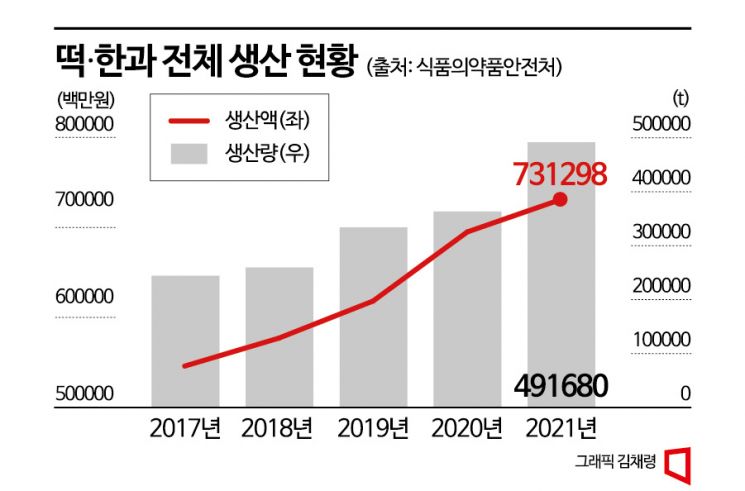
Food companies specializing in tteok manufacturing have recently been entering the market one after another. Originally, finished tteok products were generally produced by small and medium-sized enterprises, and tteok produced by food companies mainly consisted of processed tteok such as tteokguk (rice cake soup) tteok or tteokbokki (spicy rice cake) tteok, as well as refrigerated and frozen tteok. Department stores are also competing to attract famous fusion tteok shops or stores run by master craftsmen, targeting the changed consumer tastes.
Along with domestic popularity, export performance is also improving overseas due to the popularity of K-food. The total export value of tteok and hangwa in 2021 was 70 million USD, more than three times the 20 million USD recorded five years earlier in 2017. Although this figure includes snacks and bakery products made from rice or rice flour, the spicy Korean foods centered on tteokbokki are trending in the global market, and these items are growing rapidly every year.
An industry official said, "Snacks that were once enjoyed mainly by older generations are now perceived as new by younger people, becoming trendy snacks," adding, "Since they appeal to a wide range of age groups from middle-aged and older to the MZ generation (Millennials + Generation Z), the popularity of traditional snacks is expected to continue for the time being."
© The Asia Business Daily(www.asiae.co.kr). All rights reserved.
![Clutching a Stolen Dior Bag, Saying "I Hate Being Poor but Real"... The Grotesque Con of a "Human Knockoff" [Slate]](https://cwcontent.asiae.co.kr/asiaresize/183/2026021902243444107_1771435474.jpg)

















