Lee Suseok, Appears on KBS Sunday Diagnosis Live
Mentions Providing Vouchers to Socially Vulnerable Groups
"Nuclear Power Superior in Economics, Energy Security, and Carbon Neutrality"
[Asia Economy Reporter Ki-min Lee] Lee Gwan-seop, Senior Secretary for National Policy Planning at the Presidential Office, pointed out on the 29th that the previous Moon Jae-in administration failed to timely reflect the rise in energy prices in heating costs despite the sharp increase in heating expenses.
He also presented the analysis that, since Korea lacks natural resources to ease the prices of fossil energies such as oil and gas, strengthening nuclear power generation is currently the best option.
Appearing on KBS Sunday Diagnosis Live that morning, Lee said, "Prices ultimately serve as signals for economic activities, allowing people to respond accordingly, but I think the failure to provide these price signals in a timely manner was a major mistake."
Regarding the increase in heating costs, Lee first expressed, "I feel deeply sorry," and explained the background, saying, "Energy prices have risen globally, so it was inevitable to reflect that, and gas usage doubled last December due to the extreme cold."
He continued, "Domestic prices need to be adjusted in line with rising international prices. That way, households and businesses can prepare, and the government can devise various support measures, but these were not reflected promptly and were continuously delayed," criticizing the delay.
On the impact and countermeasures related to the rise in energy prices, he said, "The effect on low-income groups, socially vulnerable groups, or social welfare facilities is quite significant," and emphasized, "The government must continue to strengthen support, such as providing vouchers or reducing gas bills."
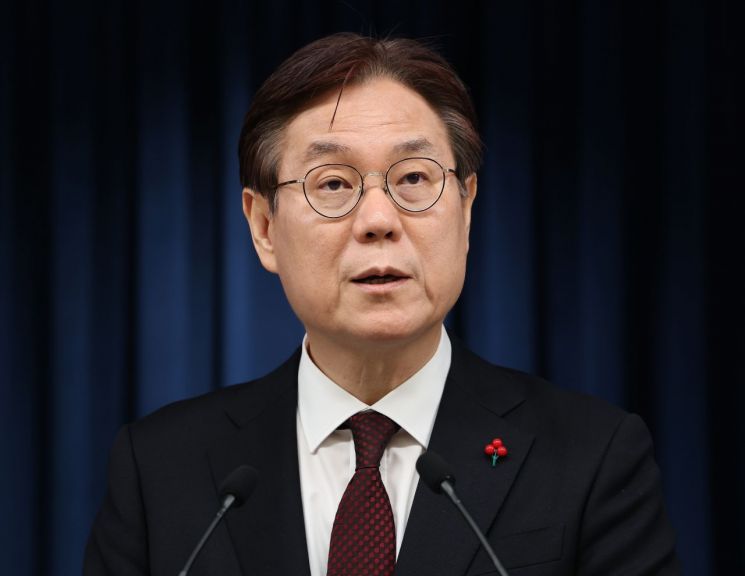
Lee stressed that Korea must strengthen nuclear power since it lacks natural resources. He emphasized, "Compared to fossil fuels, uranium has very low price volatility and accounts for a small portion of fuel costs, so nuclear power is economically superior. It is extremely important from the perspective of energy security."
Regarding nuclear power safety, he expressed confidence, saying, "Since Korea introduced nuclear power in the 1980s, it has continuously constructed and operated nuclear plants for over 40 years, and there have been no serious accidents so far."
Meanwhile, on the economic diplomacy achievements of President Yoon Seok-yeol’s visits to the United Arab Emirates (UAE) and Switzerland, Lee conveyed, "At Davos, I spoke with CEOs of leading global companies, and they fundamentally perceive Korea as a very business-friendly country."
Referring to President Yoon’s remarks emphasizing global standards in systems to promote foreign companies’ domestic investment, he said, "For example, there are parts in the financial sector that do not meet global standards, and also in the medical sector," adding, "What foreigners especially worry about is the labor sector."
In response to the question, "Isn’t it difficult to follow a 20% reduction like American big tech companies?" he explained, "Since each country is different, there are clearly parts that cannot accept free layoffs, but it is possible to make working hours more flexible, resolve the dual structure of the labor market, and establish labor-management relations based on laws and principles."
© The Asia Business Daily(www.asiae.co.kr). All rights reserved.
![Clutching a Stolen Dior Bag, Saying "I Hate Being Poor but Real"... The Grotesque Con of a "Human Knockoff" [Slate]](https://cwcontent.asiae.co.kr/asiaresize/183/2026021902243444107_1771435474.jpg)















