[Asia Economy Reporter Kim Daehyun] The Nuclear Safety and Security Commission's decision to permit the construction of a spent nuclear fuel storage facility on the site of the Wolseong Nuclear Power Plant has faced opposition from anti-nuclear groups, who filed an administrative lawsuit but lost again in the second trial.
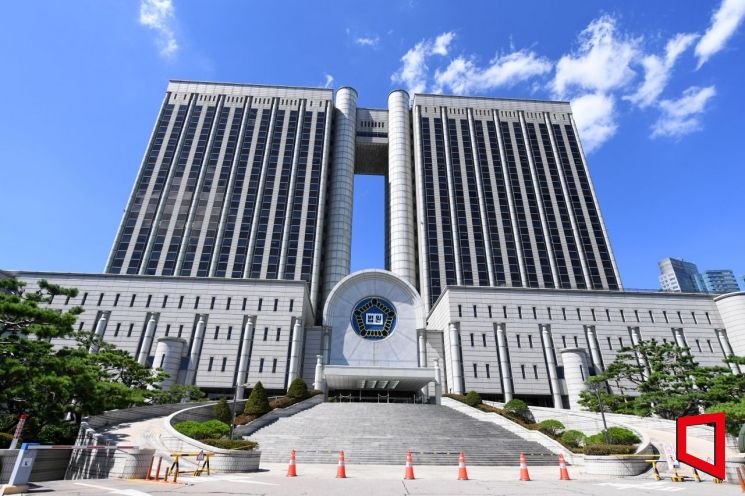
According to the legal community on the 26th, the Seoul High Court Administrative Division 10 (Presiding Judges Seong Suje, Yang Jinsu, Ha Tae-han) ruled against the plaintiffs, over 830 members of groups including the Anti-Nuclear Gyeongju Citizens' Joint Action, in the appeal trial of the lawsuit seeking nullification of the approval for operational changes to the spent nuclear fuel storage facilities at Wolseong Units 1 to 4, just as in the first trial.
The appellate court stated, "Since spent nuclear fuel has the potential for recycling or reprocessing, it should only be considered 'radioactive waste' if a decision to dispose of it has been made," adding, "Nuclear fuel for which no disposal decision has been made does not qualify as radioactive waste."
Furthermore, the court said, "If existing temporary storage facilities or newly approved storage facilities are not considered 'nuclear fuel material handling or storage facilities,' it would lead to an unreasonable conclusion that there is no legal basis to install and operate facilities to store nuclear fuel materials used as reactor fuel and not yet subject to disposal decisions."
Previously, civic groups and residents near the Wolseong Nuclear Power Plant filed an administrative lawsuit in 2020 seeking cancellation of the Nuclear Safety and Security Commission's approval for the construction of spent nuclear fuel storage facilities at Wolseong Units 1 to 4. At that time, Korea Hydro & Nuclear Power applied for additional construction as the capacity of existing temporary storage facilities reached saturation, and the Nuclear Safety and Security Commission approved operational changes to build spent nuclear fuel storage facilities on the Wolseong site with six out of eight members in favor.
The civic groups argued, "Spent nuclear fuel is impossible to reprocess and is effectively high-level radioactive waste, and the construction of facilities to store it is restricted by relevant laws. The approval treating it as a 'nuclear fuel material handling or storage facility' and permitting construction is invalid."
The first trial also rejected the residents' claims, reasoning that since there was no 'disposal decision' by authorities, it is not radioactive waste. It also stated, "(The facility in question) is a temporary facility for storing spent nuclear fuel, so it cannot be considered a 'spent nuclear fuel-related facility' under Article 18 of the Act on the Promotion of the Location of Radioactive Waste Disposal Facilities."
The first trial court additionally mentioned that research on recycling spent nuclear fuel using 'pyroprocessing' technology is underway under the new Korea-US nuclear cooperation agreement that came into effect in November 2015. Pyroprocessing is a technology that separates recyclable nuclear fuel and waste from spent nuclear fuel for reuse.
© The Asia Business Daily(www.asiae.co.kr). All rights reserved.

















