"An Important Site in the Study of Ceramic Industry in the Late Joseon Period"
Our traditional kiln called 'Mungyeong Mangdaengi Sagiyo' will be elevated to a national folk cultural asset. The Cultural Heritage Administration announced on the 26th that the name will be changed to 'Mungyeong Gwannam-ri Mangdaengi Kiln and Associated Facilities' and the designation will be finalized after review by the Cultural Heritage Committee. It is a peak-shaped kiln divided into several compartments inside. Each compartment has holes at the bottom, allowing the heat to spread throughout the kiln. The Cultural Heritage Administration evaluated it as "an important site for the study of ceramics in the late Joseon period." Ceramics refers to the industry of firing clay to make pottery, bricks, tiles, and so on.
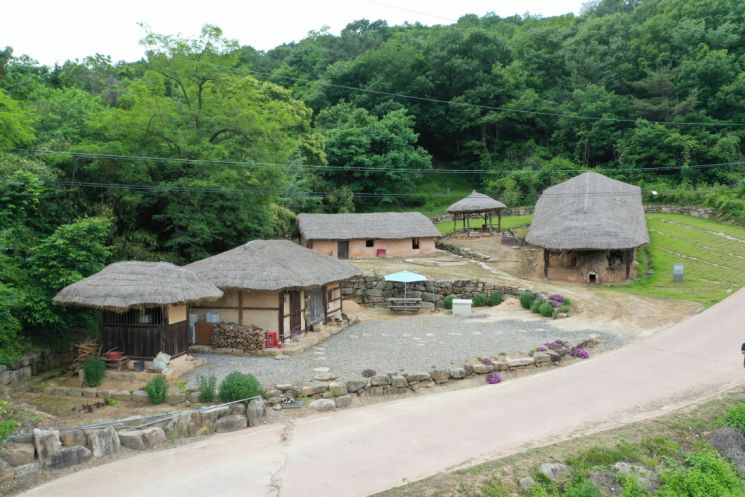
The Mungyeong Mangdaengi Sagiyo was built in 1863 by stacking the ceiling part in an arch shape using Mangdaengi. Mangdaengi is a clay lump shaped like a radish with a narrow bottom. The Cultural Heritage Administration also judged that the associated facilities have abundant value as folk research materials. These include a workshop for shaping and drying vessels, a stepping mill for grinding raw materials, a pit called ttangdumong and a container called gwaeng for refining sandy clay, a millstone powered by horses or oxen for pounding grains, and a folk house where potters lived. Ttangdumong is a pit dug into the ground to settle the sediment of the clay used for making pottery. Gwaeng is a container used in pottery-making places to hold clay.
The Cultural Heritage Administration stated, "Descendants of families such as Kim Jang-su, Kim Jeong-ok, Kim Young-sik, and Kim Seon-sik have continued the lineage of pottery production in the Mungyeong area for eight generations," adding, "The historical value is also high in that the tradition of a traditional pottery family has been maintained." Kim Jeong-ok is a national intangible cultural asset pottery master, and Kim Young-sik and Kim Seon-sik are Gyeongbuk intangible cultural asset pottery masters.
© The Asia Business Daily(www.asiae.co.kr). All rights reserved.
![Clutching a Stolen Dior Bag, Saying "I Hate Being Poor but Real"... The Grotesque Con of a "Human Knockoff" [Slate]](https://cwcontent.asiae.co.kr/asiaresize/183/2026021902243444107_1771435474.jpg)
















