JCS Reports to National Defense Committee on Wartime Readiness Inspection
"Situation Transmitted by Phone Despite High-Speed Situation Transmission System"
No Mention of Accountability or Disciplinary Actions... Criticism of 'Ineffective Inspection'
[Asia Economy Military Specialist Reporter Yang Nak-gyu, Reporter Jang Hee-jun] The military authorities reported to the National Assembly the results of the 'combat readiness inspection' that acknowledged 'overall deficiencies' in the response to North Korean drones at the end of last year. However, they did not mention the specific scope of disciplinary actions, leading to criticism that the inspection was 'ineffective.'
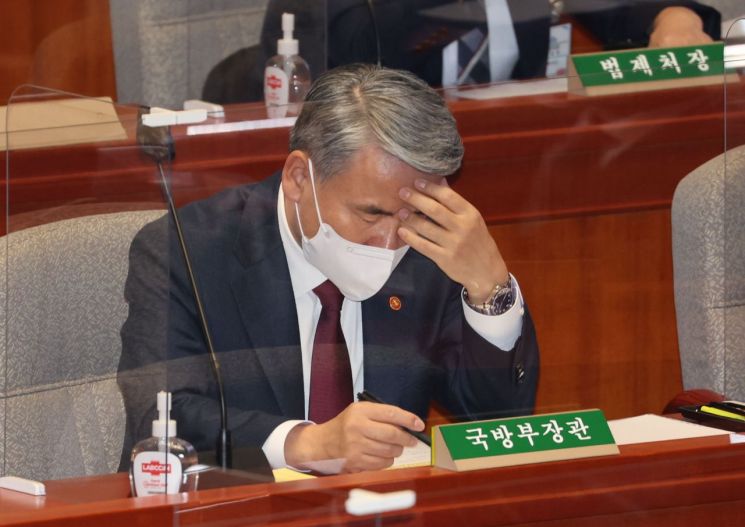
On the morning of the 26th, the Ministry of National Defense and the Joint Chiefs of Staff reported the results of an analysis of the overall situation, including the military's operational execution, situation dissemination, force utilization, and training during the airspace intrusion by North Korean drones, at the National Defense Committee plenary session of the National Assembly. Attending the meeting, held one month after the incident, were Defense Minister Lee Jong-seop, Joint Chiefs Chairman Kim Seung-gyeom, and Joint Chiefs Operations Headquarters Chief Kang Shin-cheol, among other military leaders.
Operations, Training, Force Utilization... Military Admits 'Overall Inadequacy'
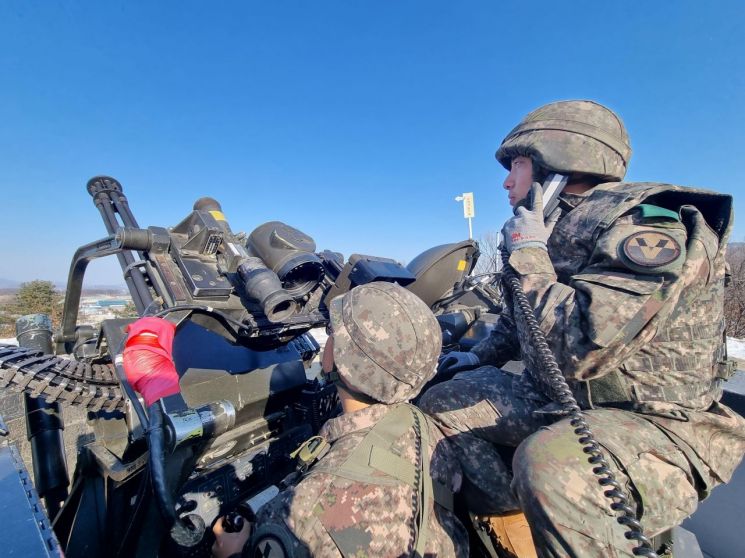 JCS conducts joint air defense exercise targeting unmanned aerial vehicles
 [Image source=Yonhap News]
The Joint Chiefs revealed through this inspection that the threat perception of North Korean drones was insufficient compared to nuclear and missile threats, and that the current drone operation system, 'Durumi,' is ineffective against small drones. Considering the speed and other characteristics of North Korean drones, it is necessary to simultaneously deploy surveillance and strike assets comprehensively, but the Durumi system limits such responses, according to the Joint Chiefs' combat readiness inspection office.
The report also included circumstances where situation sharing was not timely. During operations, the intrusion situation of the North Korean drone was not quickly relayed from the 1st Corps to the Ground Operations Command and the Capital Defense Command, causing a lengthy time for situation assessment.
Previously, it was revealed that the 1st Corps did not activate the 'High-Speed Situation Transmission System,' which is primarily used for operational dissemination, when transmitting the situation to the Ground Operations Command. According to the inspection results, the situation was not shared via the air defense transmission network 'High-Speed Command Post' or the information transmission system 'Military Integrated Information Processing System (MIM),' and was only communicated via landline telephone at 11 a.m. that day. The Capital Defense Command was not even connected to the air defense network and was connected belatedly earlier this month.
Relying mostly on equipment operators for initial situation assessment due to technical limitations was also problematic. The delay in situation transmission and failure to promptly judge the Durumi activation conditions resulted in about a one-and-a-half-hour delay from evaluating the drone as an 'anomalous track' to issuing the alert.
Such inadequate responses were attributed to a lack of 'practical air defense training' under the control of the Joint Chiefs. For example, in training, a 500MD helicopter, which is larger than small drones, was used as a simulated enemy aircraft, creating excessive differences. Additionally, cooperation between the Air Force and aviation units during training with the Ground Operations Command and corps was not smooth, resulting in a lack of joint training opportunities, the Joint Chiefs diagnosed.
"Realistic Difficulties Too"... Proposals Including Establishment of Drone Command
While listing these problems, the Joint Chiefs also mentioned realistic constraints. Due to thousands of daily radar tracks from civilian aircraft, flocks of birds, and drones, there were practical limits to response.
They also lamented that with current military equipment, timely detection is limited, and considering range and civilian damage, striking with short-range air defense weapons is difficult. Many small drones fly beyond the range of Vulcan and Biho (combined) systems, and when conducting drone strike operations with air defense weapons, flight suspension requests must be made around airports.
Based on these combat readiness inspection results, the military proposed alternatives such as establishing an operational system suitable for small drones, conducting practical joint air defense training quarterly, and adjusting and deploying response forces including local air defense radars, integrated anti-drone systems, mobile drone detection jamming systems, new anti-aircraft guns, and aerial strike forces.
Additionally, they reported plans to promptly reinforce non-physical strike systems linked with detection systems in contact areas, enhance soft-kill capabilities in air power, and establish a Drone Command.
Earlier, following President Yoon Seok-yeol's directive to establish a drone unit in response to the North Korean drone incident, the military announced plans to establish a joint drone command early, performing multipurpose missions such as surveillance, reconnaissance, and electronic warfare. If the drone unit is organized as a command, it is expected to include forces from the Army, Navy, Air Force, and Marine Corps.
Only Previously Known Issues Listed... No Disciplinary Plans Included
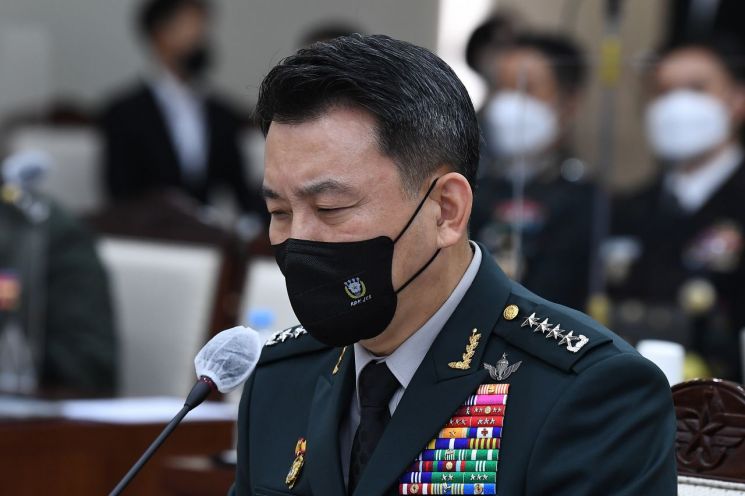
However, the report only listed previously revealed issues and did not mention specific disciplinary targets or procedures, leading to expectations of intensified criticism that the inspection was 'ineffective.' Similar problems were pointed out in a preliminary report the day before.
Opposition lawmakers are particularly suspicious about the military not reporting the time when the North Korean drone crossed the Military Demarcation Line (MDL) while returning to the North. Regarding the 36 minutes between Joint Chiefs Chairman Kim Seung-gyeom recognizing the drone's airspace intrusion at '11:36 a.m.' and reporting to President Yoon at '12:12 p.m.,' there are criticisms that the military leadership may have conducted a 'belated operation' to cover up after the drone crossed the MDL.
The issues pointed out in this inspection mainly concern the responses of the 1st Corps, Capital Defense Command, and Air Force Operations Command. If disciplinary actions are pursued, the commanders of the 1st Corps, Capital Defense Command, and Air Force Operations Command are expected to be primary targets. There is also speculation that the Ground Operations Command commander could be affected.
It is reported that the National Defense Committee concluded that the 1st Corps commander and others among senior generals bear command responsibility, but the military is cautious about disciplining commanders. They argue that disciplining commanders could immediately destabilize the military command system and ultimately play into North Korea's intentions.
However, the Joint Chiefs have reported disciplinary proposals to the Ministry of National Defense, and the decision on disciplinary actions is expected after review at the ministry level. A military official explained, "The combat readiness inspection has not yet been fully completed when the report was made to the National Assembly," adding, "It is not the stage to mention disciplinary targets."
© The Asia Business Daily(www.asiae.co.kr). All rights reserved.
![Clutching a Stolen Dior Bag, Saying "I Hate Being Poor but Real"... The Grotesque Con of a "Human Knockoff" [Slate]](https://cwcontent.asiae.co.kr/asiaresize/183/2026021902243444107_1771435474.jpg)


















