Former BOJ Chief Economist
Prospects for Monetary Policy Changes After New Governor's Inauguration
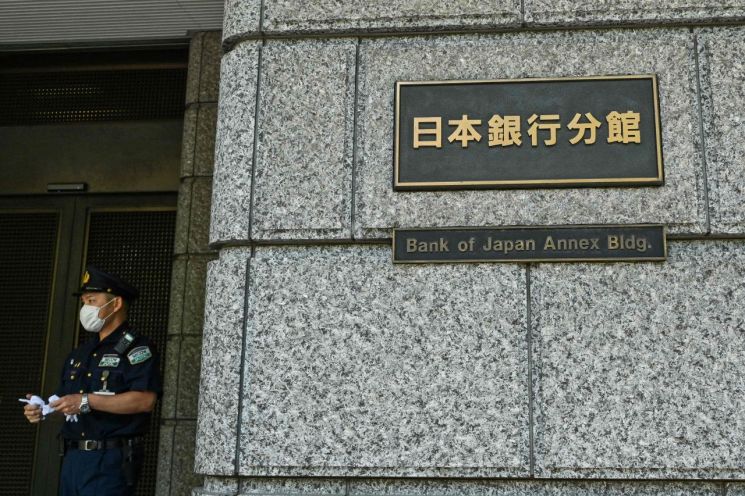
[Asia Economy Reporter Lee Ji-eun] The Bank of Japan (BOJ) announced at its monetary policy meeting held on the 18th that it would maintain its accommodative monetary policy, but speculation about the possibility of tightening has arisen again. There are forecasts that if a new BOJ governor takes office, some parts of the monetary policy may be gradually phased out. On the 25th, former BOJ chief economist Maeda Eiji stated in an interview with Bloomberg, "A moderate inflation trend is taking root in the Japanese economy."
He predicted that after Kuroda Haruhiko's term ends in April, the BOJ would make changes to its monetary policy within six months. Specifically, he forecasted that the yield curve control (YCC) policy, which involves unlimited purchases of government bonds to maintain long-term interest rates at a certain level, and the negative interest rate policy would be abolished within six months.
He explained that Japan's recent rapid inflation means the BOJ no longer needs to take extraordinary measures like the YCC policy. Former economist Maeda said, "Japanese inflation can steadily maintain a growth rate of 1 to 1.5% going forward, reducing the need for special financial measures," adding, "The YCC policy causes significant side effects such as large exchange rate fluctuations and market dysfunction, so measures including negative interest rates should be phased out at a certain point."
However, he predicted that even if special monetary measures including YCC are abolished, the accommodative monetary policy stance will continue for the time being. He said, "The BOJ will continue monetary easing and a low interest rate stance aiming to sustain 2% inflation," adding, "Only extraordinary policies (such as the YCC policy) that have a significant impact on the market are expected to be abolished."
Meanwhile, earlier, Governor Kuroda reiterated his intention to maintain the existing monetary policy at the monetary policy meeting on the 18th. Regarding the YCC policy, he said, "I do not think there is any special risk, and the current monetary policy is sustainable," countering market interpretations that pointed to the policy's limitations.
© The Asia Business Daily(www.asiae.co.kr). All rights reserved.
![Clutching a Stolen Dior Bag, Saying "I Hate Being Poor but Real"... The Grotesque Con of a "Human Knockoff" [Slate]](https://cwcontent.asiae.co.kr/asiaresize/183/2026021902243444107_1771435474.jpg)















