[Asia Economy (Daejeon) Reporter Jeong Il-woong] A large number of counterfeit Korean beauty medical products distributed in China were seized during local crackdowns. As the Korean Wave has increased the popularity of Korean beauty products in China, there is an analysis that intellectual property rights infringement has recently spread not only to cosmetics but also to medical products.
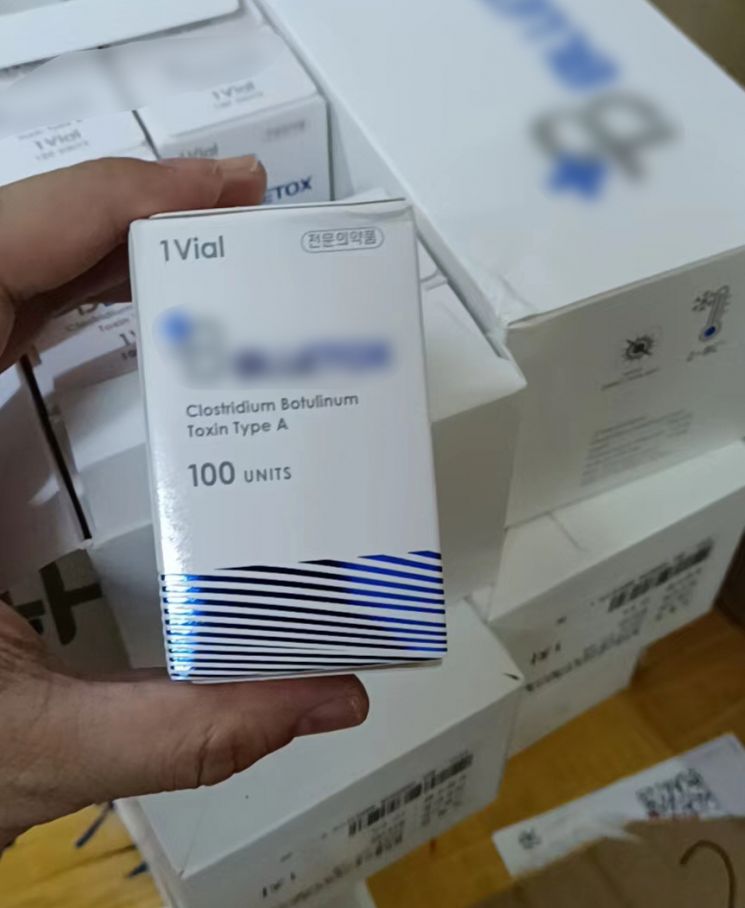 Counterfeit Korean beauty medical products seized in China. Provided by the Korean Intellectual Property Office
On the 24th, the Korean Intellectual Property Office (KIPO) and the Korea Trade-Investment Promotion Agency (KOTRA) announced that they recently seized 3,164 counterfeit Korean beauty medical products such as fillers and botulinum toxin sold in China.
This was the result of an investigation after detecting circumstances where Chinese-made fillers, botulinum toxin, and other medical products were disguised and distributed as Korean-made products.
From July to October last year, KIPO conducted an intellectual property rights infringement survey targeting 36 wholesalers in 22 cities including Beijing, Shanghai, Guangzhou, and Nanjing, 166 skin care shops, hospitals, and clinics, as well as 12 major online platforms, in cooperation with KOTRA’s Beijing Overseas Intellectual Property Center (IP-DESK) and the Korean Embassy in China.
As a result, six wholesalers suspected of selling counterfeit Korean beauty medical products were identified, and 3,164 counterfeit items were seized from the warehouse of one of them.
The seized items were counterfeit fillers and botulinum toxin products forged to appear as if produced by nine Korean companies, with an estimated genuine value of approximately 1 billion KRW.
Additionally, 1,107 sales links for Korean beauty medical products on e-commerce platforms were investigated, and 26 posts suspected of selling counterfeit products were also identified.
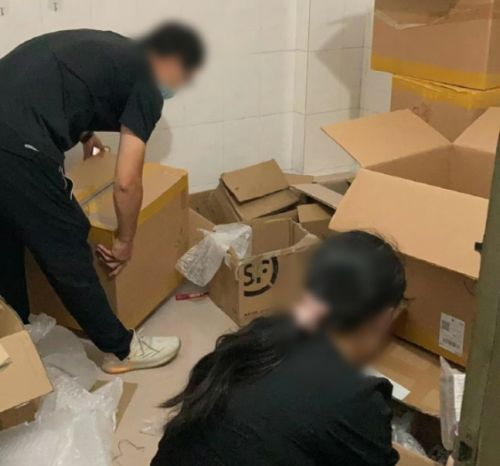 The enforcement team is cracking down on counterfeit Korean beauty pharmaceuticals at a local wholesale warehouse in China. Provided by the Korean Intellectual Property Office
Based on the survey results, KIPO and KOTRA also achieved the outcome of prompting Chinese enforcement agencies to conduct crackdowns.
KIPO explained that this case is meaningful as it shows the Chinese authorities’ intention to protect intellectual property rights through enforcement under policies to strengthen IP protection.
Previously, in 2021, the Chinese State Council announced the “National Intellectual Property Protection and Utilization Plan (2021?2025),” emphasizing the strengthening of judicial protection and administrative enforcement of intellectual property rights within the country.
Kim Si-hyung, Director of the Industrial Property Protection Cooperation Bureau at KIPO, said, “Overseas intellectual property infringement causes negative effects such as reduced exports of domestic companies and decreased trust in Korean products. KIPO plans to actively support domestic export companies in responding to IP infringement damages by cooperating with KOTRA, overseas diplomatic missions, and local governments.”
© The Asia Business Daily(www.asiae.co.kr). All rights reserved.
![Clutching a Stolen Dior Bag, Saying "I Hate Being Poor but Real"... The Grotesque Con of a "Human Knockoff" [Slate]](https://cwcontent.asiae.co.kr/asiaresize/183/2026021902243444107_1771435474.jpg)
















