[Asia Economy Reporter Eunju Lee] Competition authorities in major countries are strengthening their oversight of global big tech companies. Competition authorities in the US and Europe have firmly stated their intention to strictly assess the anti-competitive effects of mergers and acquisitions. A prime target is the world's largest software company, MS (Microsoft). MS announced plans last year to acquire Activision, the largest game developer in North America, but the acquisition has become uncertain due to an antitrust lawsuit filed by the US Federal Trade Commission (FTC).
MS, which has maintained a dominant position in the PC market, has been pursuing a strategy since 2017 to fully shift its gaming business, which was mainly focused on console games (games played on devices and software for computers or video game consoles displayed on a monitor), to a monthly subscription model (Xbox Game Pass). They have abandoned the method of increasing console device sales and instead adopted a strategy that allows users to enjoy games on PC or mobile as long as they pay the subscription fee. One of the core strategies MS has chosen to achieve this is mergers and acquisitions.
They have smartly expanded the game content they can offer by acquiring prominent game developers and other ‘smart companies.’ A representative example is the series of acquisitions of developers such as Mojang, famous for Minecraft. The announcement last year of the $68.7 billion (81.8835 trillion KRW as of last year) acquisition of Blizzard was the ‘peak’ of that strategy. Blizzard owns intellectual property (IP) for famous PC and online games such as StarCraft, Diablo, and Overwatch, as well as mobile games like Candy Crush. In particular, Blizzard holds content (Candy Crush) that could fill a gap in MS’s relatively weak mobile segment, making the acquisition worthwhile despite the enormous cost.
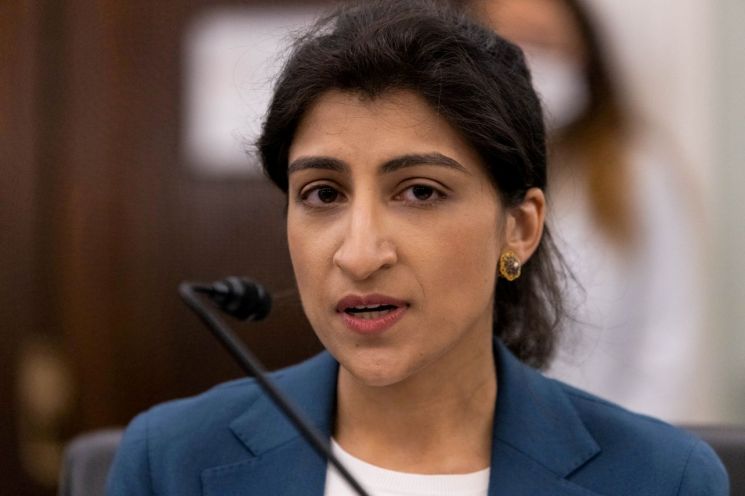
However, the FTC, which can be considered the US version of the Fair Trade Commission, has filed a lawsuit opposing the acquisition of Blizzard, making a smooth merger difficult. The FTC believes that if MS controls Activision Blizzard’s IP, competition in terms of quality, price, and innovation will be hindered. There is concern that if the acquisition goes through, MS might supply Blizzard’s game content exclusively to its subscription service, Xbox Game Pass. There is precedent for this: in the past, MS is believed to have blocked and pressured competitors from accessing games after acquiring ZeniMax Media. For example, competitors like Sony (PlayStation) might be unable to obtain Blizzard’s content, which could ultimately restrict market competition.
Moreover, competition authorities in Europe (EU) have also stated their intention to strictly evaluate the anti-competitive effects of MS’s acquisition of Blizzard. The EU is expected to express opposition to the acquisition within the next few weeks. Prior to this, the UK Competition and Markets Authority (CMA) demanded remedial measures for the merger, stating that MS could gain a ‘dominant advantage’ over competitors. South Korea’s Fair Trade Commission is also conducting a review while exchanging information with other competition authorities. Competition authorities worldwide are carefully examining the impact of global big tech strategies on the market.
© The Asia Business Daily(www.asiae.co.kr). All rights reserved.
![Clutching a Stolen Dior Bag, Saying "I Hate Being Poor but Real"... The Grotesque Con of a "Human Knockoff" [Slate]](https://cwcontent.asiae.co.kr/asiaresize/183/2026021902243444107_1771435474.jpg)















