The Long-Lasting Scars of the 'One-Child Policy'
Pursuit of Personal Ideals... The Shadow of the Hukou System
The Pace Is Too Fast... Immigration Hopes Also Dim
[Asia Economy Beijing=Special Correspondent Kim Hyunjung] China, once notorious for its strict population control policy, now faces the challenge of a 'population cliff.' With the number of births dropping to the lowest level in 72 years since 1950, the population peaked and began to decline last year. Although the government has initiated measures such as financial incentives to encourage childbirth, the population decrease is accelerating faster than initially expected due to the impact of COVID-19. Why have Chinese people started to avoid having children?
According to the announcement by China's National Bureau of Statistics on the 17th, China's population stood at 1.41175 billion at the end of last year, down by 850,000 from the previous year. With 10.41 million deaths surpassing 9.56 million births, the natural population growth rate recorded a negative (-0.6%). This is the first time in 61 years since 1961 that China's population has declined.
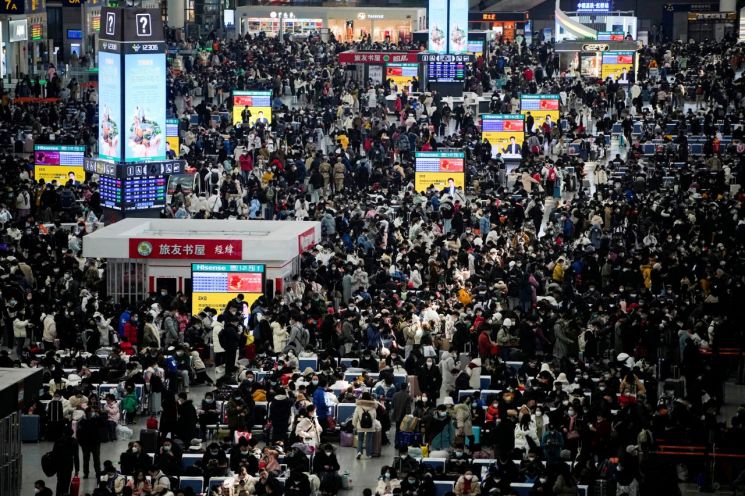
The Scars of the Long-standing 'One-Child Policy'
China's fertility rate had already been declining since the 1970s, but the government maintained the legally enforced 'One-Child Policy' until the 1980s, restricting families from having more than two children. Families who had more children faced severe penalties, including fines equivalent to several years' salary for urban workers or even having family members taken hostage to avoid forced abortions, making the enforcement by local family planning bureaus notorious.
In response to rapid demographic changes, the government ended the One-Child Policy in 2015, allowing couples to have up to two children, and further expanded this in 2021 to permit up to three children. The Communist Party took active measures such as matchmaking for unmarried men and women and providing childbirth incentives. In Shenzhen, for example, families receive an immediate payment of 10,000 yuan (approximately 1.83 million KRW) for a third child, plus 3,000 yuan annually for three years. However, Bloomberg pointed out that considering the average housing price in the area is 58,000 yuan per square meter, this amount is insufficient even to cover the cost of a child's room.
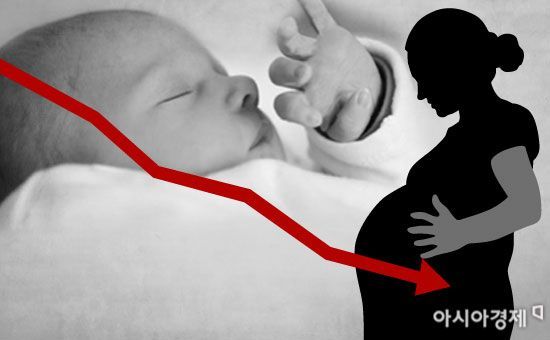
Pursuit of Personal Ideals... The Shadow of the Hukou System
Despite China's childbirth encouragement policies, the younger generation is reluctant to have children. Factors include a global shift toward individualistic ideals and personal satisfaction, severe wealth disparity within China, soaring real estate prices, and the 'Hukou (戶口)' system.
The Hukou system, similar to Korea's resident registration, is a de facto caste system that restricts economic activities based on one's place of origin. First-tier cities like Beijing and Shanghai, under the 'Hukou Registration Ordinance' enacted in 1958, do not recognize the Hukou of outsiders, excluding them from education, medical care, and social welfare services in their actual place of residence. Children cannot enroll in schools in the area unless their Hukou is registered there, and homes cannot be purchased under their names. This discriminatory system discourages migrant workers from having children, as they do not want to pass on the hardships they have endured.
As income and education levels improve with economic growth, a social atmosphere valuing personal happiness and social success has emerged in China as well. Particularly, the societal preference for sons over daughters, fostered by the birth control policy, has rapidly reversed, with Chinese women prioritizing personal social activities over marriage and childbirth. Assistant Professor Windsor from the University of Michigan's Sociology Department told the US public NPR, "China's childbirth encouragement policies are ineffective," explaining, "Research shows that Chinese women pursue individualistic ideals more than the government's various childbirth incentives."
The increase in young people who view the future pessimistically due to stagnant economic growth also appears to contribute to the declining birth rate. Foreign Policy (FP), a US diplomatic media outlet, recently reported on China's population decline, stating, "Considering the upper class, the cost of raising children in China is higher than in Japan or the US," and added, "Moreover, as China's economic growth slows, the younger generation is beginning to feel anxious."

The Speed Is Too Fast... Immigration Is Not a Viable Option
Population decline is a common phenomenon among major countries, including South Korea, but China’s rapid pace and difficulty in finding alternatives such as immigration raise concerns. The number of births dropped sharply from 12 million in 2000 to 10.62 million in 2021, and further down to 9.56 million last year. In high-income eastern coastal megacities, the total fertility rate has reportedly fallen below one, similar to South Korea.
In France, it took 115 years to transition from an aging society (over 7% of the population aged 65 or older) to an aged society (over 14%). The US took 73 years, the UK, Germany, and Japan took 46, 40, and 24 years respectively, while China took 22 years, faster than Japan (South Korea took 17 years, faster than China).
Moreover, it is notable that the decline in the working-age population due to low birth rates and aging occurred in most countries after income levels had improved to some extent. China entered an aged society last year, and South Korea did so in 2017. At the time of entry, China's per capita income was only one-third that of South Korea. Using the point when per capita Gross Domestic Product (GDP) reached $10,000 as a benchmark, Japan reached it in 1983 and South Korea in 1994, with median ages of 33 and 28 respectively. China only reached $10,000 GDP in 2019, with a median age of 38.4 at that time. The rapid aging amid insufficient income levels and overall social welfare systems poses a significant burden on China's medium- to long-term growth.
Immigration, an alternative to population decline, is also difficult for China to choose. According to UN statistics, nearly 10 million emigrants left China by 2015, with an annual growth rate approaching 128%. Conversely, the number of immigrants coming to China was only about 500 per year, and recently, due to the spread of COVID-19 and the zero-COVID policy, the outflow has likely increased while inflow has sharply decreased.
© The Asia Business Daily(www.asiae.co.kr). All rights reserved.
![Clutching a Stolen Dior Bag, Saying "I Hate Being Poor but Real"... The Grotesque Con of a "Human Knockoff" [Slate]](https://cwcontent.asiae.co.kr/asiaresize/183/2026021902243444107_1771435474.jpg)
















