Significantly Increased to 50 Days for High School, 35 Days for Middle School, and 20 Days for Elementary
Revised Sports Innovation Committee Recommendations Reflecting Field Opinions
[Asia Economy Reporter Yoo Byung-don] The number of 'approved absence days' for student athletes has significantly increased this year, making it easier to balance sports and academics.
On the 19th, the Ministry of Education and the Ministry of Culture, Sports and Tourism announced at a joint briefing held at the Seoul Government Complex that, after reviewing the recommendations of the 'Sports Innovation Committee' (hereinafter Sports Innovation Committee), a national agenda of the Yoon Seok-yeol administration, the number of approved attendance days will be expanded from 2023 to 20 days for elementary schools, 35 days for middle schools, and 50 days for high schools, effective from March 1. They also plan to prepare customized learning support measures for student athletes to support them.
The number of approved attendance days has increased by 15 days for elementary students, 23 days for middle school students, and 25 days for high school students compared to last year's 5 days, 12 days, and 25 days respectively.
This policy revises the previous approach, which leaned toward guaranteeing the learning rights of student athletes, aiming instead for a balance between learning rights and sports rights (career choice rights).
The Sports Innovation Committee was a public-private joint committee launched during the Moon Jae-in administration as part of measures to eradicate human rights violations such as sexual violence in the sports sector. From February 2019 for one year, it recommended 52 tasks over seven sessions aimed at structural reform in sports, including △ protection of sports human rights △ improvement of athlete development systems △ establishment of a fair sports culture.
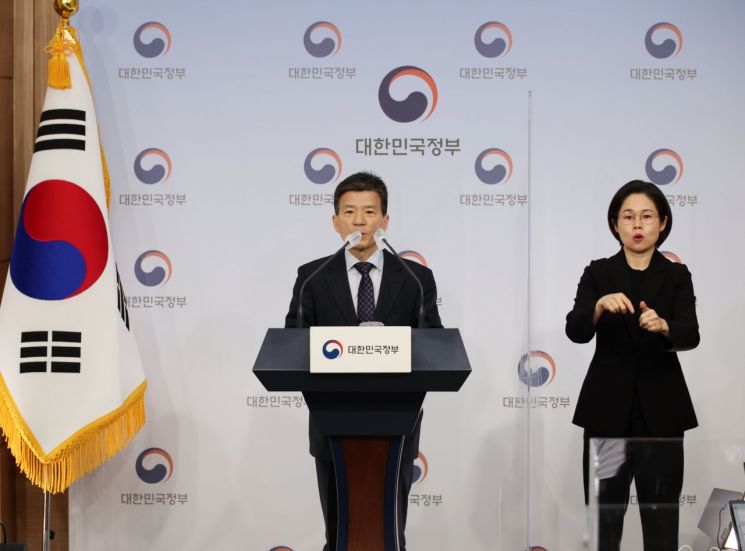 Ko Young-jong, Chief Education Support Officer of the Ministry of Education, is presenting improvement measures for the recommendations of the Sports Innovation Committee on the morning of the 19th at the briefing room of the Government Seoul Office Annex in Jongno-gu, Seoul.
 [Photo by Ministry of Education]
Based on these recommendations, the government explained that most tasks have been implemented or are currently being implemented, such as establishing and operating the Sports Ethics Center, an organization for protecting the human rights of sportspeople, enacting the Basic Sports Act, conducting training after regular classes and setting training time regulations, completely abolishing dormitories, and specifying the reflection ratio of academic grades and attendance in university admissions basic requirements.
However, three recommendations?△ banning student athletes from participating in weekday competitions during the semester (reducing approved absence days) △ converting weekday competitions during the semester to weekend competitions △ restructuring the Youth Sports Festival?have faced difficulties in implementation due to opposition from the sports community.
Additionally, the registration rate of 17-19-year-old golf players in broadcasting and correspondence high schools has doubled, indicating that student athletes have no choice but to give up either academics or sports.
The Ministry of Culture, Sports and Tourism judged that these three major recommendations need improvement. Over the past six months, they have broadly collected opinions from stakeholders including parents, student athletes, and coaches, conducted policy research with the Ministry of Education on improving the student athlete attendance recognition system, and listened to opinions from schools to prepare a government consensus plan.
First, the basic direction for expanding approved attendance days was set to guarantee foundational learning and holistic growth through school life during compulsory education stages, and to provide sufficient sports conditions in high school, considering it is a period when career paths are decided.
Also, in cases where weekend competitions are difficult due to facility rental issues inherent to certain sports or where training facilities are far away making weekday training time unavoidable, measures were taken to ensure that lack of opportunities to participate in competitions and training does not hinder skill improvement.
Furthermore, considering that high school is a critical period for entering professional sports fields, the goal is to expand approved attendance days to one-third (63 days) of the total school days when the high school credit system is implemented in 2025, with a comprehensive evaluation of the results from this year and next year to make a final decision.
The Ministry of Education and the Ministry of Culture, Sports and Tourism plan to expand the content of the 'Student Athlete e-school platform' and extend its operation to elementary school student athletes to minimize class loss.
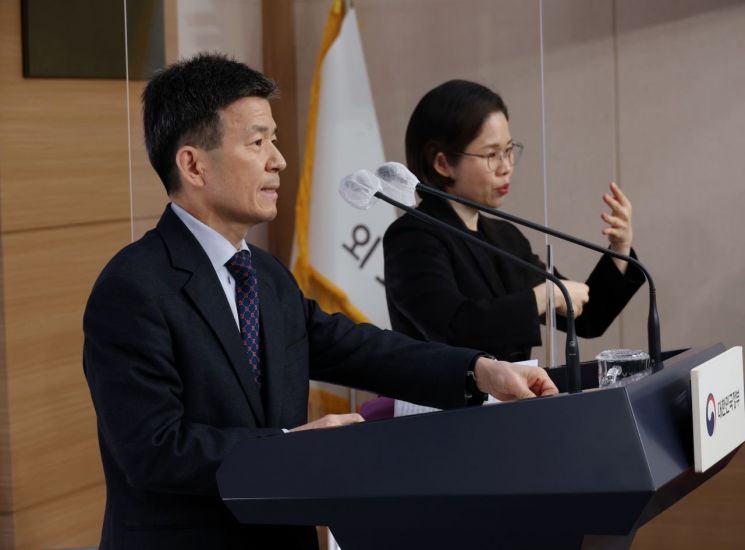 Ko Young-jong, Chief Education Support Officer of the Ministry of Education, is presenting improvement measures for the recommendations of the Sports Innovation Committee on the morning of the 19th at the briefing room of the Government Seoul Office Annex in Jongno-gu, Seoul.
 [Photo by Ministry of Education]
To nurture athletes with character, the pool of career counseling mentor teachers will be expanded by school level to enhance professional counseling support, and related content will be developed and actively provided for continuous use through 'e-school'.
The Ministry of Culture, Sports and Tourism finally stated that the conversion of weekday competitions to weekends will be left to the autonomy of sports organizations according to circumstances, and that the current system of the Youth Sports Festival, in which elementary and middle school divisions participate, will be maintained, but a foundation will be built for a mid-to-long-term transition to an integrated competition involving school sports teams and school sports clubs.
Ko Young-jong, the Ministry of Education’s Chief Education Support Officer, explained, "Student athletes have two identities as students and athletes, which makes them different from general students. It was judged reasonable to balance their learning rights and career choice rights through policy so that they can grow into professional athletes in the sports field." He added, "We will expand support for face-to-face classes by a mentor group composed mainly of teachers and university students and the career counseling mentor teacher system, which has received good responses."
Choi Bo-geun, Director of the Sports Bureau at the Ministry of Culture, Sports and Tourism, said, "In the sports field, there are many requests for face-to-face classes despite the e-school being good. We plan to increase face-to-face classes and encourage member universities of the Korea University Sports Council to reflect more than 30% of the school life record (student record) in the university admission screening for sports talents, following the Sports Innovation Committee’s recommendation."
© The Asia Business Daily(www.asiae.co.kr). All rights reserved.
![Clutching a Stolen Dior Bag, Saying "I Hate Being Poor but Real"... The Grotesque Con of a "Human Knockoff" [Slate]](https://cwcontent.asiae.co.kr/asiaresize/183/2026021902243444107_1771435474.jpg)

















