Death During 'Fainting Challenge' in Argentina
Another Fatal Incident Controversy Following US and UK
"Teenagers Are Curious and Sensitive to Peer Evaluation"
[Asia Economy Reporter Yoon Seul-gi] There have been repeated incidents of teenagers dying while attempting challenges trending on the video-sharing platform TikTok. Experts diagnose that teenagers are curious and sensitive to peer evaluation, which is why dangerous challenges are becoming popular.
According to Argentine media P?gina 12, a minor died while attempting the so-called 'Blackout challenge' trending on TikTok.

The Blackout challenge involves filming oneself strangling their own neck until they lose consciousness, a dangerous game popular among teenagers. It began trending on TikTok after 2020 and is sometimes used by some youths as a way to demonstrate their bravery.
Milagros's aunt, Lali Luque, revealed the details of the incident on Facebook on the 13th. According to her, Milagros attempted the challenge after receiving a link from friends. At that time, Milagros's friends encouraged her to do the challenge and watched the process via video call.
Similar deaths from the Blackout challenge have repeatedly occurred overseas. In December 2021, 10-year-old Isla Anderson from Pennsylvania, USA, was found unconscious after attempting the challenge and eventually died. In the same year, a 10-year-old girl in Italy also suffered a fatal accident while doing the challenge. In 2022, a 12-year-old boy in the UK lost consciousness attempting the challenge and died after life support was withdrawn.
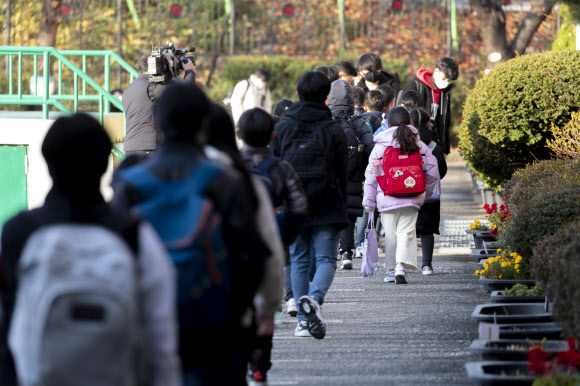
Fortunately, there have been no reported deaths in Korea from attempting the Blackout challenge, but concerns are rising as teenagers are sensitive to trends. Experts point out that teenagers’ curiosity makes them more likely to access provocative content, and when a trend spreads through peer influence, its propagation speed is rapid.
Professor Kwak Geum-ju of Seoul National University’s Department of Psychology explained, "Adults tend to rely on their own judgment, but teenagers are sensitive to peer evaluation. Many violent incidents occur in groups because group cohesion is high and behavioral pressure is strong."
She added, "They end up participating in dangerous acts because if they do not conform to the group, they fear being seen as weak or strange and worry about being ostracized."
Meanwhile, even if deaths occur from attempting the Blackout challenge, it is difficult to hold the platform responsible. Anderson’s mother filed a lawsuit against TikTok for damages, but it was dismissed.
Under Section 230 of the Communications Decency Act, which grants immunity to internet service providers for content posted by users, even if Anderson was exposed to Blackout challenge videos due to TikTok’s algorithm, TikTok cannot be held liable. The court explained, "Algorithms are also protected by law," and "It was not the court but the legislature that granted such immunity."
© The Asia Business Daily(www.asiae.co.kr). All rights reserved.
![Clutching a Stolen Dior Bag, Saying "I Hate Being Poor but Real"... The Grotesque Con of a "Human Knockoff" [Slate]](https://cwcontent.asiae.co.kr/asiaresize/183/2026021902243444107_1771435474.jpg)
















