Failure to Achieve Target '5.5%'
Largest Shortfall Since Target Set in 1994
[Asia Economy Beijing=Special Correspondent Kim Hyun-jung] Last year, China's economic growth rate reached only 3.0%, significantly falling short of the government's target of 5.5%. Excluding 2020, the first year of the pandemic, this is the weakest performance in 46 years since 1976. Structural changes also emerged, with the population declining for the first time in 61 years due to a decrease in birth rates amid social changes and concerns about infectious diseases.
GDP, Weakest in 46 Years
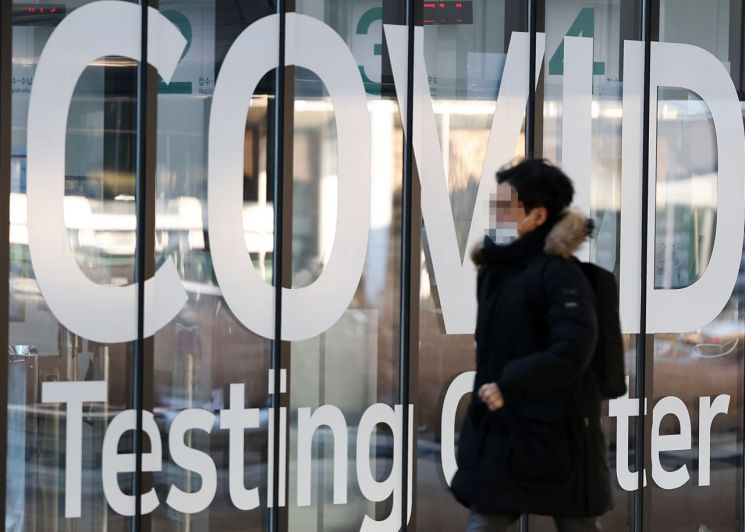
On the 17th, China's National Bureau of Statistics announced that China's gross domestic product (GDP) in 2022 was 121.0207 trillion yuan (approximately 2,223.51332 trillion KRW), marking a 3.0% increase from the previous year. Except for 2020 (2.2%), the first year of the COVID-19 outbreak, this is the lowest figure since 1976 (-1.6%), the final year of the Cultural Revolution. The government has publicly set growth targets since 1994, but last year was the first time the actual growth rate fell more than 2 percentage points below the target. Although the target was missed in 1998 and 2014, the gap was only about 0.2 to 0.1 percentage points, so it was generally considered that the targets were effectively met within China.
Based on the fourth quarter, growth was 2.9%, an improvement from the previous quarter (3.9%), and exceeded experts' expectations (1.8%). The market is optimistic about China's economic rebound, citing that the fourth-quarter growth rate was not as bad as feared and that December's economic indicators exceeded expectations.
Economic indicators for December, released on the same day, also showed a favorable trend. Retail sales, which combine department store, retail store sales, and internet sales, decreased by 1.8% year-on-year. Although still negative growth, this was significantly better than the previous month (-5.9%) and market forecasts (-8.6%).
Industrial production increased by 1.3%, surpassing the forecast (0.2%). This was somewhat slower than the previous quarter (2.2%), when COVID-19 cases were more stable. Fixed asset investment, which reflects changes in capital investment in urban factories, roads, power grids, and real estate, rose 5.1% in December. Although slightly below the previous figure (5.3%), it exceeded experts' expectations (5.0%). Employment indicators also showed slight improvement. The December unemployment rate was 5.5%, lower than the forecast (6.0%) and the previous month (5.7%).
Zhou Hao, Chief Economist at Guotai Junan Securities, told Bloomberg, "This is a positive performance and lays a solid foundation for economic recovery," adding, "If the economic reopening gains momentum and government infrastructure investment stimulates the market, both consumption and investment will improve over the next few quarters."
Bloomberg reported, "Economists expect a strong recovery in the Chinese economy in the coming months as consumption increases and the housing slump eases," estimating the median growth forecast for this year at 4.8%. Major banks such as Morgan Stanley, Citigroup, and Bank of America predict this figure to be 5.5%.
Lowest Birth Population in 72 Years
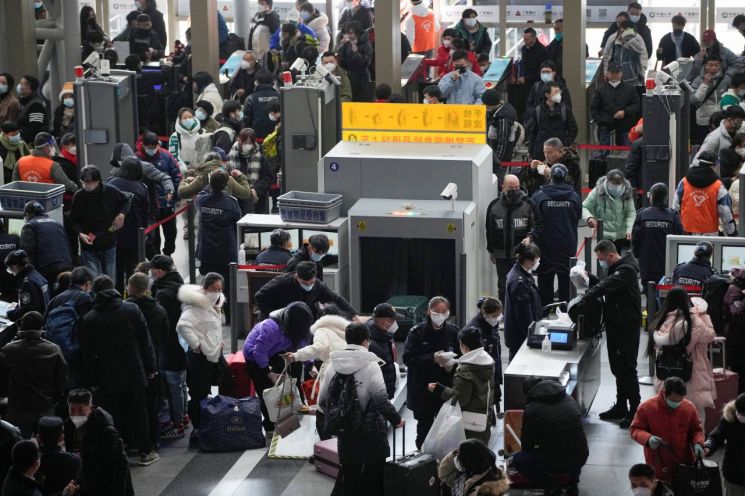
However, changes in China's population structure are expected to pose challenges to the medium- to long-term growth trajectory. According to the National Bureau of Statistics' announcement on the same day, China's population stood at 1.41175 billion at the end of last year, a decrease of 850,000 from the previous year. Deaths numbered 10.41 million, surpassing births of 9.56 million, resulting in a natural population growth rate of minus 0.6%. The birth population fell to its lowest level in 72 years since 1950, while deaths exceeded the average (10 million). This is the first time in 61 years, since 1961, that China's population has declined.
Zhang Ziwei, Chief Economist at Pinpoint Asset Management, pointed out, "China can no longer rely on the 'demographic dividend effect' (where a high proportion of the working-age population promotes economic growth) as a structural driver of economic growth," adding, "Demographics will become a headwind going forward." He further stated, "Economic growth will need to rely more on productivity improvements."
© The Asia Business Daily(www.asiae.co.kr). All rights reserved.
![Clutching a Stolen Dior Bag, Saying "I Hate Being Poor but Real"... The Grotesque Con of a "Human Knockoff" [Slate]](https://cwcontent.asiae.co.kr/asiaresize/183/2026021902243444107_1771435474.jpg)
















