Airlines Removing Seatback Functions
Cost Reduction, Seat Weight Reduction, and Dispute Prevention
The standards for airplane seatbacks have been a never-ending topic of debate among travelers worldwide. How far back is appropriate to recline the seatback? As a result, the reclining function on passenger aircraft seats is disappearing.
Less Breakdowns Reduce Maintenance Costs · Lightweight Seats Improve Fuel Efficiency
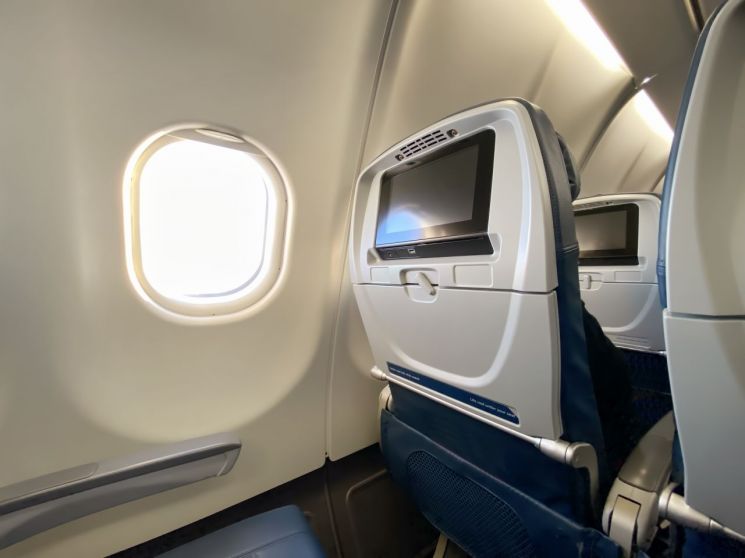
According to CNN, there is an increasing trend of removing the button that allows reclining on airplane seats. The reasons are to reduce maintenance costs, lighten the seats, and prevent disputes among passengers. Eliminating the reclining function means that if a seat breaks, repair costs are lower, which reduces airline maintenance expenses. Additionally, lighter seats help save fuel during flights. Currently, the weight of one airplane seat ranges from 7 to 10 kg.
Since the late 2000s, ultra-lightweight seats without reclining functions have entered the market. They have been especially introduced for short-haul flights and low-cost carriers (LCCs). At that time, airline officials promoted seats fixed at a position between fully upright and slightly reclined as "pre-reclined seats."
Mark Hiller, CEO of Recaro, a German aircraft seat manufacturer that launched slimline seats for short-haul flights, explained, "Airlines can choose the seatback angle position at 15 degrees or 18 degrees. The biggest advantage is that passengers' personal space is not obstructed by the seatback, and it reduces the airline's ownership costs."
"Please Raise Your Seat" Preventing Passenger Conflicts at the Source
Removing the reclining function can prevent conflicts among passengers in advance. When disputes arise over the reclining angle, flight attendants have to act as mediators, and in severe cases, the plane may need to divert for safety reasons. However, CNN stated, "For long-haul flights, the seats will retain the reclining function." They added, "Passengers should slowly recline their seats after checking behind them and keep their seats upright during meals."
Meanwhile, the U.S. travel magazine Travel + Leisure reported on seatbacks based on an article published by Time magazine in 2019. According to the report, economy class seat sizes have been gradually shrinking since the early 2000s. The distance between the seatback of the seat in front and the seatback immediately behind was 34 to 35 inches in the early 2000s but decreased to 30 to 31 inches by 2019. Seat width also shrank from an average of 18.5 inches to 17 inches.
© The Asia Business Daily(www.asiae.co.kr). All rights reserved.
![Clutching a Stolen Dior Bag, Saying "I Hate Being Poor but Real"... The Grotesque Con of a "Human Knockoff" [Slate]](https://cwcontent.asiae.co.kr/asiaresize/183/2026021902243444107_1771435474.jpg)
















