Korea Pharmaceutical Bio Association Briefing Session
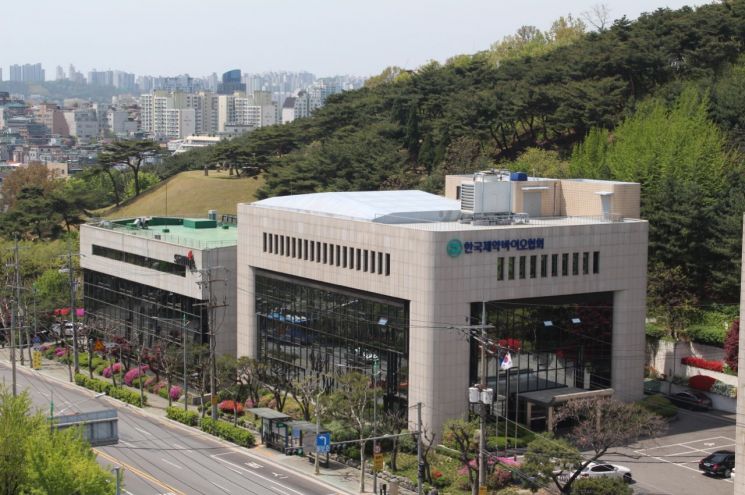 Exterior view of the Korea Pharmaceutical and Bio-Pharma Manufacturers Association in Bangbae-dong, Seocho-gu, Seoul.
[Asia Economy Reporter Lee Myunghwan] It has been suggested that the Brazilian pharmaceutical market could serve as a foothold for domestic pharmaceutical and bio companies to enter the Latin American market. The Brazilian pharmaceutical market is the largest in Latin America and is highly attractive for entry due to its significant growth potential.
On the morning of the 17th, the Korea Pharmaceutical and Bio-Pharma Manufacturers Association held an online 'Brazil Pharmaceutical Market Entry Briefing' for domestic pharmaceutical and bio companies and related organizations. The briefing was jointly organized by the Association, the Embassy of the Republic of Korea in Brazil, and the KOTRA S?o Paulo Trade Center.
The briefing highlighted trends in the Brazilian pharmaceutical and bio industry while addressing opportunity factors for domestic companies to enter overseas markets. According to the Korea Health Industry Development Institute, the size of the Brazilian pharmaceutical market is approximately $22.5 billion (about 27 trillion KRW), making it the largest in Latin America. Continuous growth is also expected due to the steady increase in the elderly population, expansion of public healthcare coverage, and rising incidence of chronic diseases. Exchanges between Korea and Brazil have also been steadily maintained. The two countries signed a memorandum of understanding on cooperation in the health and medical fields in April 2015 and have since engaged in various collaborations such as expert exchanges and information sharing on healthcare experiences and regulations.
Kim Gahyeon, a manager at the KOTRA S?o Paulo Trade Center, who presented at the briefing, explained the Brazilian healthcare market and regulatory environment, highlighting opportunity factors for market entry. Kim stated, "As of 2022, the Brazilian pharmaceutical market ranks 8th globally, accounting for about 3% of the world market," adding, "In terms of sales volume, it showed a high growth rate of 26% compared to the previous year in 2022." Kim also noted, "The Brazilian pharmaceutical market is heavily dependent on imports, with import values in 2021 being ten times higher than export values."
There are also points to be cautious about when entering the local market. To export pharmaceuticals to Brazil, certification from the local agency 'ANVISA' (equivalent to Korea's Ministry of Food and Drug Safety) is mandatory, and local business registration is required for certification. The certification process is relatively complicated and time-consuming, and renewal procedures must be followed periodically. The high tax rate in Brazil should also be noted. According to KOTRA, the average tax on pharmaceuticals in Brazil is 31.3%, which is high compared to other countries. Customs duties can also be imposed up to 14%. Kim recommended, "For pharmaceuticals, it is advisable to seek assistance from local professional consultants."
Following Kim, Yoon Hongju, deputy manager of Celltrion Healthcare’s Brazilian local subsidiary, and Kim Byungjin, head of Daewoong Pharmaceutical’s Nabota Business Center, shared their experiences and points to consider during their entry into the Brazilian market. Yoon advised, "The scale of public pharmaceutical tenders by the Brazilian federal government is very large," adding, "Since tenders can be suddenly postponed or resumed, companies should be prepared." Kim also explained, "To export pharmaceuticals, approval from Korea’s Ministry of Food and Drug Safety for national release is required," and "Since shipment, loading, import customs clearance, and national inspection by Brazilian regulatory agencies take a long time, adjusting supply dates is not easy."
However, these companies unanimously reported remarkable growth in the Brazilian market. Daewoong Pharmaceutical entered the Brazilian market in 2020 after obtaining approval for its botulinum toxin product (BTX) 'Nabota.' Kim stated, "According to our own research, Nabota’s local market share has exceeded double digits," and "It grew more than threefold in 2022 compared to the previous year."
Celltrion Healthcare is also selling the autoimmune disease treatment antibody biosimilar 'Remsima' and the cancer antibody biosimilars 'Truxima' and 'Herzuma' locally in Brazil. Remsima, now in its sixth year since launch in Brazil, maintained the top prescription spot in 2022 with an 84% market share of the entire infliximab market. Truxima and Herzuma also hold market shares of 72% and 69%, respectively, in the Brazilian market. Yoon added, "The awarded quantities of Truxima, Herzuma, and Remsima approved in Brazil exceed one million vials."
Won Heemok, chairman of the Korea Pharmaceutical and Bio-Pharma Manufacturers Association, emphasized before the briefing, "Brazil is an essential and important market to target as a gateway to Latin America," and expressed hope that "this briefing will not only enhance understanding of the overall pharmaceutical market but also serve as an opportunity to convey entry factors and know-how."
Oh Youkyung, commissioner of the Ministry of Food and Drug Safety, said in her greeting, "Last August, the Ministry established the Global Food and Drug Policy Strategy Promotion Team to support the global market entry of domestically developed pharmaceuticals," and added, "We will prepare and implement export strategies considering regional and national characteristics."
© The Asia Business Daily(www.asiae.co.kr). All rights reserved.
![Clutching a Stolen Dior Bag, Saying "I Hate Being Poor but Real"... The Grotesque Con of a "Human Knockoff" [Slate]](https://cwcontent.asiae.co.kr/asiaresize/183/2026021902243444107_1771435474.jpg)















