US Inflation Soars to 9% Then Slows to 6% Range
Mixed Views on Fed's Additional Tightening
[Asia Economy New York=Special Correspondent Joselgina] As the US Consumer Price Index (CPI) inflation rate, which had surged to the 9% range last year, slowed down to the 6% range, the possibility of the Federal Reserve (Fed) once again slowing the pace of tightening is gaining traction. However, on Wall Street, divergent opinions are pouring in regarding how long the Fed should continue raising interest rates, regardless of the pace adjustment. While some argue that the time to stop the Fed's rate hikes is approaching as the cumulative tightening effects become visible, others analyze that the Fed should tighten further due to soaring wages and service prices.
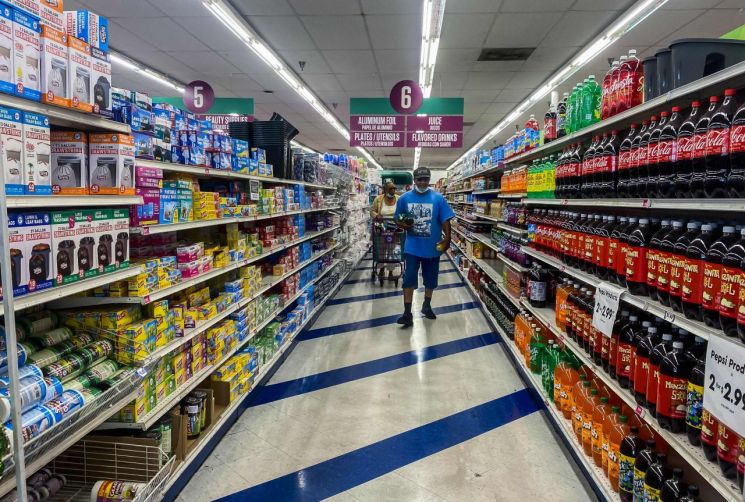
◆US CPI Slows to 6% Range...Momentum Builds for 'Baby Step'
According to the US Department of Labor on the 12th (local time), the December CPI rose 6.5% compared to the same month last year. The CPI inflation rate, which had jumped to 9.1% in June last year, has shrunk for five consecutive months. This is also the smallest increase in 14 months since October 2021. Notably, the December CPI fell 0.1% compared to the previous month. This is the first time the CPI has declined month-over-month since May 2020, right after the COVID-19 outbreak. The core CPI, which excludes the volatile energy and food sectors, rose 5.7% year-over-year and 0.3% month-over-month.
As expected, the confirmed trend of slowing inflation has eased concerns about Fed tightening. There are growing expectations that the Fed may reduce the rate hike to 0.25 percentage points at the Federal Open Market Committee (FOMC) regular meeting scheduled for January 31 to February 1.
According to the Chicago Mercantile Exchange (CME) FedWatch, the federal funds futures market on that day reflected over a 96% probability of a February baby step (a 0.25 percentage point increase in the benchmark interest rate). A week ago, it was 62%, and the day before was 76%. Meanwhile, the probability of a big step (a 0.5 percentage point increase) dropped below 4%. Morgan Stanley evaluated that "the December CPI will encourage the Fed to slow down the pace."
Patrick Harker, President of the Philadelphia Federal Reserve Bank, attended an event that day and said that while several more rate hikes are expected this year, "going forward, a 0.25 percentage point increase will be appropriate." He noted that the December CPI data shows inflation is coming down and said, "If inflation is moving in the right direction, the Fed does not need to overreact with monetary policy." Having raised rates seven times last year to 4.25-4.5%, the Fed is at a point where it needs to confirm the effects of cumulative tightening to avoid unnecessary recession.
◆"Time to Stop Raising Rates" VS "Fed Has Much to Do"
With the Fed's additional pace adjustment likely, the key now is the final rate level and duration?that is, "how much higher and how long it will last." On Wall Street, conflicting opinions about the Fed's future moves are already pouring in.
Jeremy Siegel, a prominent bull on Wall Street and professor at the University of Pennsylvania's Wharton School, reiterated that the Fed should stop raising rates now. Dean Baker, chief economist at the Center for Economic and Policy Research, also argued on his Twitter account that "the Fed should declare victory in the fight against inflation and stop raising rates."
They argue that, considering service inflation indicators excluding housing costs, the economy has already entered a deflationary environment. Since there is a lag before the Fed's monetary policy is reflected in the data, they say it is time to stop to avoid unnecessary economic recession. Professor Siegel also pointed out that the wage growth rate the Fed worries about is a "structural problem" and difficult to reduce through additional tightening.
Morgan Stanley, the largest investment bank on Wall Street, also analyzed that the Fed, after taking a baby step at the next meeting, will end tightening earlier than expected. Unlike other investment banks that believe two or more rate hikes remain, Morgan Stanley expects the Fed to start cutting rates in December after just one more hike.
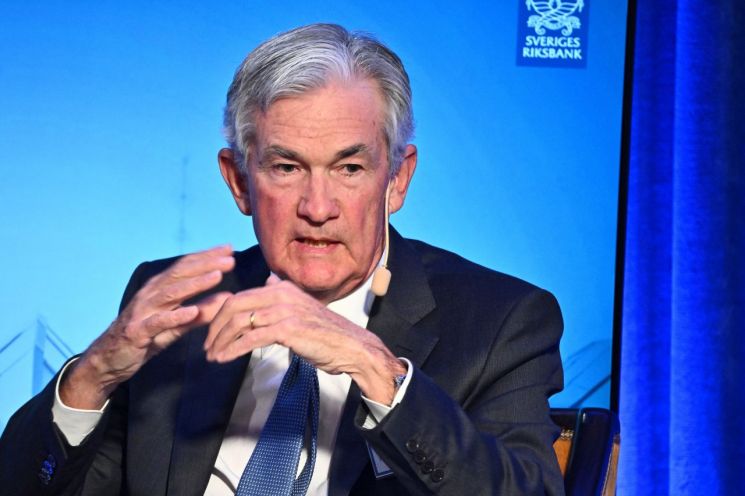
On the other hand, there are also arguments that the tightening intensity should not be eased due to persistent service inflation pressures, including housing costs. The Fed, which has expressed the view that over-tightening is better than under-tightening, is unlikely to stop raising rates now only to face a resurgence of inflation later.
Tim Graff of State Street Global Markets pointed out, "Overall indicators look good, but housing and service-related inflation remain sticky," adding, "Inflation may not come down as quickly as the Fed wants." The slowdown in the December CPI increase was largely due to a 9.4% drop in gasoline prices, which is not expected to continuously lead the price decline trend. Meanwhile, housing costs, which account for one-third of the December CPI, rose 7.5% year-over-year and 0.8% month-over-month.
Recent employment data supporting a still-strong labor market also backs these tightening views. The Department of Labor reported that initial jobless claims for the week of January 1-7 were 205,000, down 1,000 from the previous week, marking the lowest level in 15 weeks. The Fed is most concerned that an overheated labor market, where demand exceeds supply, is fueling wage increases and prolonging high inflation. Jerome Powell's recent remarks consistently show caution regarding service prices and wage growth. Mohamed El-Erian, senior advisor at Allianz, said, "The Fed still has much to do."
Fed officials are leaving room for pace adjustment but draw the line on rate cuts or halting hikes. On the same day, James Bullard, President of the St. Louis Fed, welcomed the CPI data but said, "We need to reach (above 5% interest rates) as soon as possible and maintain that level." Thomas Barkin, President of the Richmond Fed, also confirmed the policy to continue tightening, saying, "There is much to do." Mike Lowengart, Morgan Stanley's portfolio manager, emphasized, "The CPI is another signal that inflation is moving in the right direction," adding, "The Fed is firmly committed to maintaining high interest rates."
Meanwhile, major indices on the New York Stock Exchange all rose as the CPI increase slowed as expected. The Nasdaq, which is sensitive to interest rates and tech stocks, closed higher for five consecutive trading days for the first time since July last year. However, none of the three major indices rose more than 1%. Sandy Bragger, Chief Client Officer at Aspiriant, said, "The market was pleased with the CPI report but did not get overly excited." There is an assessment that the Fed's rate hikes will continue and that the CPI outlook has already been priced into the market.
© The Asia Business Daily(www.asiae.co.kr). All rights reserved.
![Clutching a Stolen Dior Bag, Saying "I Hate Being Poor but Real"... The Grotesque Con of a "Human Knockoff" [Slate]](https://cwcontent.asiae.co.kr/asiaresize/183/2026021902243444107_1771435474.jpg)

















