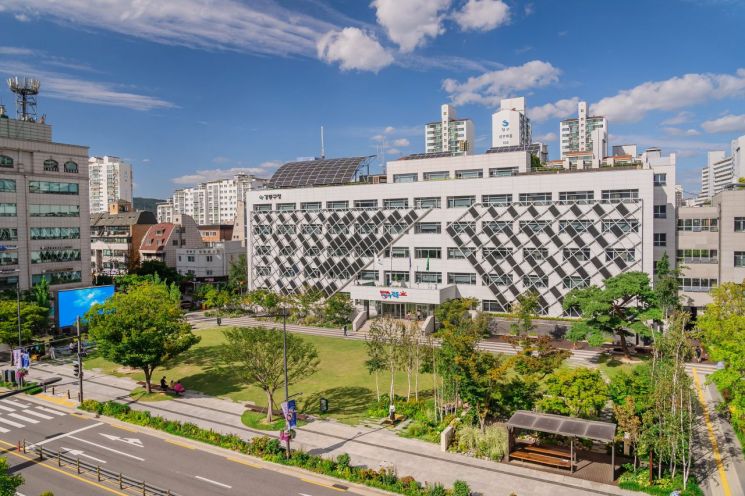
Strengthening Publicity to Intensively Identify Crisis Households in Welfare Blind Spots During Winter Until February 28
Providing Customized Welfare Services for Welfare-Excluded Groups Who Need Help but Are Not Receiving Support
[Asia Economy Reporter Park Jong-il] Gangdong-gu (Mayor Lee Soo-hee) announced on the 11th that it plans to intensively identify crisis households hidden in welfare blind spots and strengthen customized service support until February 28.
The main targets for identification are welfare-excluded groups who need help but are not receiving support, including ▲seasonal unemployment households ▲households facing income, employment, housing, or financial crises ▲households struggling to maintain livelihoods due to urgent reasons such as temporary or permanent business closure ▲and other low-income households facing difficulties.
For the identified individuals, public support such as the Basic Livelihood Security System and emergency welfare will be prioritized and provided. For households not eligible for public support but facing complex difficulties such as economic problems or needing care, they will be selected as integrated case management targets and provided with customized integrated services or household-specific customized services through the Care SOS Center.
The district will post promotional posters and banners mainly in public facilities with many users or places with high foot traffic, and will conduct large-scale publicity activities through outdoor electronic billboards, electronic display stands, village buses, delinquent tax notices, hospitals, pharmacies, and more.
Lee Soo-hee, Mayor of Gangdong-gu, said, “The cold winter season is a time when the difficulties of vulnerable groups can become especially severe, so we will pay closer attention to ensure meticulous support. Since interest in neighbors is the first step in identifying welfare blind spots, we will strive to minimize welfare blind spots by establishing a dense social safety net through continuous identification and protection system operation.”
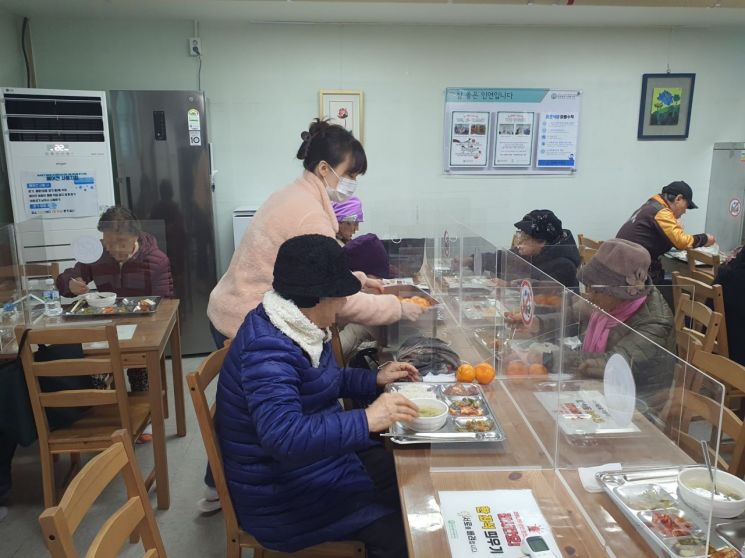
Dongjak-gu Raises Free Meal Support Unit Price for Low-Income Seniors from 4,000 to 4,500 Won
Dongjak-gu (Mayor Park Il-ha) announced on the 11th that it will raise the support unit price for free meals for low-income seniors from 4,000 won to 4,500 won starting this year.
Following the increase from 3,500 won to 4,000 won in June last year, the district independently re-raised the price within six months to provide seniors with higher quality meals.
The district operates the ‘Free Meal Project’ to protect vulnerable seniors at risk of meal deprivation, such as basic livelihood recipients aged 60 and over and low-income elderly living alone.
About 1,270 seniors are eligible for free meal support, selected comprehensively considering risks of meal deprivation and living conditions at senior welfare facilities such as Daebang Comprehensive Social Welfare Center and Sadang Comprehensive Social Welfare Center.
Currently, lunch is provided at seven senior restaurants, and for vulnerable seniors aged 65 and over who have difficulty visiting due to mobility issues or disabilities, meals and side dishes are delivered.
For senior restaurants, substitute meals (such as ready meals) are additionally provided on weekends and holidays to prevent meal service gaps.
The free meal support project not only provides meals but also plays a role in checking seniors’ health and well-being, forming emotional empathy, and facilitating communication.
Park Il-ha, Mayor of Dongjak-gu, said, “We will support safe and nutritious meals to provide seniors with a warm meal,” adding, “We will build a dense welfare safety net in the community to eliminate welfare blind spots.”
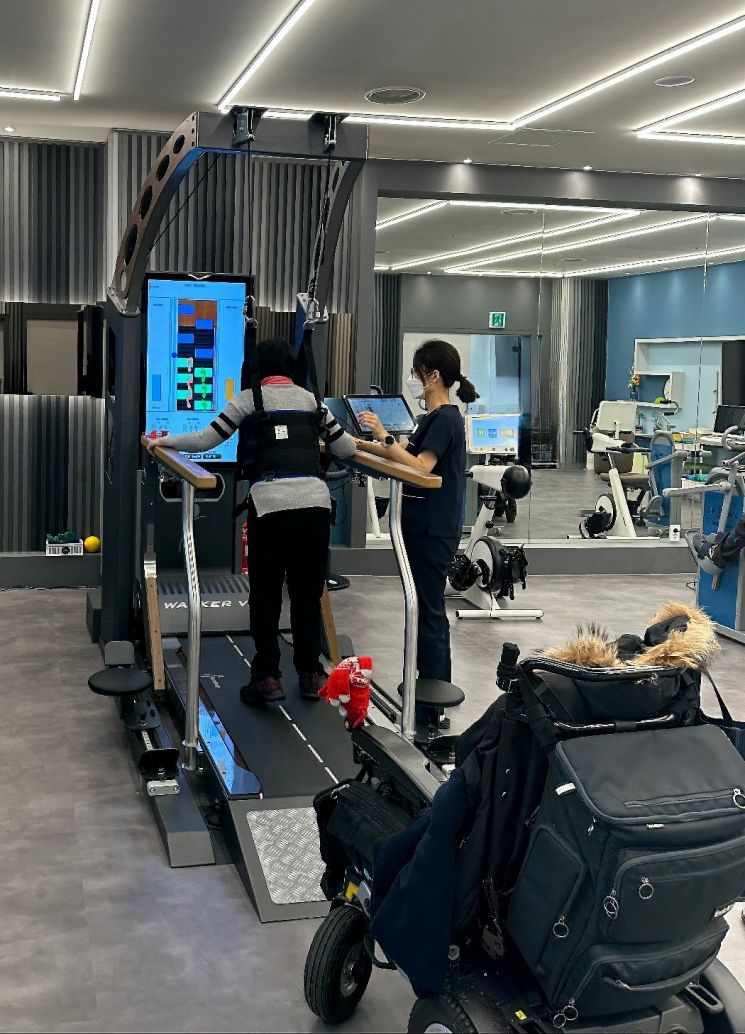
Gangnam-gu Operates ‘Smart Rehabilitation Therapy Room’ for Disabled at Health Center Branch
Remodeling of Suseo-dong Health Center Branch, Equipped with 3 Types of Latest Walking Training Equipment Including 3D Walking Analysis and Balance Support
Gangnam-gu (Mayor Cho Sung-myung) has remodeled the aging rehabilitation exercise therapy room for the disabled at the health center branch and has been operating a ‘Smart Rehabilitation Therapy Room’ equipped with the latest rehabilitation devices since January this year.
Located on the first floor of Gangnam Sports Culture Center in Suseo-dong, the Gangnam-gu Health Center Branch (52 Bamgogae-ro 1-gil) operates primary care rooms, dental care for the disabled, oriental medicine clinics, physical therapy rooms, and rehabilitation exercise therapy rooms to manage the health of local residents. Operations were suspended due to COVID-19 but resumed in May last year.
Additionally, the exercise therapy room supporting disabled rehabilitation resumed operation in July last year, and the aging interior space was newly renovated to become a more comfortable exercise therapy space.
In particular, six old rehabilitation devices were replaced with four new smart devices, totaling 10 types of equipment, transforming it into a ‘Smart Rehabilitation Therapy Room’ that provides customized rehabilitation therapy according to disability types. The new devices include ▲one real-time walking training and analysis device ▲two electric upper and lower limb therapy devices (also manual) ▲and one computerized cognitive therapy device.
First, the previously used electric walking parallel bars and stair walking devices were replaced with a ‘real-time walking training and analysis device.’ This device uses a 3D camera to analyze an individual’s walking ability in real time and allows repetitive training of normal walking patterns. It also features a suspension system (Smart Gravity) that supports disabled individuals who have difficulty maintaining upright or walking posture by holding them from the sides, enabling safer and more satisfying rehabilitation therapy without losing balance during training.
Additionally, a new rehabilitation exercise device called the ‘electric upper and lower limb exerciser (also manual)’ was introduced for those who have difficulty moving their limbs independently. This device automatically detects stiffness during repetitive limb exercises and switches the movement direction to relaxation to alleviate stiffness. It supports both active and passive exercise according to the user’s ability.
The cognitive rehabilitation device (RehaCom) evaluates the user’s cognitive function and provides customized cognitive therapy programs via computer. It is effective in improving attention and memory for dementia and brain lesion patients.
Starting this year, the rehabilitation exercise room at the health center branch plans to expand its user base. Previously, only registered disabled persons with brain lesions or severe physical disabilities could receive rehabilitation therapy, but going forward, all registered disabled persons who want rehabilitation will be eligible. Rehabilitation exercises will also be provided to prospective disabled persons who have applied for disability registration after hospital discharge and are waiting.
Cho Sung-myung, Mayor of Gangnam-gu, said, “In the 8th term of the elected government, Gangnam-gu is leading customized welfare for the disabled by establishing a Disabled Welfare Division,” adding, “We will continue to provide rehabilitation exercise and cognitive programs to improve the quality of life for disabled people.”
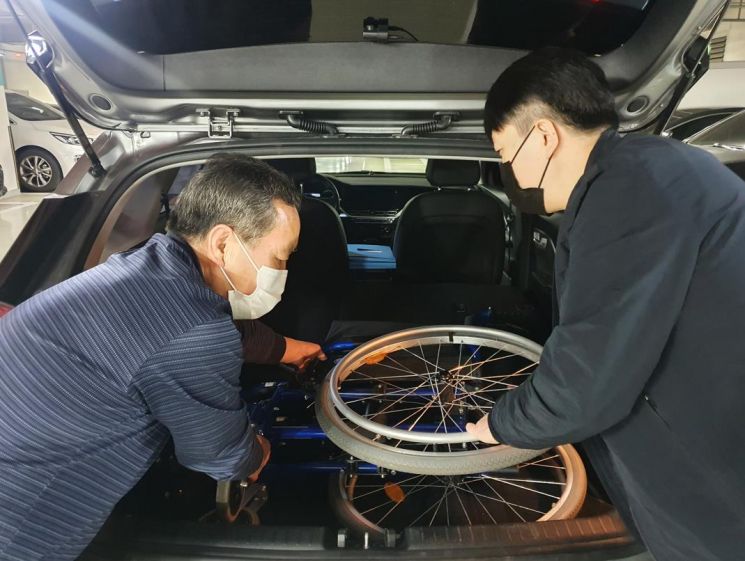
Gangseo-gu’s Visiting Rehabilitation Assistive Device Sharing and Donation Service Receives Praise from Residents
Seoul’s Gangseo-gu (Mayor Kim Tae-woo) is receiving positive feedback from residents for its ‘Visiting Rehabilitation Assistive Device Sharing and Donation Service.’
The ‘Visiting Rehabilitation Assistive Device Sharing and Donation Service’ is a service that directly visits residents who need rehabilitation assistive devices such as wheelchairs and crutches due to sudden accidents or temporary disabilities and lends them free of charge.
Many local governments operate rehabilitation assistive device rental services, but most require residents to visit rental locations in person to borrow and return devices, causing inconvenience for residents without caregivers, such as single-person households.
To solve this problem, the district introduced the visiting rental service nationwide for the first time in 2021.
In the first year of introduction, 161 residents used the service, and last year, 300 residents utilized it.
Accordingly, the district conducted a satisfaction survey in December last year to reflect users’ opinions and provide better services.
Out of 124 participants, excluding 8 non-responses, 94 (75.8%) responded ‘very satisfied,’ and 15 (12.1%) responded ‘satisfied,’ with over 87.9% of respondents expressing satisfaction or higher. Six responded ‘neutral,’ and only one (0.8%) expressed dissatisfaction.
Reasons for satisfaction included ‘direct visits for lending and collection,’ ‘clean and well-maintained equipment,’ and ‘kind guidance and response.’ Suggestions for improvement included ‘more publicity needed’ and ‘insufficient quantity of equipment.’
Based on the survey results, the district plans to purchase additional children’s wheelchairs and manual wheelchairs this year and strengthen publicity to expand the service to more residents.
The service is available to all Gangseo-gu residents, and applications can be made by phone to the Gangseo-gu Disabled Persons’ Organizations Federation.
Mayor Kim Tae-woo said, “Since this service reduces the economic burden and supports social activities for residents experiencing inconvenience due to accidents or temporary disabilities, we will further expand the project,” adding, “We will continue to carefully address the inconveniences residents face in daily life and do our best to create a Gangseo-gu that walks together with socially vulnerable groups.”
© The Asia Business Daily(www.asiae.co.kr). All rights reserved.
![Clutching a Stolen Dior Bag, Saying "I Hate Being Poor but Real"... The Grotesque Con of a "Human Knockoff" [Slate]](https://cwcontent.asiae.co.kr/asiaresize/183/2026021902243444107_1771435474.jpg)

















