[Asia Economy Reporter Yujin Cho] The U.S. stock market, which struggled on Wall Street last year, is projected to fall an additional 22% this year. The three major indices, which had shown sluggish performance since the beginning of the year, recently rebounded following economic data releases, making a late recovery attempt. However, the prevailing outlook is that the market will perform worse than previously expected due to corporate earnings shocks.
According to Bloomberg on the 9th (local time), Morgan Stanley, a major investment bank (IB) on Wall Street, stated that the U.S. stock market is facing a much sharper decline this year than pessimists had anticipated.
Morgan Stanley strategist Michael Wilson said in an investment note that although economic growth forecasts are pessimistic, corporate earnings estimates remain high. This suggests that even if a mild recession occurs, the S&P 500 index could fall far below the current market estimates of 3500 to 3600.
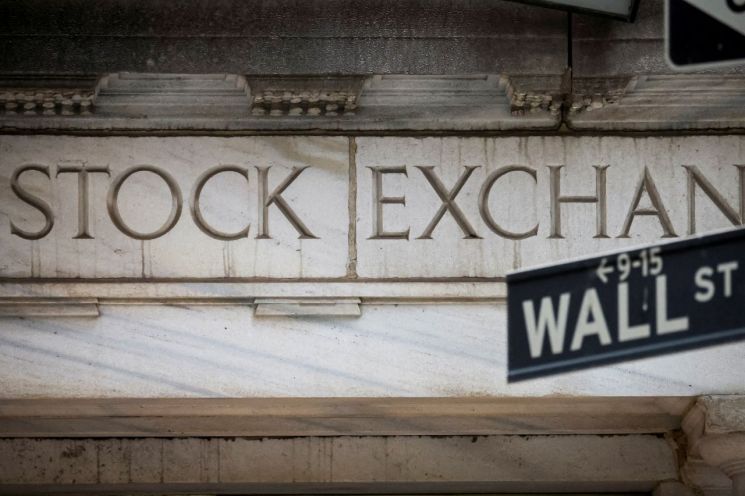
He warned, "The market consensus may be correct about the direction but could be wrong about the depth," adding, "The S&P 500 index could drop 22% from its current level and bottom out near 3000."
On the same day at the New York Stock Exchange (NYSE), the S&P 500 index closed at 3892.09, down 0.08% from the previous session. The Dow Jones Industrial Average fell 0.34%, while the Nasdaq index closed up 0.63%.
Wilson cited inflation as one of the factors driving this year's bearish market. The U.S. stock market, which had been in a steep decline since the first trading day of the year, rebounded on the 6th, the last trading day of the first week, amid signs of easing price pressures and the possibility that the Federal Reserve (Fed) might delay interest rate hikes.
The market attributed this to indicators showing that wage growth, a headache for the Fed, had slowed down, while the U.S. unemployment rate in December dropped to a historic low of 3.5%. Although strong employment data will serve as a key basis for the Fed's future tightening measures, the prevailing view is that it will be difficult to prompt a policy change from the Fed.
Wilson predicted that while inflation peak signals would benefit the bond market, they would negatively impact corporate profitability, forecasting continued disappointing earnings for companies this year.
Alongside Morgan Stanley, Goldman Sachs strategists also forecast a sluggish stock market, anticipating a recession that would overshadow corporate profitability deterioration, changes in U.S. corporate tax policy, and China's reopening (economic restart).
Deutsche Bank also expects weak earnings from U.S. companies this year but believes that bargain hunting aiming for a year-end stock price rebound could lead to a market recovery in the fourth quarter.
© The Asia Business Daily(www.asiae.co.kr). All rights reserved.
![Clutching a Stolen Dior Bag, Saying "I Hate Being Poor but Real"... The Grotesque Con of a "Human Knockoff" [Slate]](https://cwcontent.asiae.co.kr/asiaresize/183/2026021902243444107_1771435474.jpg)















