[Asia Economy Reporter Kim Min-young] SR, the operator of the high-speed rail SRT, on the 5th urged changes to the railway facility maintenance system, stating that the damage caused by the power outage accident on the overhead line in the Tongbok Tunnel on December 30 last year "amounts to 13 billion KRW." SR also announced plans to expand its own vehicle maintenance and reorganize the consignment contract with Korea Railroad Corporation.
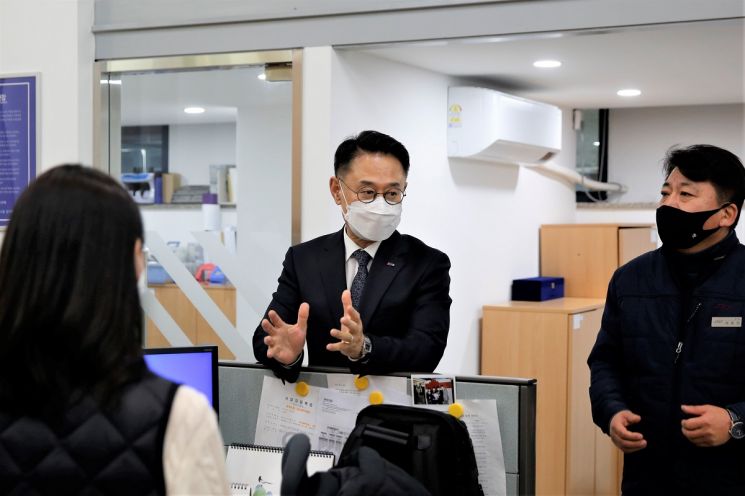
On the same day, CEO Lee Jong-guk made these remarks while announcing the "Statement on the Disruption of SRT Operations Due to the Power Outage on the Overhead Line in Pyeongtaek Tongbok Tunnel" at the customer reception room of Suseo Station.
According to SR, the overhead line accident in the Pyeongtaek Tongbok Tunnel damaged 67 main power conversion devices (motor blocks) in 25 out of 32 train sets, resulting in a total damage cost of 13 billion KRW, including 9.1 billion KRW for vehicle restoration and 2.5 billion KRW for emergency vehicle rental fees.
CEO Lee pointed out, "Regrettably, the party responsible for causing this inconvenience has yet to apologize to the public and SR," adding, "The cause of the power outage accident in the Tongbok Tunnel overhead line was due to the use of substandard materials and poor management during the defect repair process." This implies that responsibility should be attributed to Korail, which is effectively in charge of tunnel maintenance management.
SR requested institutional improvements, stating that the current maintenance system, where construction and management are separated, cannot ensure railway safety. CEO Lee said, "Considering past railway accident cases, the current maintenance system is unstable," and urged, "The government should promptly conduct a thorough investigation of this accident and establish strong measures to prevent recurrence of railway facility failures, including fundamental changes to the maintenance system."
SR is considering claiming compensation for customer inconvenience and damages caused by the accident. CEO Lee stated, "We will respond strongly, including claiming compensation for customer inconvenience and damages caused by the accident."
Through its own investigation, SR concluded that the accident was caused by the use of substandard materials and poor management, such as using summer-grade adhesive instead of winter-grade during the defect repair work in the Tongbok Tunnel.
Furthermore, since the government’s policy is to operate trains departing from Seoul Station as KTX and those from Suseo Station as SRT, SR requested to lease spare vehicles provided by Korea Railroad Corporation to assist in managing this accident.
CEO Lee said, "Korail’s cooperation in vehicle support and maintenance in response to this accident is a good precedent, but on the other hand, they are absurdly using this collaboration as an argument for their integration logic," adding, "Operating trains departing from Seoul Station as KTX and those from Suseo Station as SRT is the government’s decision."
SR plans to promote the following measures to improve the efficiency of the railway industry: △ expanding independent vehicle maintenance and vehicle parts supply △ comprehensive review of consignment contracts with Korea Railroad Corporation △ promotion of an independent reservation and ticketing system △ reorganization of consignment tasks with subsidiaries of Korea Railroad Corporation.
© The Asia Business Daily(www.asiae.co.kr). All rights reserved.
![Clutching a Stolen Dior Bag, Saying "I Hate Being Poor but Real"... The Grotesque Con of a "Human Knockoff" [Slate]](https://cwcontent.asiae.co.kr/asiaresize/183/2026021902243444107_1771435474.jpg)















