Align Partners Sends Shareholder Letter to 7 Major Financial Holding Companies
Truston Asset Management Blocks Irregular Capital Increase and More
[Asia Economy Reporter Hwang Yoon-joo] The movement of native activist funds is unstoppable. Unlike the past, when they mainly focused on improving the governance of individual companies, they are now demanding structural innovation across entire industries. They are being evaluated as taking the lead in strengthening shareholder rights more actively than major shareholders or financial authorities.
On the 2nd, Align Partners' open shareholder letter caused a big stir in Yeouido. On that day, Align Partners sent open shareholder letters to seven major financial holding companies: KB Financial, Shinhan Financial, Hana Financial, Woori Financial, JB Financial, BNK Financial, and DGB Financial.
In summary, the letter demanded "return 50% of net income to shareholders annually." Lee Chang-hwan, CEO of Align Partners, requested that shareholder return policies be introduced and disclosed by the 9th of next month. If they do not comply or if the shareholder return plan is deemed insufficient, they plan to directly propose shareholder proposals at the March general meeting.
According to Align Partners, the shareholder return rate of domestic banks in 2021 was around 24%. During the same period, overseas banks returned 64% of net income to shareholders.
On the surface, the letter asked for an increase in dividends, but in reality, it pointed out structural problems in the domestic banking industry. Due to the expansion of loans, banks are subject to capital adequacy ratio regulations and cannot increase dividends. CEO Lee Chang-hwan criticized, "When South Korea's nominal GDP grew by 3-4%, domestic bank loans increased by 10-12%. Since banks must accumulate a certain ratio of capital when executing risky assets like loans, they fell into a vicious cycle where they cannot pay dividends." He added, "During the low-interest-rate period, banks grew through loans, and individuals accumulated household debt."
Lee evaluated that domestic banks essentially have a weak willingness to pay dividends. Meanwhile, the financial authorities' stance on dividend policies in the financial sector has also changed. Last month, Lee Bok-hyun, Governor of the Financial Supervisory Service, said, "I have a different view on the Financial Supervisory Service strongly expressing specific figures related to shareholder return policies." The industry interpreted this as meaning that it is undesirable for regulators to control the dividend payout ratio (total dividends relative to net income) of financial companies. This contrasts with the previous stance where the FSS recommended limiting bank dividend payout ratios to within 20%.
A private equity fund official evaluated, "Until now, activist funds have conducted shareholder activities targeting individual companies, but it is impressive that they raised issues for the entire industry."
Truston Asset Management can be cited as the originator of such shareholder activism. It dates back to 2013. At that time, when Mando's participation in Halla Construction's rights offering caused controversy, Truston Asset Management filed an injunction to prohibit the payment for the rights offering in court. Although they could not stop the rights offering, it became an opportunity to reconsider the perspective on activist funds.
Lee Sung-won, Vice President of Truston Asset Management, said, "At that time, we continued to communicate with the Halla Group management and obtained promises such as prohibiting rights offerings to insolvent affiliates," adding, "As a result, the stock price, which had plummeted, rose, and both sides won."
Truston Asset Management's philosophy is summarized as "raising undervalued corporate value." It explains that if major shareholders do not manage arbitrarily through unfair succession or support for insolvent affiliates but consider shareholders' interests according to principles, the stock price will find its proper place.
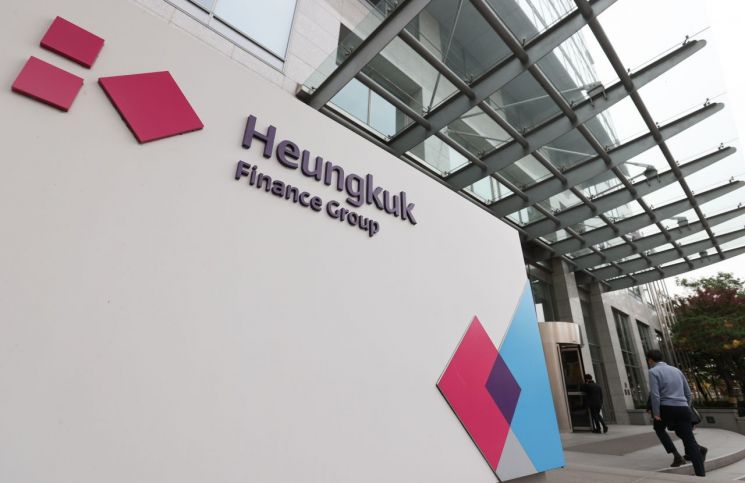
Last year, they directly pointed out the issue of unfair succession by the third generation owner of BYC. At that time, they criticized, "There is suspicion that the interests of minority shareholders are infringed due to the major shareholder's private interests in the process where related parties of the major shareholder accumulate succession funds through unfair internal transactions with BYC." Around the same time, they also blocked the rights offering of Heungkuk Life by Taekwang Industrial. Truston Asset Management is the second-largest shareholder of Taekwang Industrial (with a 5.8% stake). They expanded their stake and changed their investment purpose to 'management participation.'
These actions are also influenced by the changing environment. "Fairness" has become a major issue, and there is a growing focus on minority shareholder rights, such as opposition to physical spin-off listings. Truston Asset Management operates a private equity fund called 'Truston ESG Value Creation No.1' for shareholder activities. They have also expanded this management strategy to public funds. Vice President Lee said, "Compared to the past, there are successful cases and increased interest, but it is still minimal," adding, "However, as ESG (environment, social, governance) management strengthens, the influence of activist funds emphasizing corporate governance improvement will grow."
© The Asia Business Daily(www.asiae.co.kr). All rights reserved.
![Clutching a Stolen Dior Bag, Saying "I Hate Being Poor but Real"... The Grotesque Con of a "Human Knockoff" [Slate]](https://cwcontent.asiae.co.kr/asiaresize/183/2026021902243444107_1771435474.jpg)















