Webtoon Artists' Average Annual Income 118.7 Million KRW
Diverse Use in Movies and Dramas... Over 10 Million Audience Drawn
Challenges Remain: Illegal Copying and Artists' Work Environment
[Asia Economy Reporter Han Seung-gon] The domestic webtoon industry’s revenue has surpassed 1.5 trillion KRW. Reflecting on the days when people secretly read webtoons in small rooms or comic book cafes to avoid their parents’ eyes, this represents a dramatic transformation. Moreover, webtoons are being widely utilized as material for various movies and dramas. They can be regarded as one of Korea’s representative K-content.
Comic book cafes expanded nationwide in the 1960s. At that time, the comic "Raiphai," featuring a masked hero defeating the embodiment of evil, gained tremendous popularity. Leading this trend, new comic books were released daily, marking the heyday of comic book cafes. However, as these cafes spread across neighborhoods, government-led pre-censorship of published comics restricted creators’ freedom of expression, resulting in dull, formulaic comics and the beginning of their decline.
In the 1980s, baseball comics by artists such as Lee Hyun-se, Heo Young-man, and Lee Sang-moo became unprecedented hits, and with the appearance of "Baby Dinosaur Dooly," comic books gradually regained popularity. In the late 1980s, comic magazines emerged, bringing forth diverse genres and distinctive artists. Later, in October 2003, Kang Full’s
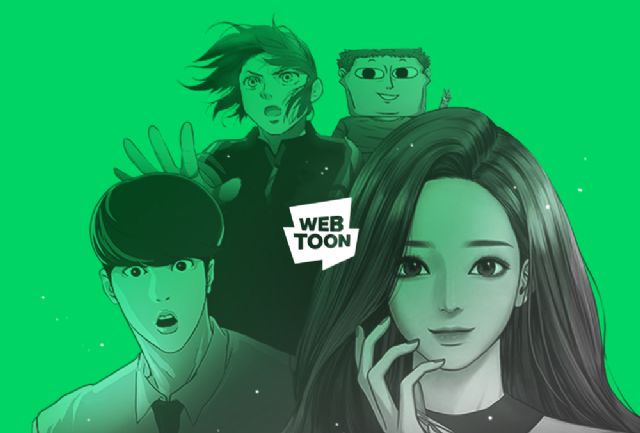 The webtoon industry is gradually expanding. Behind this trend, it is analyzed that a well-established webtoon production system acts as a significant competitive advantage. Photo by Naver
◆ Diverse IP Utilization in Movies and Dramas... Popular Genres Are Pure Love and Romance
In this regard, the webtoon industry continues to show growth. According to the Korea Creative Content Agency’s "Webtoon Business Survey," the domestic webtoon industry size in 2022 was 1.566 trillion KRW, a 48.6% increase from the previous year. This figure is more than four times the revenue of 379.9 billion KRW recorded in 2017 when the webtoon industry survey began.
The average proportion of webtoon-related revenue was 76.5%, up 11.6 percentage points from the previous year. By revenue category, paid content accounted for the largest share at 63.2%, followed by overseas content (17.4%), publishing (6.0%), secondary copyrights (2.8%), and advertising (1.7%). In 2021, new business areas included establishing in-house production studios (38.2%), utilizing in-house intellectual property (IP) and producing secondary derivative works (31.4%), and producing and selling merchandise using in-house IP (20.6%).

The genres mainly planned, produced, and distributed by businesses were led by romance fantasy at 61.5%, followed by fantasy/SF (50%), pure love/romance (49%), and action/martial arts (48.1%). The most profitable genres by revenue and profitability were romance fantasy (56.7%), followed by action/martial arts (51.0%), pure love/romance (44.2%), and fantasy/SF (43.3%).
A survey of webtoon artists showed a gender ratio of 69% female and 31% male. The largest age group was under 30, accounting for 80.7%. The main genre was pure love/romance at 45.9%. The average annual income of webtoon artists who serialized continuously for the past year was 118.7 million KRW, and for those with serialization experience within the past year, 85.73 million KRW. These figures represent increases of 37.49 million KRW and 29.05 million KRW, respectively, compared to the previous year. The main income sources from webtoon creation were revenue sharing (RS) at 64.8%, minimum guarantee (MG) at 53.3%, and overseas distribution at 24.3%. Most webtoon artists contract directly with platforms (45.3%) or through agencies (43.0%).
◆ Illegal Copying Undermines Creative Will... Government, Naver, and Kakao Actively Respond
However, issues such as illegal copying and webtoon artists’ working conditions remain challenges to be resolved. According to webtoon data analysis firm Conist, as of 2020, illegal distribution of webtoons reached 36.6 billion views, more than triple the 10.6 billion views in 2017. As of July 11 last year, the number of domestic and international illegal copying and distribution site domains totaled 9,588. Including cleverly renamed sites that evade detection, the total is estimated to exceed 100 million. Illegal distribution not only harms creators’ earnings but also dampens their creative motivation.
Given this situation, the government is taking active measures. The Ministry of Culture, Sports and Tourism has established a comprehensive copyright infringement response system at the Korea Copyright Protection Agency and will begin monitoring the webtoon sector this year. It also plans to investigate overseas illegal webtoon sites. Amendments to the "Broadcasting and Communications Act" will expand blocking access to copyright infringement sites from twice a week to daily, and amendments to the Copyright Act will introduce multiple damages compensation for copyright infringement cases.
Webtoon and web novel platforms such as Naver and Kakao are also making every effort to prevent illegal distribution. Naver Webtoon has been blocking illegally distributed webtoons since 2017 using its proprietary Toon Radar technology. It embeds invisible user identification information in webtoon images to identify and block the original illegal leaker.
Seo Chung-hyun, head of Naver Webtoon’s Copyright Protection Technology Team, explained, "The key to eradicating illegal shared webtoons is not how many are caught but how much the timing of illegal sharing can be delayed." He added, "Using Toon Radar technology, we have extended the time before the latest paid episodes are shared on illegal webtoon sites from one day to three to four weeks." He further stated, "We will enhance predictive blocking technology for risky accounts to strengthen our ability to prevent illegal sharing in advance."
Kakao Entertainment also formed a global illegal distribution response task force (TF) called 'P.CoK' in November 2021. P.CoK continuously monitors illegal content in English-speaking, Chinese-speaking, and Indonesian regions. By April last year, it had deleted a total of 2.24 million cases. Lee Ho-jun, head of Kakao Entertainment’s Legal Office, said, "We will actively cooperate with government efforts against illegal distribution, including international legislative activities and joint investigations with Interpol."
◆ Webtoon Production System Is Good, But Improving Artists’ Working Conditions Remains a Task
As the webtoon industry’s revenue grows, voices calling for improvements in artists’ working conditions have also emerged. The Webtoon Association issued a statement on August 8 last year, saying, "On July 23, we received the sad news of the late artist Jang Seong-rak," and added, "It is time to talk about the excessive workload among the many issues in the industry beyond the time of mourning." The association emphasized, "The brutally intense work environment formed in the industry is a harsh reality," and warned, "Unless the excessive workload stops, webtoon artists are dying even at this moment."
According to in-depth interviews conducted by the association, over 90% of artists feel overwhelmed by producing 60 to 70 cuts per week. The association urged, "Platforms, content providers (CPs), and artists?the main stakeholders of the industry?must come together to understand the situation of artists exposed to excessive workloads and find ways to guarantee their health rights," adding, "Artists must live for the industry to survive. Artists must not become disposable." Artist Jang passed away last year at age 30 due to a cerebral hemorrhage. Since then, concerns about artists’ health and poor working conditions have been raised.
Relatedly, a report titled "Mental and Physical Health and Precarious Labor Conditions of Webtoon Artists," released on the 5th by the Korea Labor and Health Institute, found that one in three webtoon artists suffers from depression and insomnia. According to the report, 28.7% of surveyed webtoon artists were diagnosed with depression, and 28.2% experienced insomnia. The researchers analyzed, "Those who have experienced criticism through comments showed significantly higher risks of depression, anxiety, and sleep disorders." The survey was conducted online with 320 full-time webtoon artists who earned more than 500,000 KRW in the past year.
Meanwhile, experts emphasize the production system as the background for webtoons’ competitiveness and distinctiveness. Cultural critic Jung Deok-hyun said, "Korean webtoons already have competitiveness in the global market," explaining that the webtoon production system created today’s K-webtoons. Jung pointed out, "In the past, the apprenticeship system required artists to be under a master for years, during which many good ideas could be lost." He added, "Now, there is a system where creators can freely express their raw imagination. Ultimately, this process continuously produces new artists."
© The Asia Business Daily(www.asiae.co.kr). All rights reserved.
![Clutching a Stolen Dior Bag, Saying "I Hate Being Poor but Real"... The Grotesque Con of a "Human Knockoff" [Slate]](https://cwcontent.asiae.co.kr/asiaresize/183/2026021902243444107_1771435474.jpg)

















