China Issues 'Pan-Hao' License After 1 Year 6 Months
Opening World's Largest Mobile Game Market
Domestic Game Companies' Stocks Rebound
Copyright Infringement Persists, Uncertain Market
Game Companies "Need to Monitor Situation"
[Asia Economy Reporter Seungjin Lee] The Chinese government has lifted restrictions on Korean games after a year and a half. While the market welcomed this with a surge in game stocks, the mood among game companies is not entirely positive. This is due to ongoing copyright infringements such as illegal distribution of Korean games and the lack of business stability.
Domestic Game Stocks Rebound Following China’s Issuance of Game Licenses
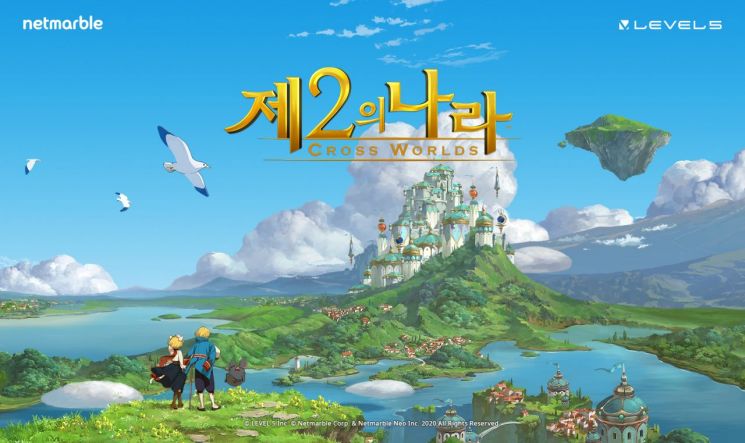
According to the industry on the 4th, the National Press and Publication Administration of China issued game licenses (service permits) for seven domestic games last month. This is the first time in a year and a half that the Chinese government has issued game licenses to domestic developers. It is also the first time since the 2017 Hallyu ban (restriction on Korean Wave) that multiple Korean games have been granted licenses. As the world’s largest game market reopened, domestic game stocks collectively rebounded. Netmarble, which received licenses for three games including 'The Second World', 'A3: Still Alive', and its North American subsidiary Kabam’s 'Shop Titans', saw its stock price surge by more than 20% compared to the previous day after the news broke.
According to the 2022 first half 'China Game Industry Report', the global mobile game market size surpassed $93.2 billion (approximately 111.2248 trillion KRW) in 2021. The Chinese market ranked first with $32 billion (approximately 28.1888 trillion KRW), accounting for 34% of the total. In the first half of this year, the revenue of the Chinese mobile game market reached 110.475 billion yuan (approximately 20.2566 trillion KRW).
Illegal Game Distribution and Copyright Infringement Persist
Although this is a welcome development, most domestic game companies view it with concern. They cannot be sure if the market doors will be closed again without notice. Some game companies have no plans to enter the Chinese market despite the issuance of licenses by the Chinese government. A particular concern for Korean game companies is the inadequate protection of game copyrights within China. Illegal operations of game servers by individuals and copying of games for market release continue to occur.
The Korea Creative Content Agency monitored illegal distribution of five popular Korean games in China?'Dungeon & Fighter', 'MapleStory', 'KartRider', 'Lineage', and 'Yeolhyeol Jeon-gi (Legend of Mir 2)'?from March to June last year and discovered dozens of websites and applications illegally distributing these games. Most of these operate without significant sanctions. Illegal private servers created by individuals were found to be operating, where illegal trading of in-game currency takes place.
Illegal copies, or 'pirated versions', are also rampant. These include adaptations of genuine games or continuous service of past versions through direct copying. Illegal distribution involving game currency charging and derivative product sales has also been investigated. On Chinese e-commerce sites, game currency charging products for 'Tower of God M: The Great Journey' were being sold. The revenue from game currency charges, which should be paid within the game, is going to illegal copiers.
High Dependence on Publishers and Lengthy Litigation
One of the difficulties in entering the Chinese market is the absolute role of local publishers who distribute and operate games on site.
Usually, for popular games, the influence of the game developer is stronger than that of the publisher. However, the Chinese market is the opposite. To obtain licenses for entry into China and to respond to illegal distribution locally, the influence of publishers is paramount. Currently, most Korean game companies have contracts with Tencent in China.
It is also not easy to respond to illegal activities through litigation. In 2021, Tencent, which exclusively manages Smilegate’s game 'Crossfire', won a lawsuit recognizing that the game company 'Quan Min Chang Zan' infringed on game copyrights and was awarded 25 million yuan (approximately 4.6 billion KRW) in damages. Although this was a meaningful precedent, the lawsuit took over four years since 2017, highlighting the ongoing difficulties in protecting game copyrights in China.
For these reasons, domestic game companies are expected to maintain a wait-and-see stance despite China’s moves to open its game market. A game company official explained, "If a game ranks well in the Chinese market, the contribution to sales is significant. However, the operational difficulties are great, and it is unclear whether Chinese authorities will fully open the market, so the risks of entering the Chinese market remain high."
© The Asia Business Daily(www.asiae.co.kr). All rights reserved.
![Clutching a Stolen Dior Bag, Saying "I Hate Being Poor but Real"... The Grotesque Con of a "Human Knockoff" [Slate]](https://cwcontent.asiae.co.kr/asiaresize/183/2026021902243444107_1771435474.jpg)















