High Dependence on Chinese Supply Chain Raises Retaliation Concerns
Supply Chain Shift to Taiwan and India Also Difficult
[Asia Economy Reporter Jeong Hyunjin] Meta Platforms, the parent company of the social networking service (SNS) Facebook, has encountered a huge obstacle called "China" as it attempts to transform into a hardware company. Meta, which adopted an anti-China strategy centered on CEO Mark Zuckerberg, accusing China of "stealing American technology," now faces concerns of retaliation as it inevitably depends on Chinese supply chains to produce smart glasses and other future flagship products.
◆ Difficult to Avoid Chinese Supply Chains
According to multiple sources who shared the internal atmosphere with The Washington Post (WP) on the 4th (local time), Meta has hit a wall in its transition to a hardware company. In 2021, Meta changed its company name from Facebook to Meta Platforms and has been focusing on producing electronic devices such as virtual reality (VR) smart glasses and smartwatches. It is also reported that Meta is currently pursuing the acquisition of Luxexcel, a company specializing in smart lenses.
Meta executives reportedly did not consider their dependence on China for Oculus, the VR headset manufacturer, very significant while focusing on SNS services for some time. However, WP reported that the situation changed after the company shifted its business focus to hardware following the name change. According to KC Kua, senior director and analyst at market research firm Gartner, 80% of smartwatch components and 80% of smartphone parts are manufactured in China.
Internally, Meta executives have considered relocating parts and production facilities for smartwatch manufacturing to be able to label products as "Made in Taiwan" instead of "Made in China" at U.S. customs. This was seen as a way to reduce tariff costs and minimize political issues. However, WP reported that the supply chain for smart electronic devices is primarily established in China, and countries like Vietnam, Taiwan, and India are still in the early stages of building their supply chains, making this difficult.
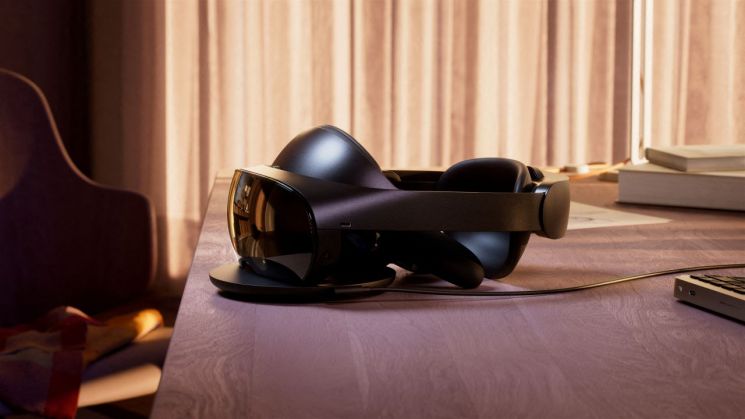
Additionally, sources said Meta tried to produce smart glasses labeled "Made in Italy" through a partnership with the Italian sunglasses brand Ray-Ban, but this also failed. Plans to move Oculus’s VR headset production facilities to Taiwan were also explored but proved impossible. A Meta executive told WP, "Meta is making complex hardware devices. You cannot just easily move production elsewhere."
Meta acknowledged to WP that it is exploring securing production facilities in new regions. Meta spokesperson Hatai explained, "Currently, Meta’s consumer electronics are produced in China, but we are continuously reviewing this and seeking opportunities to build supply chains worldwide."
◆ Meta’s Anti-China Choice Following Trump, What Now?
Meta’s efforts to avoid business in China stem from a long-standing anti-China strategy. In a 2019 speech at Georgetown University, CEO Zuckerberg criticized China for exporting a dangerous vision of the internet worldwide. At that time, he said Meta had tried for years to enter the Chinese market but could not reach an agreement on what was required to do business there, and there was no guarantee that American values such as freedom of expression could be upheld.

In 2020, Zuckerberg appeared at a U.S. congressional antitrust hearing and stated, "There is a lot of evidence that the Chinese government has stolen technology from American companies," pointing out that China has created its own internet version that contrasts with the U.S. Meta’s anti-China stance expanded when Nick Clegg, former UK Deputy Prime Minister and Meta’s head of policy, criticized the Chinese-style internet in a November 2020 WP op-ed, saying, "The Chinese internet is cut off from the rest of the world and under severe government surveillance."
Sources evaluated Meta’s direction as politically opportunistic. Amid the Trump administration’s pressure on TikTok, a Chinese rival to Meta, Meta shifted attention to China to avoid criticism. WP noted, "However, Meta now fully understands that its dependence on China for VR headsets and smartwatches has become a new political issue."
The market views that given Meta’s trajectory, the possibility of retaliation from the Chinese government cannot be ruled out. Analysts told WP, "It is unclear whether China will retaliate against Meta’s new hardware business." Meta’s partners in China are reportedly closely monitoring the situation.
© The Asia Business Daily(www.asiae.co.kr). All rights reserved.
![Clutching a Stolen Dior Bag, Saying "I Hate Being Poor but Real"... The Grotesque Con of a "Human Knockoff" [Slate]](https://cwcontent.asiae.co.kr/asiaresize/183/2026021902243444107_1771435474.jpg)

















