Alps Region Also Hits 18°C... Unseasonal High Temperatures
Russia's 'Resource Weaponization' Strategy Undermined by Gas Demand Drop
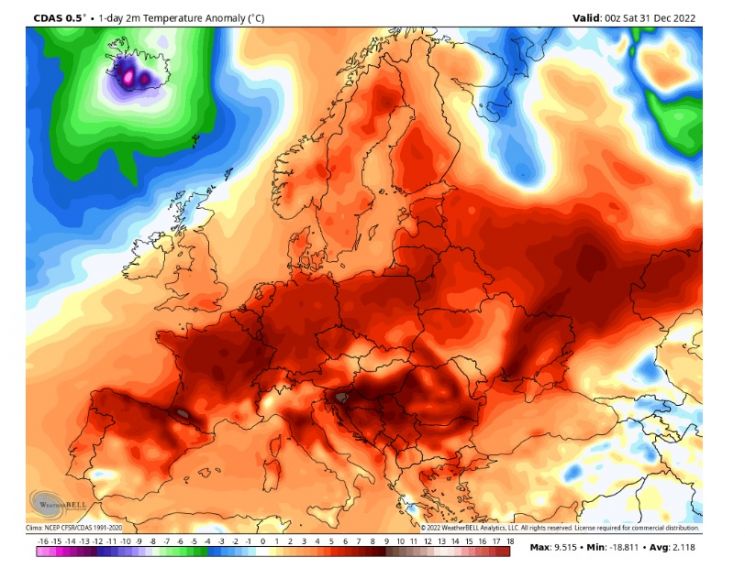 Temperature in the European region observed by the U.S. weather analysis company WeatherBell. Most areas are showing temperatures above 15 to 18 degrees Celsius. [Image source= weatherbell.com]
[Asia Economy Reporter Lee Hyun-woo] While severe cold and heavy snow continue across Northeast Asia and the North American continent, Europe is experiencing an unusual heatwave, with temperatures exceeding 15 degrees Celsius even in the Alpine mountain regions. This is attributed to the continuation of the 'heat dome' phenomenon in Europe, which has persisted since last summer due to global warming, now extending into the winter season.
Concerns over an energy crisis in Europe, where winter heating gas shortages were anticipated due to Russia's gas supply pressure, are expected to significantly ease. As gas demand is projected to be lower than expected, natural gas prices, which had surged, are falling, leading to analyses that Russia's resource weaponization strategy may become ineffective.
Europe trapped in a heat dome... Some areas nearing 25 degrees Celsius
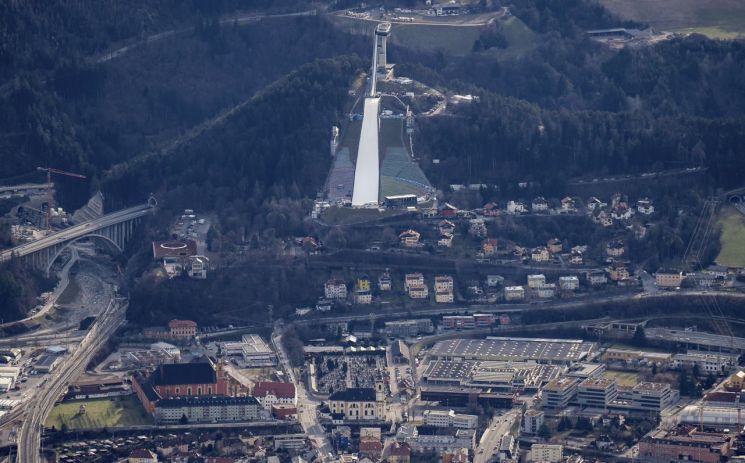 On the 2nd (local time), a view of the Bergisel Ski Jump in Innsbruck, Austria, a city that has hosted the Winter Olympics twice in the past. Due to unusually high temperatures, no snow has fallen, leaving the green forest exposed. Innsbruck=AP·Yonhap News
According to the Washington Post on the 3rd (local time), Europe has welcomed the warmest New Year in history. On January 1st, Verdun in northeastern France recorded a daytime high of 24.8 degrees Celsius, Austria, surrounded by the Alps, saw an average temperature of 18 degrees Celsius, and Prague in the Czech Republic recorded the highest January temperature in 247 years at 17.7 degrees Celsius since temperature measurements began.
With warm weather ranging from 15 to 25 degrees Celsius continuing across Europe, major ski resorts in Switzerland and Austria are struggling to open due to lack of snowfall. Meteorological agencies across European countries forecast that this unprecedented warm weather will persist until the end of this month.
The main cause of this abnormal heatwave is presumed to be the massive heat dome phenomenon that occurred in Europe due to the effects of global warming since last summer. While Northeast Asia and North America are experiencing severe cold and heavy snow due to the southward movement of the Arctic cold air mass, Europe is experiencing abnormal warmth in winter as low-pressure systems developing around the Iberian Peninsula and the Mediterranean continuously draw in hot high-pressure air masses from the Sahara Desert in North Africa.
Last July, the central UK region of Lincolnshire recorded a historic high temperature of 40.3 degrees Celsius, and even northern high-latitude regions of Northern Europe, which usually do not exceed 20 degrees, experienced temperatures reaching 40 degrees, causing drought and heatwave damage.
Resource weaponization by Russia challenged by abnormal heat... Gas demand decreases
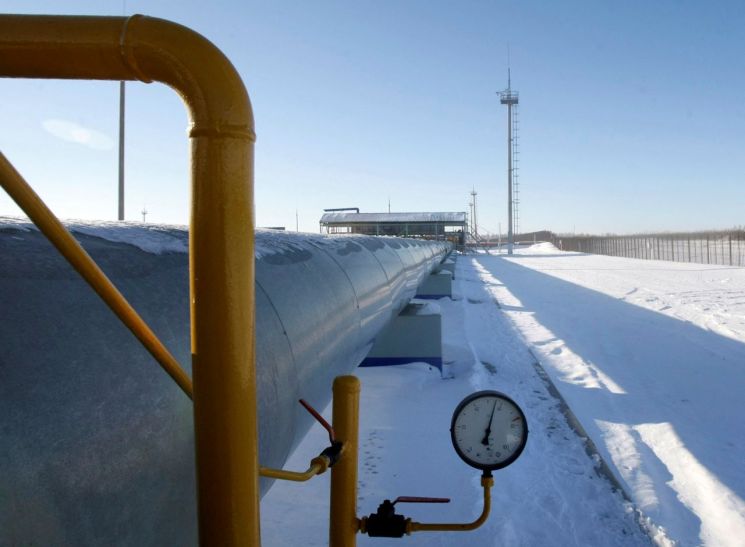
With gas demand decreasing due to the abnormal heatwave, Europe's gas supply situation, which was previously worried about winter heating gas shortages, is expected to stabilize somewhat. The Dutch TTF gas futures price, a major European natural gas indicator, closed at 76.31 euros per megawatt-hour (MWh) on the 30th of last month, significantly down from the all-time high of 346 euros recorded in August.
Accordingly, Russia's strategy to pressure gas supply and weaponize resources is expected to face difficulties. Russia recently criticized the European Union's (EU) ninth round of sanctions against Russia, which included price caps on Russian oil and natural gas, and threatened to completely halt gas and oil exports to countries participating in these measures.
In the ongoing war zone in Ukraine, warmer-than-usual weather continues, and fighting persists. Expectations that combat would significantly diminish due to anticipated severe cold have been proven wrong, and intense battles between both sides are expected to escalate on major fronts.
© The Asia Business Daily(www.asiae.co.kr). All rights reserved.
![Clutching a Stolen Dior Bag, Saying "I Hate Being Poor but Real"... The Grotesque Con of a "Human Knockoff" [Slate]](https://cwcontent.asiae.co.kr/asiaresize/183/2026021902243444107_1771435474.jpg)

















