What Matters Is Practical Skills, Not College Major
Company-Led Program for Hands-On Training
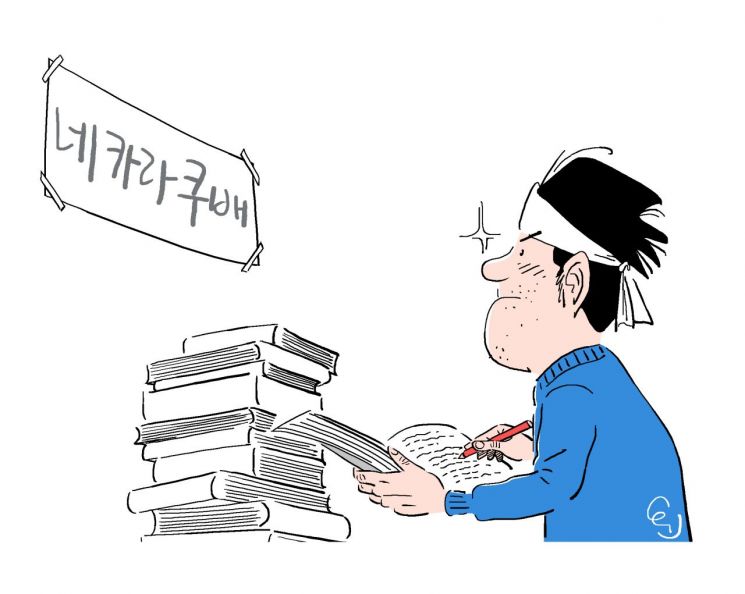
‘Nekarakubaedangto’. This term is derived from the first letters of Naver, Kakao, Line, Coupang, Baedal Minjok, Danggeun Market, and Toss. For those learning programming, Nekarakubaedangto represents the companies everyone wants to join and work for. For developers entering these ‘Nekarakubaedangto’ companies, university majors are no longer the most important factor. Companies now prioritize practical skills over academic majors. And the organizations that best understand how to cultivate practical skills are not universities but development companies. Nowadays, many companies have started teaching practical programming directly. A significant portion of those receiving this training are liberal arts students and non-programming majors. Liberal arts students are beginning to flood into Nekarakubaedangto as developers.
Woowa Brothers announced on the 4th that the 5th cohort of their ‘Woowa Tech Course,’ a 10-month training program started in February this year, recorded an average competition rate of 18 to 1. They selected 175 students across three tracks: web backend, web frontend, and mobile, attracting 3,192 applicants. Compared to the 4th cohort last year, the number of applicants increased by over 1,000. The Woowa Tech Course is a program initiated by Woowa Brothers in 2019 to cultivate excellent developers needed across the industry. The tuition is covered by Woowa Brothers. Noteworthy is the achievement of producing a total of 286 graduates up to the 4th cohort. The employment rate for the 1st and 2nd cohorts exceeded 95%, and the 3rd cohort’s web frontend track achieved 100%. Graduates found employment at leading domestic IT companies including Woowa Brothers, Samsung Electronics, Coupang, Kakao, Naver, Line, Danggeun Market, Viva Republica (Toss), Wemakeprice, and Yanolja.
◆Half of the coding learners are non-majors=Woowa Brothers focused on the significant gap between the practical skills expected in the field and the programming knowledge taught at universities. The program was designed to equip students with practical development skills that enable them to work immediately in companies. Among the students, 60-70% have related majors such as computer science, while 30-40% are non-majors.
There are other corporate programs that train non-majors as IT developers. Naver also nurtures practical IT talent through the Naver Connect Foundation. Since its launch in 2016, it has discovered 605 software (SW) talents as of the 6th cohort. The proportion of non-majors among all trainees is around 50%. A Naver representative said, "The ratio of non-majors among trainees is increasing every year," adding, "A significant number of liberal arts students who have never encountered coding before are participating."
KT’s ‘Able School,’ which aims to train 5,000 practical developers over five years, is similar. It offers intensive training totaling 840 hours over six months, eight hours a day. Currently running its 2nd cohort, the proportion of non-majors among the 1st and 2nd cohorts is about 60%. Recently, a team of Able School 2nd cohort students won the grand prize at the ‘K-Digital Training Hackathon’ hosted by the Ministry of Employment and Labor, drawing attention because half the team members were non-majors from fields such as journalism and broadcasting. A KT representative said, "Although the proportion of non-majors is high, the employment rate of the 1st cohort graduates, released last May, reached 78% as of October, showing significant results."
◆Liberal arts students take IT classes... why?=The reason non-majors receive IT ‘tutoring’ and challenge themselves to become developers is due to the increasingly harsh job market. Most large companies have abolished open recruitment, and banks and financial sectors are also hiring IT personnel in line with digital transformation. Various statistics show that it is not easy to break into the job market with just a humanities background. The number of humanities graduates employed decreased by 27,700 over two years as of the first quarter of 2021, social sciences and media studies by 8,600, and business, administration, and law by 1,600 (Statistics Korea ‘Economically Active Population by Major Field’). The Ministry of Education also reports that 155 humanities departments at four-year universities nationwide have disappeared over the past nine years.
However, there are concerns about liberal arts students transforming into developers. Critics point out the limitations of becoming advanced developers through just about a year of training. While IT industry developers have gained attention for high salaries, the treatment of developers in small and medium-sized enterprises still has a long way to go compared to large corporations or well-known startups. An IT industry insider said, "Due to the rapid pace of technological advancement, it is difficult to find quality developers who can take responsibility for coding education," adding, "If you cannot join companies with good developers, the skill gap widens, and even if employed, you may end up doing only simple coding tasks."
© The Asia Business Daily(www.asiae.co.kr). All rights reserved.
![Clutching a Stolen Dior Bag, Saying "I Hate Being Poor but Real"... The Grotesque Con of a "Human Knockoff" [Slate]](https://cwcontent.asiae.co.kr/asiaresize/183/2026021902243444107_1771435474.jpg)
















