KLM CEO "Take the Train Instead of the Plane"
Air Travel Produces 12 Times More Carbon Emissions Than Railroads
[Asia Economy Reporter Jeong Hyunjin] As major European countries begin reducing short-haul flight routes and increasing taxes on air travel, attention is focusing on the background of these measures. These environmental regulations aim to reduce air travel, which emits 12 times more carbon than rail transport, and the abolition of short-haul flight routes is expected to accelerate further.
Marjan Rintel, CEO of KLM Royal Dutch Airlines, the world's oldest airline, advised taking the train instead of flying in an interview with a leading economic magazine last month. Although he is the head of an airline, he said that trains are suitable for short-distance travel to reduce carbon dioxide emissions. He emphasized, "If there is a good alternative, it should be used. Trains are not competitors to planes," adding, "They should work together." He also mentioned that he personally used the train when traveling from KLM's headquarters in Amsterdam to the parent company Air France-KLM's headquarters in Paris.
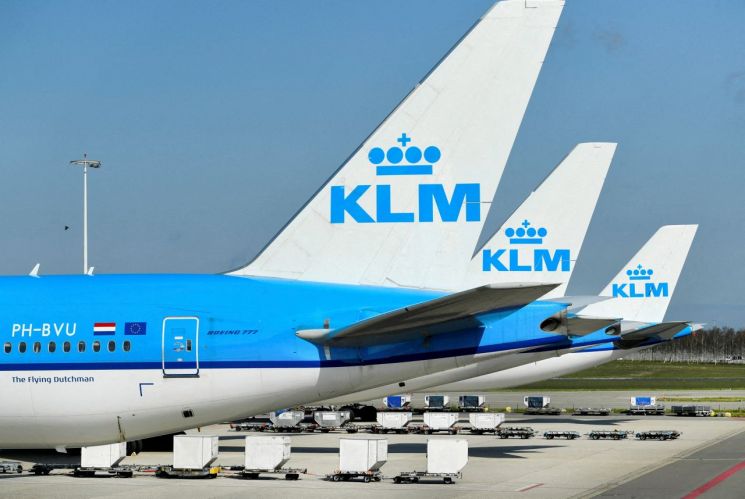
The somewhat unusual situation of a leading European airline CEO recommending trains stems from Europe's climate change policies. Due to the significant carbon emissions from airplanes compared to other public transportation, the European Union (EU) is encouraging the use of other public transport, including railways, through measures such as tax increases. It remains to be seen whether this will also affect Europe's tourism industry, which is expected to recover in the post-COVID-19 era.
◆ France bans short-haul routes... Netherlands and Belgium introduce taxes
According to Euronews and Politico on the 3rd (local time), the EU announced early last month that it approved the French government's request to ban certain short-haul flight routes operated by airlines. The domestic routes in France that have been banned are 'Paris-Orly,' 'Paris-Bordeaux,' and 'Nantes-Lyon.'
In 2021, the French Parliament decided to ban domestic short-haul flights with flight times under 2 hours and 30 minutes if there is an alternative rail option, as part of efforts to address climate change. France initially requested the EU to ban eight routes, but only three were approved. The EU stated that approval was granted only when multiple direct train routes operate daily.
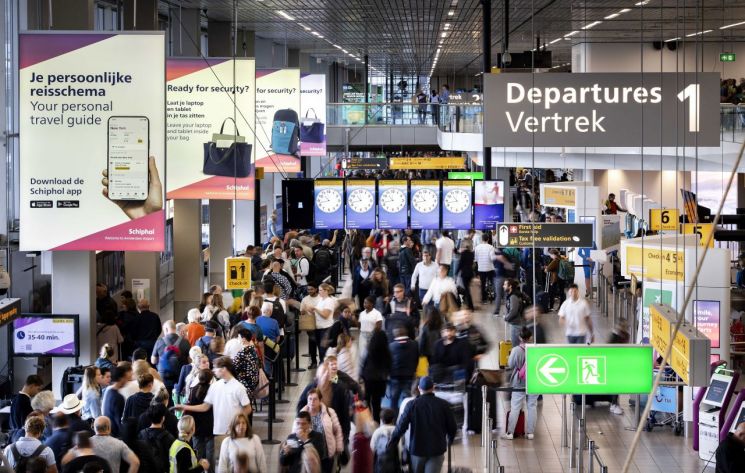
Since January 1 this year, the Netherlands has raised the air passenger tax on flights departing from the country from 7.95 euros (about 10,800 KRW) per passenger to 26.43 euros. Foreign media interpreted this measure as an attempt to reduce the price gap between airline tickets and train tickets, encouraging the use of other public transportation. The Dutch government announced in June that it would reduce more than 10% of the 440,000 annual flights departing from Amsterdam Schiphol Airport.
Belgium has also introduced flight reductions through tax increases. In April last year, Belgium decided to impose a certain level of tax per passenger on short-haul flights within the EU. For flights under 500 km, passengers pay a tax of 10 euros, while for longer distances, the tax is 2 or 4 euros depending on the case. The Belgian government is reportedly planning to increase taxes on noisy aircraft for short-haul flights under 500 km starting in April.
◆ "Air travel emits 12 times more carbon than rail"
The reason EU member states are rolling out these policies simultaneously is to reduce carbon dioxide emissions from airplanes. The EU aims to reduce greenhouse gases to 'zero' by 2050. Although carbon emissions occur whenever public transportation is used, since travel itself cannot be stopped, the goal is to encourage switching from airplanes, which have high carbon emissions, to relatively lower-emission rail transport.
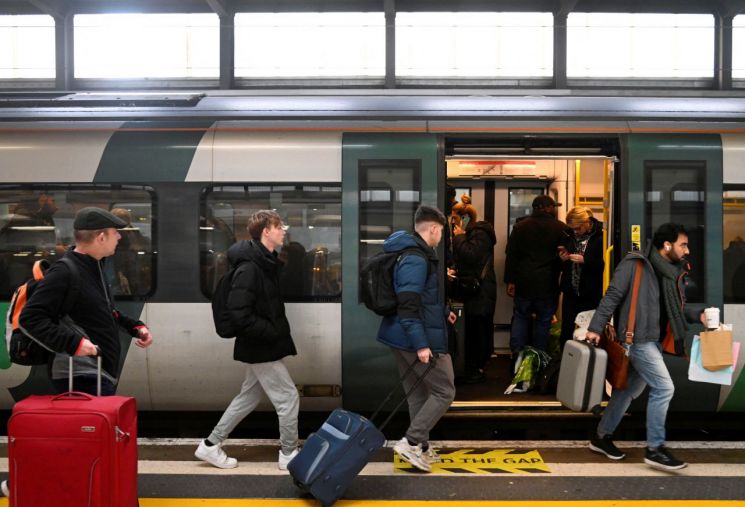
According to a report released last month by global insurer ING citing the European Environment Agency (EEA), air passenger transport emits 160g of CO2 per passenger-kilometer (pkm), which is 12 times higher than rail passenger transport at 33g per pkm.
The problem is that from 2010 to 2019, air transport in Europe increased by an average of 5.5% annually, while rail transport increased by only 1.8%. This is interpreted as a result of the growth of low-cost airlines, leading more users to choose flying over rail. ING analyzed that most European flights are medium- and short-haul, with 25% of flights under 500 km and 70% under 1500 km as of 2019.
Europe has a railway infrastructure of 200,000 km as of 2020, and for high-speed railways running at speeds over 200 km/h, the length has increased fourfold in the 21st century to about 12,000 km, ING explained. However, ING emphasized, "Although railways have environmental advantages, they still lag behind air travel in terms of price, time, and reliability," adding, "Investment is needed to expand the network in the long term."
© The Asia Business Daily(www.asiae.co.kr). All rights reserved.
![Clutching a Stolen Dior Bag, Saying "I Hate Being Poor but Real"... The Grotesque Con of a "Human Knockoff" [Slate]](https://cwcontent.asiae.co.kr/asiaresize/183/2026021902243444107_1771435474.jpg)

















