Small Business Owners Face Reality of Avoiding Pregnancy and Childbirth
Sogongyeon "Social Security System Must Be Established"
Advanced Countries Guarantee Equal Protection for Employees and Self-Employed
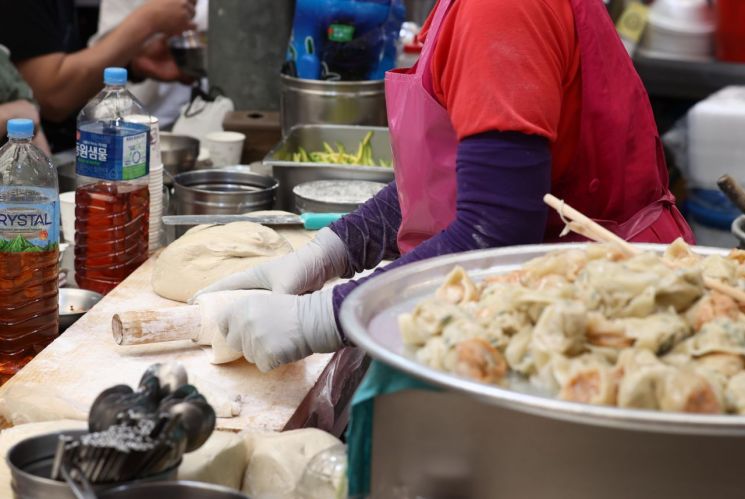
[Asia Economy Reporter Kim Bo-kyung] "If I want to have a child, I have no choice but to close my store. If I keep worrying, I think I will eventually miss the right time to get pregnant."
Self-employed individual Lee Song-joo has been running a brunch cafe in Gurye, Jeollanam-do for four years. Having lived in Seoul, she moved to the countryside eight years ago and deeply wishes to have a second child. However, she is troubled because if she becomes pregnant, she has no choice but to close her store. "When I had my first child, I ran a Korean restaurant alone, but after becoming pregnant, I closed for four months and when I reopened, it felt like starting anew." She says that once a restaurant closes, it is difficult to recover to the previous level without completely revamping the menu and recipes. Repeating past experiences is a heavy burden. She said, "For self-employed people like us, it is hard to give up a business that sustains our livelihood," adding, "Concerns about having a second child are just a 'dream' detached from reality." Even if she becomes pregnant, it is difficult to receive timely medical care and to prepare for childcare after birth. She appealed, "In the current situation of population decline, fundamental measures are needed for pregnancy and childbirth support for self-employed individuals."
Like Lee’s case, our society significantly lacks social safety nets for small business owners. Even the representative social security system, the National Pension, has one in five self-employed people not enrolled. According to the supplementary survey on non-wage workers and economically inactive population from the Statistics Korea’s August economic activity population survey this year, the non-enrollment rate for the National Pension among self-employed individuals is 20.1%. Especially, among self-employed people without employees, the non-enrollment rate is 23.6%, about three times higher than the 8.7% of self-employed with employees. Cha Nam-soo, head of policy and public relations at the Korea Federation of Small and Medium Business, said, "Unlike salaried workers who split the contribution with their company, small business owners must bear the full 9% National Pension contribution, which inevitably causes a burden."
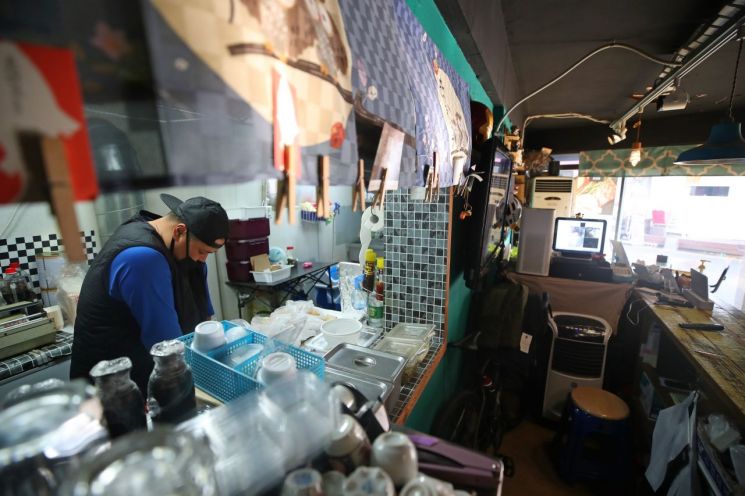
Welfare-advanced countries have developed social security systems for wage workers and self-employed individuals at an equal level. According to the "Study on Social Legislation for the Self-Employed" report published by the Korea Labor Institute, Sweden and Finland apply unemployment insurance equally to both wage workers and the self-employed. In particular, Sweden operates mandatory industrial accident insurance for the self-employed. In Norway, self-employed women who take leave due to pregnancy can receive pregnancy benefits. They receive pregnancy benefits from the leave date until three weeks before the expected delivery date, and then receive childbirth benefits thereafter.
The Korea Federation of Small and Medium Business argues that social safety nets such as childbirth and childcare allowances and sickness benefits, which have been introduced overseas for small business owners, should be strengthened domestically as well. They emphasize the need to create an environment where small business owners can focus on treatment without worrying about their livelihood when they are sick, thus protecting their right to health. Although the sickness benefit system is currently being piloted in some regions, most small business owners must bear the losses caused by business closure alone when undergoing health checkups or hospitalizations. Also, 40% of domestic companies are led by female representatives, most of whom are small-scale small business owners, but social safety nets for leave periods due to pregnancy and childbirth are insufficient.
Oh Se-hee, president of the Korea Federation of Small Business, stated, "Currently, there is no social safety net for self-employed individuals of childbearing age, making it difficult for sole proprietors who support their livelihoods to choose pregnancy and childbirth," and added, "It is time to establish social security systems for small business owners comparable to those for employees."
© The Asia Business Daily(www.asiae.co.kr). All rights reserved.
![Clutching a Stolen Dior Bag, Saying "I Hate Being Poor but Real"... The Grotesque Con of a "Human Knockoff" [Slate]](https://cwcontent.asiae.co.kr/asiaresize/183/2026021902243444107_1771435474.jpg)
















