[Asia Economy New York=Special Correspondent Joselgina] Following India, Japan, and Taiwan, the U.S. government has also strengthened entry restrictions on travelers from China. This comes amid expectations of a surge in Chinese travelers following the end of the 'Zero COVID' policy, and growing concerns that the spread of COVID-19 in China could cross borders and affect the U.S. itself.
According to the U.S. Centers for Disease Control and Prevention (CDC) on the 28th (local time), starting from the 5th of next month, all travelers aged 2 and above entering the U.S. from China, Macau, and Hong Kong must submit a negative COVID-19 test result. The test must be a PCR test or a rapid antigen test conducted within two days before boarding the plane. For recent confirmed cases, this can be replaced by a document confirming a positive diagnosis at least 10 days prior and recovery status.
The CDC explained, "This measure is to prevent the spread within the U.S. amid the COVID-19 outbreak while the Chinese government does not provide appropriate and transparent epidemiological information." Additionally, the CDC plans to expand the airports collecting genomic analysis samples from international arrivals to closely monitor the emergence and spread of variant viruses.
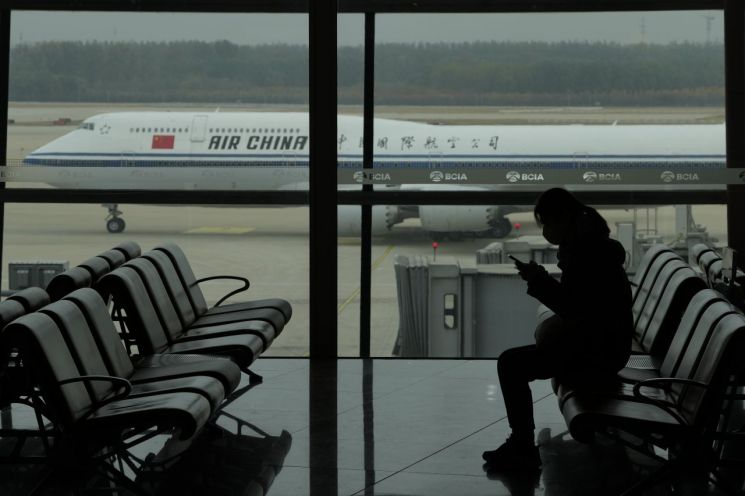
Before the U.S., countries such as India, Japan, Taiwan, and Italy have also mandated COVID-19 testing for travelers from China. In these countries, travelers arriving from China must undergo PCR testing immediately upon arrival and self-isolate if testing positive. South Korea is also reportedly discussing strengthening quarantine measures related to China. Jeff Freeman, president of the U.S. Travel Association, stated in a press release, "We welcome Chinese travelers coming to the U.S.," while calling the U.S. entry restrictions "a reasonable and appreciated measure."
Earlier, China relaxed quarantine regulations by lifting facility quarantine for overseas arrivals and normalizing passport issuance for its citizens starting January 8. These measures are likely to lead to an increase in Chinese outbound travelers, coinciding with the upcoming Lunar New Year holiday next month and the demand for 'revenge travel' after COVID-19 restrictions. Consequently, concerns about a global surge in COVID-19 cases and the spread of new variants have intensified, leading to tightened quarantine measures worldwide. China has not reported the number of confirmed cases since the 25th.
CNN reported, "COVID-19 related data across China is limited, and the number of tests has decreased, making it impossible to know the actual infection rate," pointing to the possibility of new variants emerging. Matthew Binnicker, head of clinical virology at the Mayo Clinic in the U.S., said, "What we want to avoid is COVID-19 variants like Delta and Omicron entering and spreading in the U.S."
On the same day, Bloomberg News reported that half of the passengers on two flights departing from China to Milan, Italy, tested positive for COVID-19. Milan health authorities announced that they would conduct comprehensive COVID-19 testing on all passengers arriving from China. If new variants are discovered during this process, entry restrictions by various countries are expected to be further strengthened. Recent studies by Australian and French research teams have also found that BA.5, a subvariant of Omicron currently prevalent in China, may cause severe damage to the human brain.
© The Asia Business Daily(www.asiae.co.kr). All rights reserved.
![Clutching a Stolen Dior Bag, Saying "I Hate Being Poor but Real"... The Grotesque Con of a "Human Knockoff" [Slate]](https://cwcontent.asiae.co.kr/asiaresize/183/2026021902243444107_1771435474.jpg)
















